

Table of contents
Introduction
The AirPods Pro 3 launch may have vacuumed up most of the headline oxygen this year, but let’s call it straight — the features are terrific, the connectivity roadmap is promising, and the ergonomics are still Apple-level slick… yet the sound didn’t exactly make us sprint to the boardwalk shouting its praises. Good? Yes. The new reference? Not quite.

Meanwhile, the rest of the category showed up hungry. Bose continues to hit like a prizefighter with comfort and ANC dialed in better than almost anyone. Technics remains the “if you know, you know” option that more people really need to consider. And Sony is quietly prepping something aimed at taking on the entire category — not just Apple.
Then you have the brands pushing the sonic envelope: Noble carrying its audiophile pedigree into wireless, Nothing tightening up its tuning to match its design swagger, and Cambridge Audio reminding everyone it actually knows how to tune a driver properly. Even SOUNDPEATS nearly made the cut this year with a $129 ANC model that punches way above the expectations for the price.
And here’s the part consumers care about most: maximum flexibility. Bluetooth 5.4 with LE Audio, LDAC, and aptX Lossless are finally becoming standard instead of niche bragging rights. AI-enhanced ANC has graduated from marketing buzzword to a real performance separator. People want earbuds that look sharp, sound better than the money suggests, and pair cleanly with phones, laptops, tablets, and whatever else is sitting on the desk.
The wireless-earbud landscape didn’t just get crowded — it got smarter, more competitive, and far less forgiving for anyone coasting on brand recognition.
Best Wireless Earbuds of 2025
Bose QuietComfort Ultra Earbuds (2nd Gen) ($249)
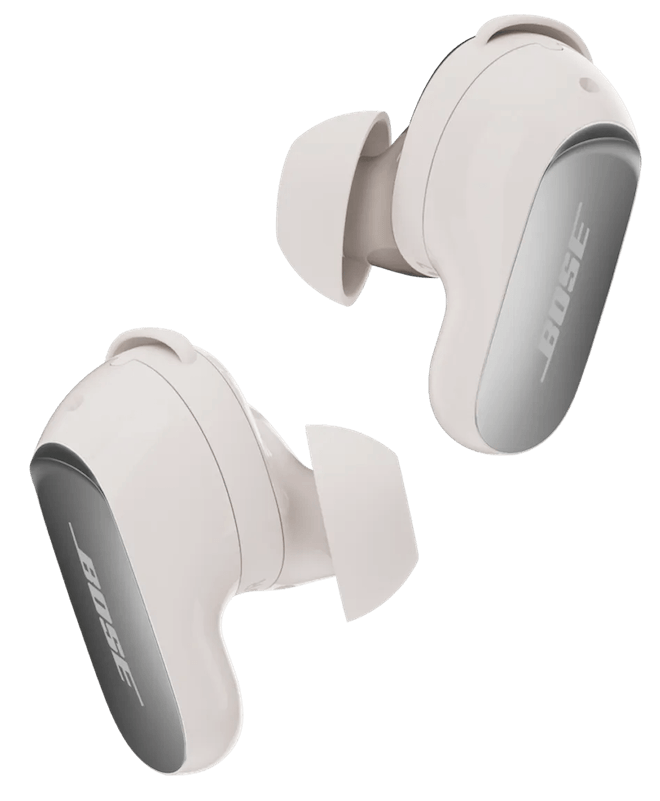
Bose didn’t reinvent its top-tier in-ears — it tightened every screw and finally added the features users have been begging for. The Bose QuietComfort Ultra Earbuds (2nd Gen) look almost identical to the originals, right down to the compact case and soft contours, but the stability bands now include a small locking nub for a more secure fit. The case and earbuds remain cross-compatible with Gen 1, and the layout is so familiar that most people couldn’t tell them apart without a magnifying glass. The real upgrades happen under the hood: Bluetooth 5.4 with LE Audio, wireless charging, USB-C audio input, improved ActiveSense adaptive ANC, the ability to disable touch controls, and — at long last — Bluetooth multipoint. Add in better battery life, a new Cinema Mode for spatial audio, and AI-based call noise suppression, and Gen 2 becomes a much more capable daily-driver.
Performance-wise, Bose is still king of consumer ANC, and the refinements here extend that lead. The earbuds deliver superb noise cancellation, noticeably clearer calls, and a more flexible overall experience thanks to multipoint and USB-C audio. The bass-forward tuning adds punch and energy, though some listeners will want to trim it back with EQ. There’s still no true ANC-off mode, and the look hasn’t evolved much, but the core experience is significantly better. With stronger ANC, wireless charging, better calls, and a far more complete feature set, the Bose QuietComfort Ultra Earbuds (2nd Gen) remain one of the most compelling options for anyone shopping for best-in-class noise-cancelling in-ears.
Go to full review | $299 at Amazon | Crutchfield
Technics EAH-AZ100 ($299)
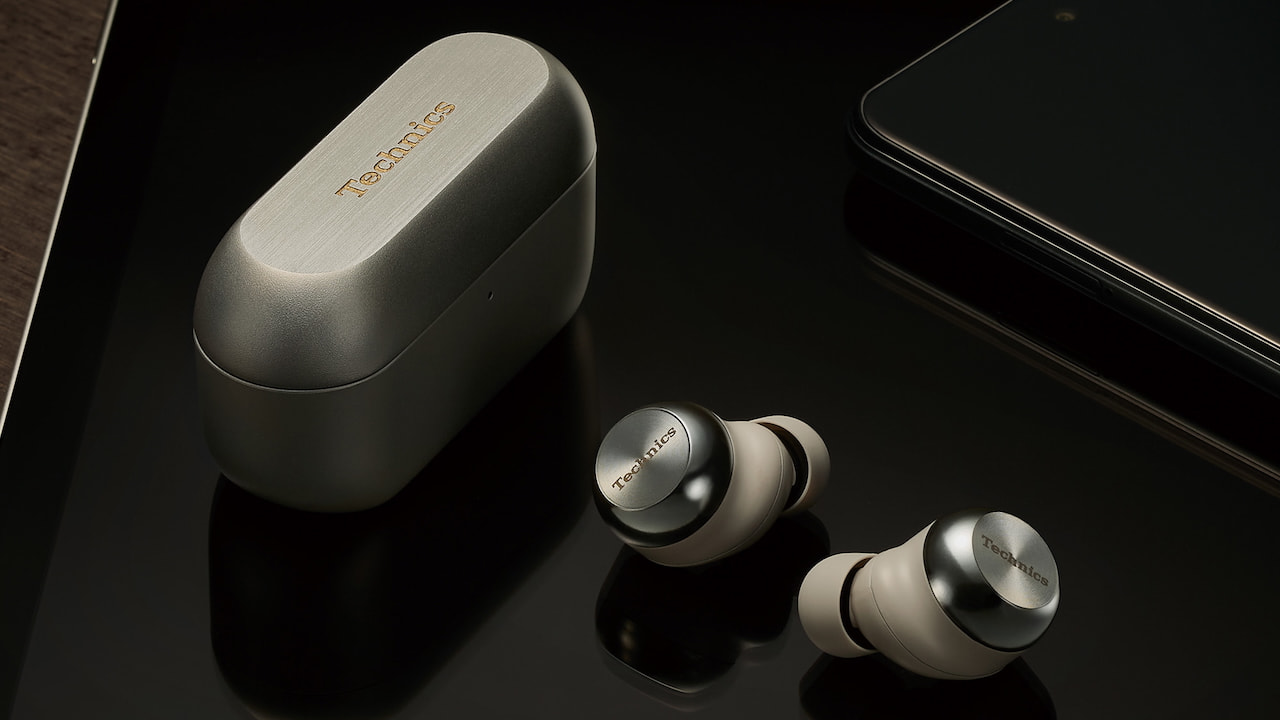
Technics’ EAH-AZ100 steps directly into the Bose/Sony/Sennheiser arena with stronger adaptive noise cancellation, a redesigned driver system, and one of the most detailed EQ implementations in any mainstream TWS: an 8-band adjustable EQ inside the Audio Connect app. The ANC is the real deal—significant background reduction on trains and flights without dulling the music in the process, which is where many competitors stumble. Call quality is also notably improved, thanks to triple mics per ear and Technics’ Voice Focus AI. Connectivity is state-of-the-art: Bluetooth 5.3, LE Audio, Auracast, LC3, LDAC for Android users, Google Fast Pair, and seamless tri-device auto-switching that actually works. The buds weigh just 5.9 grams each, come with five tip sizes, and are immediately comfortable for long listening sessions.
Sonically, the AZ100 earns the “audiophile alternative” label. The bass has more extension and definition than Sony’s WF-1000XM5, the mids are expressive rather than muted, and the overall presentation is more dynamic and engaging without turning into a bass-cannon cliché. Battery life is solid, ANC performance strong, and the only real slip is the ambient mode, which doesn’t pass quite enough outside sound to feel fully aware in busy environments. Still, with LDAC, LE Audio, excellent noise cancelling, and sound quality that punches well above the typical TWS curve, the Technics EAH-AZ100 is one of the strongest all-rounders in the premium category.
Go to full review | $299 at Amazon | Crutchfield
Bose Ultra Open Earbuds ($299)

The Bose Ultra Open Earbuds wrap around the ear like a cuff, leaving the ear canal untouched and giving listeners true situational awareness with minimal sound leakage. The spring-loaded polymer design keeps them secure and comfortable across different ear shapes, and the color range is unusually expansive for Bose—everything from classic black and white to carbon blue, chilled lilac, sunset iridescent, and even a Diamond 60th Anniversary Edition. Connectivity is strong with Bluetooth 5.3, AAC, SBC, AptX Adaptive, and Snapdragon Sound (future-friendly as more devices add support). They weigh 6.4 grams each, include an IPX4 rating, and offer battery life that can easily stretch through a full work week.
Bass is naturally limited by the fully open design, and at $299 you don’t get wireless charging or on-ear sensors—features that really should be standard. But for buyers who want a stylish, comfortable, all-day wearable with excellent situational awareness, solid sound within the limits of the format, and useful extras like an optional “immersive” surround mode, the Bose Ultra Open Earbuds are one of the strongest open-ear options currently available.
Go to full review | $299 at Amazon | Crutchfield
Sony WF-1000XM5 ($299)

Sony’s WF-1000XM5 builds on the XM4 by shrinking the earbuds, improving comfort, and upgrading nearly every core feature. Two proprietary processors drive stronger ANC performance, assisted by six microphones (three per ear, with two dedicated to ANC feedback). Low-frequency noise reduction is noticeably improved, and call quality gets a major lift—voices come through cleanly while background noise stays out of the conversation. Sony also adds a fun “Head Gesture” control that lets you accept calls by nodding your head. LDAC is still onboard for hi-res playback, and Sony’s 24-bit processing plus upgraded analog amplification deliver cleaner, more dynamic sound. The new Dynamic Driver X is larger than the XM4’s driver yet sits in a smaller earbud housing, giving the XM5 deeper bass, smoother mids, and less physical bulk.
Comfort is excellent straight out of the box, and the weight drop makes a real difference during long sessions. Battery life remains strong: up to 8 hours with ANC on (12 with ANC off), plus 16–24 additional hours from the charging case depending on ANC use. The WF-1000XM5 doesn’t radically redefine the formula, but it meaningfully improves noise cancellation, sound quality, and call clarity while becoming lighter and more comfortable. For Android listeners who rely on LDAC—and anyone who wants one of the best all-around ANC earbuds available—the XM5 remains a top-tier contender.
Go to full review | $299 at Amazon | Crutchfield
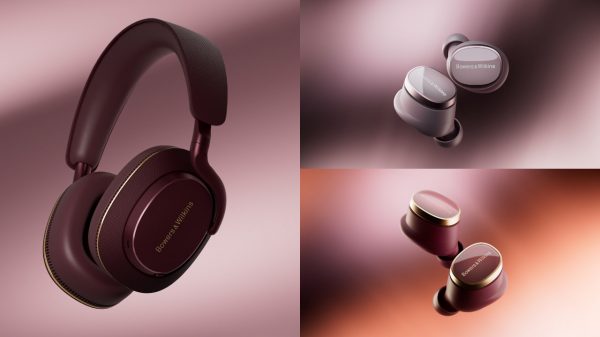
Bowers & Wilkins Pi8 ($499)

The Bowers & Wilkins Pi8 step in for the Pi7 S2 with real upgrades, starting with a cleaner, more pocketable charging case that stands upright and arrives color-matched to the earpieces, cable, and tips. Inside the box you get four pairs of tips (medium pre-installed), a 24-inch USB-C cable, and a USB-C–to–3.5mm cable for wired use. The IP54 rating and secure twist-and-lock fit make them gym-safe—just not canoe-safe. The big shift is the new 12mm carbon-cone dynamic driver, a major leap over the Pi7’s 9.2mm unit and tech borrowed from B&W’s larger headphones and speakers. Bluetooth 5.4 brings aptX Lossless, aptX Adaptive, AAC, and SBC, though early firmware shows some finicky connections. The app is basic but effective, the EQ works well, and comfort is excellent for most ears.
Battery life is solid, ANC does its job without dulling the sound, and the Pi8’s clarity and tonal balance push them ahead of most rivals. If sound quality is the priority, these belong at the top of the audition list, even if that ANC trails the class leaders and the price isn’t shy. Apple and Sony have ground to make up, but passive isolation still isn’t great and connectivity quirks may linger until updates arrive.
Go to full review | $499 at Amazon | Crutchfield
The Bottom Line
Bose isn’t taking a backseat to anyone — not this year, not with this lineup. The QuietComfort Ultra Earbuds Gen 2 remain the benchmark for everyday ANC performance, comfort, and call quality, and the Ultra Open Earbuds prove Bose can innovate outside the usual playbook without tripping over its own legacy. Technics continues its slow, deliberate march toward dominance with the EAH-AZ100, a model that blends excellent tuning with serious feature depth. Sony’s WF-1000XM5 still sits at the crossroads of performance and practicality with a mature app, strong ANC, and codec flexibility that keeps it relevant. Bowers & Wilkins’ Pi8 push the category forward with a more advanced driver design, upgraded materials, and a cleaner, more confident sound. And this is a segment where the heavy hitters are still grinding on the fundamentals: stronger ANC, better overall fidelity, more reliable apps, clearer call quality, and support for an ever-expanding list of Bluetooth codecs — LDAC, LC3, aptX Lossless, and whatever Apple decides to green-light next week.
Apple still holds a massive chunk of the wireless-earbud market — let’s not pretend otherwise. The gravitational pull of the ecosystem is real. But do the AirPods sound better than the models listed above? No. Not even close. And a few of the newer upstarts are already outpacing them on pure sonic quality. The truth is that wireless earbuds have become a commodity category. Unlike the high-end wireless headphone world — where prices are starting to flirt with mortgage-payment territory and $650 to $800 is the new “mid-tier” — earbuds aren’t crossing that line yet. Consumers will switch brands over $50 without blinking, and manufacturers know it.
Related Reading:
- AirPods Pro 3 vs. AirPods Pro 2
- Best Wireless Headphones: Editors’ Choice
- Latest True Wireless Earbuds News & Reviews
- View the Latest Editors’ Choice Awards


















ORT
November 9, 2022 at 12:43 am
I do no know how others think about these things but I can’t stand to have stuff in my ears. Silly, I know and hard to understand. So…
If they were INMs, In Nostril (cuz “nostril” reads/sounds a lot classier than “nose”) Monitors would they still succeed? Why not? They had the “Bone Fone” decades ago. Call is MucusMusic or Snotcandy or…or…I need to start volunteering at the local library. No. Really. 😉
I bought a pair by “Skullcandy” IEMs once. Gave them to a person on the street. Just walking (and you know how goofy I look walking) along and said to a random person, “Here ya go! Take ’em! Thanks!”
Fortunately not everyone is as sensitive about putting stuff in their ears as I am. This is borne out by taking a walk and counting the number of people with IEMs in their ears vs the number of people with their fingers up their nostrils.
IEMs win. Every time!
Thank the Buddha.
My mind is aglow with whirling transient nodes of thought…Time to view “Groundhog Day”. Again.
ORT
Vince
November 29, 2025 at 9:07 pm
Hello, I don’t see the point in spending so much on EIMs; what matters most is the music source. Get some CCA-C12s with a Wireless 5.4 kit and you’ll blow all the ones featured here out of the water, for less than $100.
OK, there will always be sheep who are convinced that this or that brand is better, and good for them if they can afford it. But ordinary mortals will already get a serious and uncompromising slap in the face if they listen to their wallet and buy CCA-C12s or equivalents in the world of Chifi.