

In This Article:
Introduction
As 2025 slides into 2026 and we all pretend our streaming queues aren’t overflowing with albums we meant to hear months ago, one truth in personal audio still stands tall: when you want uncompromised fidelity, you reach for a wire. Wireless ANC headphones have come a long way — better comfort, longer battery life, smarter features, and Bluetooth codecs that finally feel like they’re trying — but they still can’t match the transparency, detail retrieval, soundstage, and long-term reliability that dedicated audiophiles demand.
That’s why our Best Audiophile Headphones (Wired): Editors’ Choice 2025 remains a pillar of the eCoustics awards. Whether it’s the open-back legends that vanish and leave nothing but music, the studio monitors that tell you the brutal truth every time you hit play, or the closed-backs that isolate without crushing the soul of the recording, these are the wired headphones that defined 2025 for us and the ones we trust to carry their relevance well into 2026.
Best Open-Back Headphones
The open-back headphone landscape looks like a world tour with a passport full of stamps — and not a single weak stop along the way. From Brooklyn workshops to precision labs in Germany and Japan, from Romania’s handcrafted artistry to China’s cutting-edge manufacturing, and right back home to America’s DIY-to-boutique pipeline, the range of contenders between $400 and $6,000 has never been broader or more impressive.
Open-backs remain the benchmark for fidelity: the air, the staging, the transparency that makes you forget you’re wearing anything at all. And whether you gravitate toward dynamic drivers for their natural tone, planar-magnetic designs for their speed and grip, or electrostatics for their almost supernatural clarity, the truth is the same — the quality in this category has never been this good. These are the models that defined the year and continue to raise the bar for what open-back headphones can deliver.
HiFiMAN XV ($399)
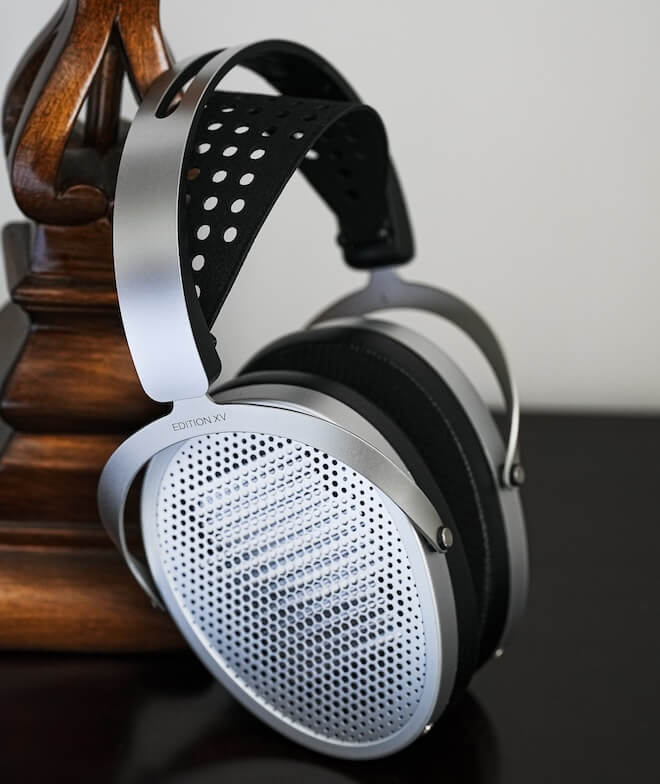
The HiFiMAN Edition XV stands out because it’s the least “planar-sounding” planar in the company’s lineup—in a good way. At $399, it keeps the expected HiFiMAN detail and speed but shifts toward a warmer, fuller, smoother presentation that sidesteps the sharpness and fatigue common to many planars. As the third-generation successor to the Edition X and Edition XS, it uses the new NEO Supernano diaphragm, now 40% thinner, to improve transient response and microdetail without pushing the treble into glare. The tuning and technical balance make it an easy all-day listener rather than a forensic tool.
HiFiMAN also reworked the comfort and ergonomics, adding a lightweight composite headband with rotatable hinges and plush memory-foam padding. At 452g, with 12Ω impedance, 92dB sensitivity, and a 8Hz–50kHz range, the Edition XV is efficient, sturdy, and simple to pair with portable or desktop gear. Its combination of a relaxed tonality, cleaner upper register, and strong technical performance makes it one of the more musically engaging open-back planars available in its price bracket.
Meze Audio 105 AER ($399)

The Meze 105 AER slots cleanly between the warmth of the 99 Classics and the cleaner, more revealing nature of the 109 PRO, but stays under $400 by ditching the wood cups and machined aluminum chassis. Despite the cost cuts, the build feels every bit like Meze: cast zinc alloy, manganese spring steel, and a self-adjusting PU leather headband that keeps pressure even. At 336 grams, it’s their lightest open-back yet, and the velour pads keep comfort high without clamping your skull like a budget gym headset. The AER name (“air” in Romanian) isn’t just branding—it’s a nod to the headphone’s easy, breathable presentation.
Inside, the reworked 50mm dynamic driver ditches the 109 PRO’s beryllium coating but holds onto the musicality, delivering a slightly lifted bass and sub-bass foundation that adds weight without muddying the mids. Specs land at 5Hz-30kHz, 42Ω, and 112dB SPL, making it simple to drive from portable gear while still rewarding better amps. Sonically, it’s open, full-bodied, and forgiving—more immersive than the new 99 Classics 2nd Gen, less surgical than the 109 PRO, and arguably the most balanced “everyday” Meze has built. Handmade, serviceable, and tuned for long, enjoyable listening, the 105 AER might be the most sensible value play in their entire lineup.
Meze Audio 105 SILVA ($499)

The Meze Audio 105 SILVA is a masterclass in design discipline—open-back headphones that look, feel, and sound like they should cost twice as much. Crafted with solid walnut earcups, a reinforced polymer frame, and PVD-coated zinc hardware, the SILVA balances strength and elegance with the precision of Meze’s higher-end models. The build is tight, flexible, and dead silent under pressure—no creaks, no corners cut. At its heart is a 50mm dynamic driver featuring a carbon fiber–reinforced cellulose composite dome and a copper-zinc stabilizer ring to control resonance and smooth out treble response. Rated at 42Ω impedance, 112dB sensitivity, and <0.1% THD, it’s effortlessly easy to drive and never feels gear-picky, scaling nicely from dongle DACs to serious desktop amps.
Sonically, the 105 SILVA walks a confident line between clarity, warmth, and precision. The bass is tight and textured rather than booming, the mids are natural, and the treble—while crisp—can edge toward brightness if paired with analytical sources. The dual-twisted Kevlar OFC cable feels premium and battle-ready, matching the rest of the headphone’s no-nonsense construction. At 354 grams, it’s comfortable enough for marathon listening sessions, with plush velour pads that breathe well and a headband that disappears once it’s on. The 105 SILVA doesn’t chase planar-level resolution, but what it does deliver—detail, build, and long-haul comfort—makes it a legitimate contender for best open-back under $500.
Go to full review | $499 at Amazon | Apos Audio | Crutchfield
Sendy Audio Aiva 2 ($599)

The Sendy Audio Aiva 2 refines one of the most distinctive planar-magnetic headphones under $1,000, elevating both performance and craftsmanship. Its 97 x 76mm planar drivers have been re-engineered with an ultra-thin 1-micron diaphragm and double-sided magnets, delivering faster transients, finer detail, and improved dynamics over the original. With an impedance of 32Ω and 96dB/mW sensitivity, it remains easy to drive, pairing well with portable DACs or desktop amps alike. The sound is clear, textured, and balanced, with a wide, coherent soundstage and excellent treble definition—though bass is more refined than thunderous, and the upper mids can get a touch hot at higher volumes.
Visually, the Aiva 2 is a stunner. The darker zebrawood cups, CNC-machined aluminum, and lambskin padding give it a luxurious, mature aesthetic, while the fish-scale open-back grille adds subtle flair. At 420 grams, it’s solid yet comfortable thanks to its contoured earpads and well-distributed weight. The included four-core 6N OCC cable is one of the best in the category—supple, beautifully braided, and topped with wooden splitters and metal strain reliefs. Accessories include a plush leather hard case, a hemp travel pouch, and a 4.4mm-to-3.5mm adapter, rounding out a package that feels premium from top to bottom. For those seeking artisan build quality and articulate planar sound without spending four figures, the Aiva 2 delivers in style—equal parts sonic finesse and visual indulgence.
Go to full review | $599 at Amazon
Audio-Technica ATH-ADX3000 ($1,099)

The Audio-Technica ATH-ADX3000 aims to deliver flagship-level performance at a price more people can actually reach, and for the most part it sticks the landing. This is a headphone built for listeners who want speed, clarity, and a wide-open soundstage rather than warmth or extra bass weight. Detail retrieval is superb, timbre is impressively natural, and the comfort level is exactly what you’d expect from a 280-gram open-back designed for long studio sessions. At $1,099, it’s not cheap—but considering it borrows core driver technology from the flagship ADX5000, it’s a compelling value for anyone who leans analytical but still wants an engaging, lifelike presentation.
The ADX3000 uses an open-back design that keeps airflow completely unrestricted, avoiding damping materials or acoustic tricks that might color the presentation. The 5–45,000 Hz driver is designed, manufactured, and hand-assembled in Audio-Technica’s Machida, Japan factory and benefits from the same engineering priorities as the ADX5000. Audio-Technica’s Core Mount Technology centers the voice coil within the housing, balancing the acoustic space in front of and behind the driver for improved imaging and spatial accuracy. A detachable 3-meter A2DC cable and an aluminum storage case round out the package, making the ATH-ADX3000 easy to live with at home or in the studio.
Go to full review | $1,099 at Amazon
Grado Signature S950 ($2,195)

The Grado Signature S950 marks a genuine evolution for the Brooklyn brand—one that trades brute character for nuance and emotional connection. Still instantly recognizable as a Grado, the S950 introduces meaningful refinements: a new 52mm “S” driver with a paper composite cone, rare-earth magnetic circuit, and a lightweight copper-plated aluminum voice coil that deliver improved transient speed, spatial depth, and detail retrieval. With 38Ω impedance and 115dB sensitivity, they’re easy to drive, yet scale beautifully with better gear.
Build quality is classic Grado with a modern twist: engraved aluminum gimbals, a stainless-steel height rod for greater stability, and a 50% thicker headband pad that finally makes long sessions genuinely comfortable. At 395 grams, they balance well on the head, though a touch more clamping force wouldn’t hurt. Sonically, the S950 shifts to a more balanced and mature tuning—the mid-bass through upper mids shine with rich texture and natural vocal timbre, while the top end feels smoother and less aggressive than Grado’s earlier models. The result is unmistakably Grado, but with newfound finesse: open, spacious, and deeply human. It’s the same Brooklyn soul—just dressed in a tailored suit.
Go to full review | $2,195 at Crutchfield
HiFiMAN HE1000 Unveiled ($2,699)

The HiFiMAN HE1000 Unveiled reimagines one of the company’s most iconic planar-magnetic headphones, stripping away the rear grille—literally—to improve airflow and reduce reflections. Once a flagship, now a “sub-flagship” beneath the Susvara, it still delivers world-class performance for the price. The hybrid magnet system combines tightly packed Stealth Magnets on the rear (with integrated waveguides) and wider spacing on the front side to minimize distortion and open up the soundstage. The result is an expansive, natural, and near-neutral signature with lifelike midrange clarity and effortless transparency, provided your amp has the muscle to back it up.
The HiFiMAN HE1000 Unveiled is a headphone many should reach for more than any other—and for good reason. It embodies the classic HiFiMAN tuning: dead-neutral bass, a gentle dip in the ear-gain region, and brilliantly extended treble without crossing into harshness. Where newer models like the Arya Unveiled and Edition XV have chased broader appeal with smoother highs, the HE1000 Unveiled keeps the sparkle alive while delivering a huge, holographic soundstage, razor-sharp imaging, and lightning-fast transients. It’s refined yet organic, with superb instrument separation and a cohesive tonal balance that never feels sterile. The sub-bass is polite, the treble can occasionally flirt with brightness, but it never loses musicality.
Comfort is top-notch, the magnetic covers are clever (if dust-prone), and while it’s fragile and heavily source-dependent, it stands as one of the most technically accomplished and emotionally engaging headphones you can buy around $3,000—airy, articulate, and alive.
Go to full review | $2,699 at Headphones.com | Apos Audio
Audio-Technica ATH-ADX7000 ($3,499)
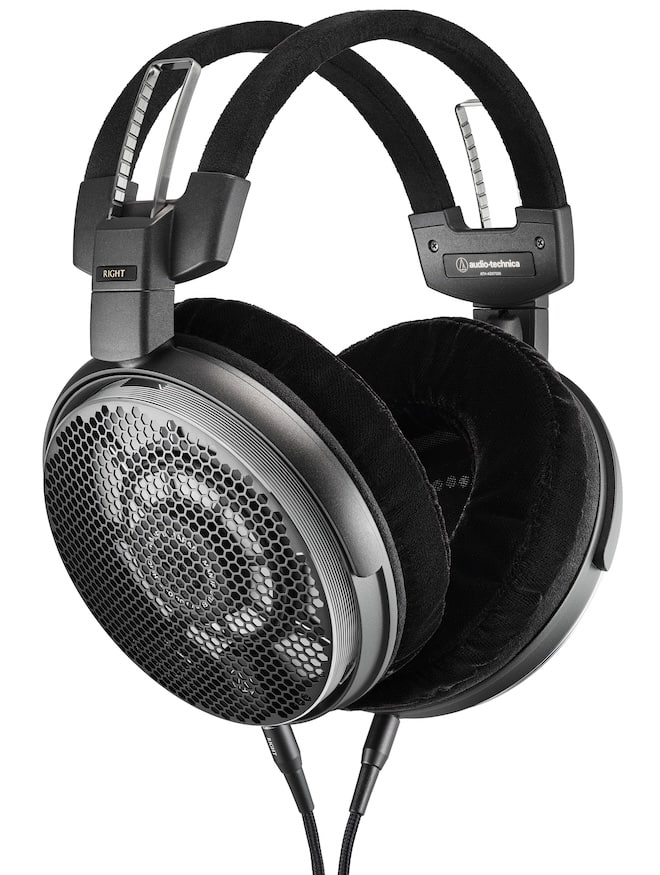
Audio-Technica didn’t reinvent the wheel with the ATH-ADX7000 — they rebuilt the entire axle. HXDT driver technology and a fully circular 58mm diaphragm mounted with micrometre precision give these headphones a level of control, texture, and detail that immediately separates them from the ADX5000 lineage. Core Mount Technology places the driver in the optimal acoustic position, improving airflow and lowering distortion in ways you can actually hear. And even with that deliberately high 490-ohm load (engineered for sharper transients and wider dynamic range), the ADX7000 isn’t punishing to drive thanks to a 100dB/mW sensitivity. At just 275 grams, they disappear the moment they touch your head, leaving behind a soundstage that’s startlingly open, tonally balanced, and capable of real visceral impact. The midbass bump is tasteful, the treble is disciplined, and the overall presentation feels like Audio-Technica flexing every engineering muscle they’ve got.
Are they flawless? No. The headband could use more padding, and at $3,499, some will wish the physical build looked as luxurious as the metal hard case they ship in. But none of that undermines why the ATH-ADX7000 earns its Editors’ Choice status. These are among the most technically complete and emotionally engaging wired headphones of the past decade — a rare mix of engineering innovation, reference-level refinement, and a dynamic presentation that actually delivers that elusive “wow” moment. In a market where many flagship headphones coast on hype, the ADX7000 shows its work.
Go to full review | $3,499 at Crutchfield | Apos Audio
Audeze CRBN2 Electrostatic Headphones ($5,995)

The Audeze CRBN2 isn’t just another flagship—it’s a statement piece from a company that treats headphone design like applied physics. Born from Audeze’s work on MRI-safe technology, the CRBN2 uses a carbon nanotube–infused diaphragm that eliminates magnetic materials entirely, giving electrostatic performance a radical new foundation. The most significant evolution here is SLAM (Symmetric Linear Acoustic Modulator), a passive system that delivers up to a 6dB boost between 20–30Hz, addressing the one weakness electrostatics have always carried: bass that felt more polite than physical. The result is shockingly tactile low-end extension without sacrificing the speed, transparency, and microdetail that make the category legendary.
Weighing 480 grams, the CRBN2 remains comfortable, balanced, and impeccably built, with slightly deeper cups that expand soundstage and ergonomics alike. The sonic presentation is effortlessly detailed, lightning-fast, and harmonically rich, combining the spatial realism of electrostatics with the punch and control of top-tier planar designs. It’s ruthlessly revealing but never sterile—music simply breathes through it. Expensive? Absolutely. You’ll also need a proper electrostatic amplifier, but once heard, it’s hard to go back. The CRBN2 isn’t just one of the best electrostatics ever made—it’s one of the best headphones ever made, period.
Go to full review | $5,995 at Audeze
Best Closed-Back Headphones
Closed-back headphones no longer live in the shadow of their open-back counterparts — this corner of the market has become a global arms race, with standout models arriving from China’s rapidly advancing factories, America’s boutique builders, Germany’s engineering powerhouses, and Japan’s precision-obsessed artisans. From affordable excellence to true flagship craftsmanship, the category now spans a wide range of prices and design philosophies, and the performance ceiling keeps rising.
What defines modern closed-backs isn’t isolation alone. It’s the ability to deliver accuracy, punch, spaciousness, and real musicality without leaking half the sound into the room. Dynamic, planar-magnetic, hybrid — every driver technology is represented, and every region is pushing its own interpretation of what a reference closed-back should be. The result is simple: the quality has never been stronger, and the options have never been this compelling.
FiiO FT1 ($165)

The FiiO FT1 is an easy standout in the budget wired category thanks to its combination of solid wood construction, large drivers, and genuinely thoughtful comfort. The ear cups are made from FAS-grade American black walnut, giving each pair a unique grain pattern while naturally reducing resonance and adding a bit of visual flair you simply don’t see at this price. The breathable fabric pads stay cool during long sessions, and the FT1 uses the same ergonomic, well-balanced headband design found in FiiO’s higher-end FT3 and FT5, making it comfortable enough for all-day use. Two cables come in the box—3.5mm SE and 4.4mm balanced—which is rare at this price and makes the FT1 plug-and-play with almost anything.
Inside, the FT1 packs second-generation 60mm dynamic drivers, much larger than what most closed-backs offer in this class. The result is deeper, more confident bass, clean midrange clarity, and treble that’s detailed without turning sharp. Specs land at 10Hz–40kHz with 32Ω impedance, making them easy to drive from portable sources while still scaling with better gear. Isolation is strong, build quality is excellent, and the sound quality—especially the clarity and low-end authority—is hard to match at the price. If you want a well-built, great-sounding closed-back that looks far more expensive than it is, the FT1 is one of the best value plays in 2025.
Learn more | $164.99 at Amazon | Apos Audio
Meze Audio 99 Classics 2nd Generation ($349)
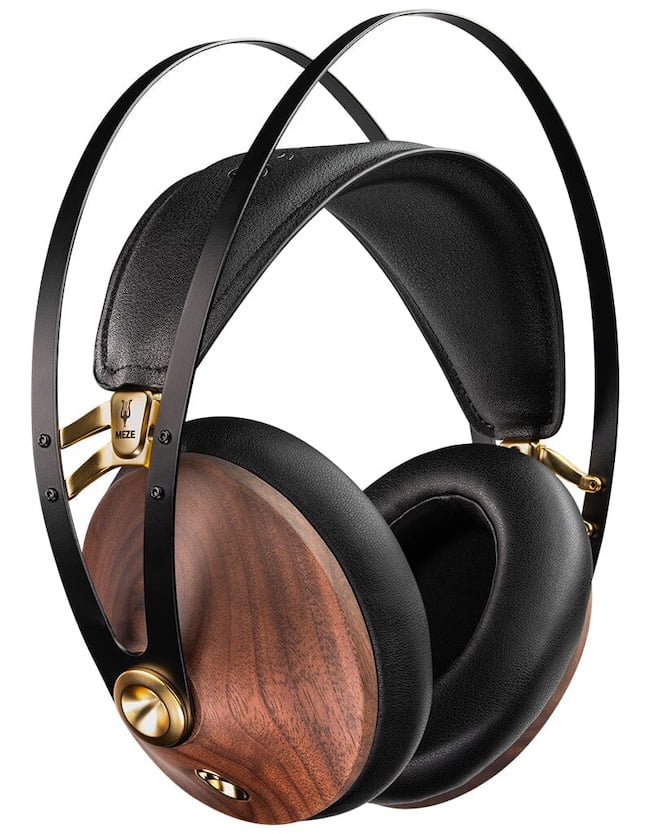
The Meze Audio 99 Classics 2nd Generation takes everything beloved about the original—its warmth, craftsmanship, and comfort—and sharpens it with modern precision. Engineered to tighten bass control, smooth the mids, and extend the treble, Meze reworked nearly every element: CNC-machined walnut cups, refined baffle geometry, enlarged ear cups, and advanced driver matching algorithms that ensure consistency from left to right. The result is a more linear, balanced sound that still carries Meze’s signature musicality and rich timbre.
Weighing 290 grams, the 99 Classics 2nd Gen remains supremely comfortable, thanks to its self-adjusting spring-steel headband and vegan leather ear pads, which now improve both passive isolation and acoustic stability. It’s easy to drive from portable DACs or desktop amps and includes upgraded connectors, a USB-C dongle, and a 6.3mm adapter. Some may miss the original’s extra warmth and bass heft, but this update feels like the grown-up version—refined, sustainable, and built to last. A reminder that evolution, when done right, doesn’t erase character—it perfects it.
Go to full review | $349 at Crutchfield | Apos Audio
Denon AH-D5200 ($799)

The Fostex TH610 has long been a platform for modders, with ZMF and Lawton building entire ecosystems around its tuning and wooden cup variants. With the TH610 now discontinued, buyers looking for that classic biodynamic character are left choosing between Denon’s current lineup or the E-MU derivatives. The E-MU Teak remains the most affordable entry point: $450 for the fixed-cable version or $500 for the removable-cable model. Given that the Denon AH-D5200 typically sells for at least $100 more, the E-MU Teak presents the stronger value for listeners wanting the traditional Fostex-style sound at a lower cost.
The Denon AH-D5200, however, remains the more polished, fully supported option. It features 50mm FreeEdge dynamic drivers housed in Zebrawood ear cups, offering a 5–40,000 Hz Hi-Res certified response and Denon’s signature smooth, extended tonality. The design uses a diecast-aluminum hanger, engineered-leather headband, and soft memory-foam pads for long-term comfort. The headphone includes a detachable 3.5mm cable, a 6.3mm adapter, and a carrying pouch, and supports Denon’s app for additional device integration. As a closed-back with Japanese-made drivers and a stable build platform, the AH-D5200 offers a refined take on the FreeEdge biodynamic sound, while the E-MU Teak delivers a more cost-efficient path to a similar sonic profile.
Dan Clark Audio Noire X ($999)

The Dan Clark Audio Noire X is a masterclass in refinement, taking the beloved Aeon 2 Noire and pushing it firmly into next-gen territory. It’s the most affordable DCA headphone to feature the brand’s Acoustic Metamaterial Tuning System (AMTS)—a microscopic labyrinth of channels that tames treble reflections and kills high-frequency harshness for a smoother, fatigue-free listen. Inside, upgraded 62x34mm planar magnetic drivers with V-Planar knurling deliver lower distortion, better dynamics, and more uniform performance, while the Gorilla Glass 3 cups add durability (and a constant need for a microfiber cloth).
With 13Ω impedance and 94dB/mW sensitivity, the Noire X demands a capable amp to truly shine, rewarding good gear with exceptional imaging, balance, and sub-bass control that follows the Harman 2018 target closer than most headphones under $1,000. The foldable design, Nitinol headband, and Alcantara pads keep it light, comfortable, and built for real-world use. Downsides? Glued-on earpads make replacements a pain, and the Hirose connectors aren’t exactly cable-swap friendly. Still, the Noire X offers one of the best closed-back soundstages in its class—precise, dynamic, and meticulously engineered, with just enough sparkle to remind you that audiophile listening should never be boring.
ZMF Vérité Closed ($1,999)

The ZMF Vérité Closed sits at $1,999.99 and remains one of the strongest values in the high-end closed-back category, especially with its recent price drop. While the Caldera offers a modest performance jump, the cost difference is substantial, making the Vérité Closed the more practical choice for listeners seeking top-tier resolution, staging, and craftsmanship without crossing into flagship pricing. Its design uses airflow porting and a proprietary damping system to create a deeper and wider presentation than most closed-backs, preserving the speed and character of the Vérité Open while maintaining the isolation of a sealed design. The current stock wood is Sapele, paired with black rods, chosen for its stability, acoustic behavior, and the distinctive chatoyance ZMF is known for.
The headphone uses a vapor-deposited beryllium driver with a 300Ω impedance and ~99dB/mW sensitivity, offering scalability with mid-to-high-power desktop amplifiers. Weight is 500g ±25g, and the upgraded magnesium chassis—painted rather than anodized—may show wear over time. Included accessories cover daily use and fit adjustments: ZMF’s stock braided cable, Auteur pads installed, a secondary earpad set, owner’s card, clamshell case, and a lifetime driver warranty. As a closed-back with a natural, three-dimensional stage and ZMF’s trademark material quality, the Vérité Closed remains a compelling option for listeners who want isolation without sacrificing spatial performance or tonal refinement.
HiFiMAN Isvarna ($2,899)

The HiFiMAN Isvarna isn’t just another high-end headphone—it’s a hybrid powerhouse, pairing a planar magnetic driver for speed and clarity with a dynamic driver for bass weight and impact. The result is one of HiFiMAN’s most ambitious designs to date: a semi-closed-back headphone that delivers visceral slam without smearing the details. With a 16Ω impedance, 93dB/mW sensitivity, and a 6Hz–60kHz frequency range, the Isvarna needs a serious amplifier to perform at its best—but once properly driven, it combines planar precision with dynamic punch in a way few headphones can.Tonally, it’s lively and rich, leaning into a W-shaped tuning that keeps bass authoritative, mids textured, and treble energetic yet controlled. It’s not a sterile studio tool—it’s audiophile fun done right. Comfort is excellent for long sessions, and the new ear cup design—clearly inspired by the Sony MDR-R10 and HiFiMAN’s own R9—adds a touch of heritage to the engineering showcase. Yes, it leaks sound, and yes, any tap on the cups or gimbals can travel straight to your ears, but the Isvarna’s hybrid execution feels genuinely special. Pricey? Sure. But for those chasing a new frontier in hybrid headphone design, this one delivers both the science and the soul.
Go to full review | $2,899 at Apos Audio
Best Studio Headphones
Studio headphones follow a very different mandate. Accuracy rules the day. Tonal balance, midrange honesty, and mix clarity matter far more than swirling soundstage effects, and the build has to endure the grind of long sessions, clumsy hands, and the occasional coffee spill. These aren’t lifestyle products. They’re instruments for people who need to know exactly what’s happening in a mix every single time they hit play.
And the competitive landscape has changed dramatically. Sony may have written the old rulebook, but Audeze and beyerdynamic are eating everyone’s lunch now. Audeze, in particular, has dragged its planar magic into the studio world, bringing the transparency, speed, and low distortion that made its audiophile models so successful. Those traits are creeping into pro workflows, and engineers aren’t complaining. With heavyweight entries from the US, Germany, and Japan, the studio category has never been deeper. The mission is still accuracy above all, but the level of refinement available today would have shocked the recording world a decade ago.
Beyerdynamic DT 770 PRO X ($229)

The Beyerdynamic DT 770 PRO X modernizes a studio legend without losing its unmistakable DNA. Built like a tank and fitted with velour pads that feel like a Bavarian spa for your head, it upgrades the classic with STELLAR.45 drivers (extending response to 40kHz), a detachable Mini-XLR cable, and a lighter clamping force that makes marathon sessions painless. Power handling jumps to 210mW, and the new 48-ohm impedance means it plays well with anything—from a dongle DAC to a full-size interface.
Sound-wise, it’s neutral, open, and honest, with excellent passive isolation and a surprisingly spacious stage for a closed-back design. The included cable is sturdy but not exactly premium—functional rather than fancy—but with replaceable pads, headband, and cabling, longevity is a given. For under $200, the DT 770 PRO X delivers studio-grade precision with soul—the kind of headphone you can trust on a flight, in a mix room, or anywhere Amy Winehouse might dare you to light her cigarette.
Go to full review | $229 at Amazon | Crutchfield
Audeze MM-100 ($399)

Audeze’s MM-100 carries the same “built like a tank, tuned like a tool” DNA as the MM-500, just at a far friendlier $399. The construction is exactly what you’d expect from Audeze at this price: aluminum, steel, and magnesium everywhere, with a Maxwell-style headband that ditches traditional height sliders for a fixed yoke, leather suspension strap, and three-hole adjustment system. At 475 grams, it’s only slightly lighter than the MM-500, but the weight is well-managed and the durability is pure studio-grade. The recessed jacks accommodate the reversible single-entry 3.5mm TRS cable on either cup—handy for left- or right-side setups—and the included 4-wire braided cable terminates in a proper 1/4-inch plug. This is a headphone built for real work, not coffee-shop cosplay.
Under the hood, the MM-100 uses 90mm planar drivers made on the same production line as the LCD-5 and MM-500, complete with N50 magnets and Uniforce diaphragms. Specs land at 20Hz–25kHz, 18Ω, and 98dB/mW, making them easy enough to drive while still scaling with good interfaces or amps. Sonically, they’re not perfectly flat, but they reveal mix issues with enough honesty to earn their studio label—punchy low end, solid clarity, and excellent extension. Some competitors edge them out in timbral accuracy or top-end refinement, but at this price nothing matches the combination of planar speed, durability, and near-neutral tuning. For engineers who can’t justify MM-500 money—or home listeners who want a neutral-ish, reference-leaning over-ear without sacrificing build—this is the Audeze sweet spot.
Go to full review | $399 at Amazon | Crutchfield
Beyerdynamic DT 1770 Pro MKII ($699)
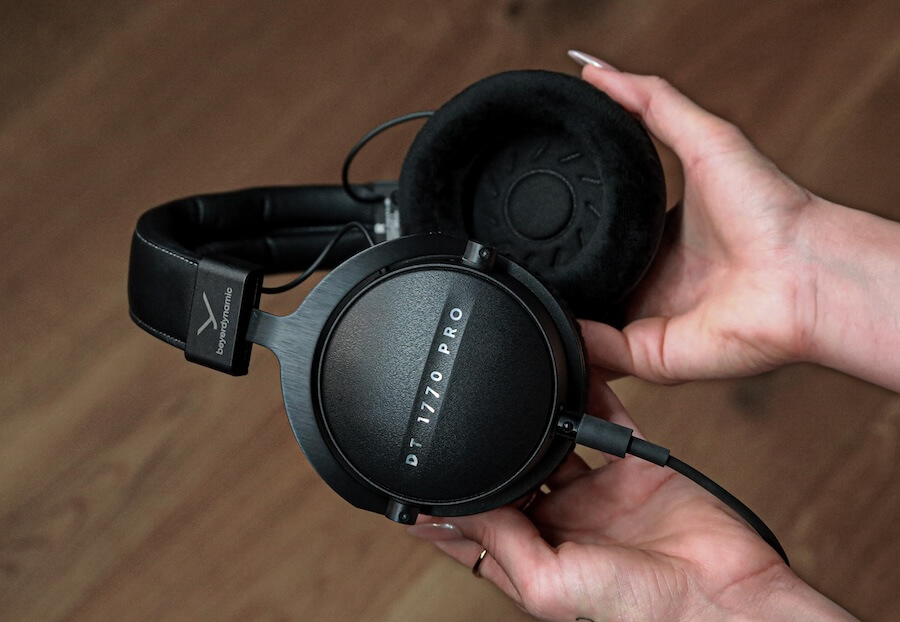
The Beyerdynamic DT 1770 Pro MKII refines a studio legend with subtle but meaningful upgrades. Still proudly Made in Germany, this closed-back workhorse now features TESLA.45 dynamic drivers, a lowered 30Ω impedance, and a 95dB sensitivity, making it far easier to drive from modern interfaces, DAPs, or even portable DACs. Build quality remains classic Beyerdynamic—tank-like but comfortable, with replaceable parts and two sets of ear pads (velour and vegan leather) included in a rugged hard-shell case.
Weighing 377 grams, it’s slightly lighter than its predecessor yet delivers a more textured, balanced, and refined sound. The lower impedance broadens versatility, while the closed design offers solid passive isolation ideal for both studio tracking and home listening. The soundstage isn’t massive, and the 3-pin XLR connector limits balanced cable swaps without modding, but overall, the DT 1770 Pro MKII remains a studio staple reborn—neutral, dynamic, and built to survive decades of daily use.
Go to full review | $699 at Amazon | Crutchfield
Beyerdynamic DT 1990 Pro MKII ($699)

Beyerdynamic ships the DT 1990 Pro MKII with everything a studio engineer could reasonably want: two pad sets (velour and vegan leather), a 3-meter straight cable, a 5-meter coiled cable (both 3-pin mini-XLR to 3.5mm), a 6.35mm adapter, and a hard-shell transport case. The design stays true to the original DT 1990—same cup size, same gimbals, same headband—but the grille has been reworked to increase airflow. Where the first model used a spaced-out “3-2-3-2-3-2-1” vent pattern, the MKII adds five tighter “3-2” rows, follows them with two “2-1” rows, and finishes with a single vent at the top and bottom. Combined with a new glossy finish and the familiar mix of DT 1990 and DT 900 Pro X styling cues, the MKII looks—and feels—ready for a lifetime of work. At 376 grams, it’s only 5 grams heavier than the original.
Inside, the shift to the new TESLA.45 driver is the headline. It’s still a 45mm dynamic driver with high-flux magnets, but nearly everything else is redesigned. The older 250-ohm, 102dB/mW driver has been replaced with a far more source-friendly 30-ohm, 94dB/mW version that doesn’t require a brute of an amp. The tuning stays near-neutral but remains engaging, and the MKII takes EQ exceptionally well. The treble rise around 9kHz will be a sticking point for some listeners, and yes, it’s pricier than a few mid-level competitors. But at $599—with this level of build quality, comfort, airflow improvements, and a more flexible driver—the DT 1990 Pro MKII remains a professional-grade tool that easily earns its place on both studio desks and home rigs.
Go to full review | $699 at Amazon | Crutchfield
Audeze MM-500 ($1,699)

Audeze designed the MM-500 to survive actual studio life, not influencer desk décor, and the build makes that clear immediately. The $1,699 flagship studio model arrives in a hard case that could double as a blunt weapon, with foam cutouts that immobilize every component. The headphones themselves are classic Audeze industrialism: heavier-gauge aluminum and steel throughout the gimbals, rods, cups, and headband, plus reinforced hinges and upgraded micro-XLR connectors built to withstand constant plugging and unplugging. At just under 500 grams, they’re no featherweights, but the wide leather suspension strap keeps the weight distributed well enough for long sessions. Even the driver bars follow the black-and-grey aesthetic, and the included 20-AWG OFHC cable feels every bit as overbuilt as the rest of the package. This is a tool designed to live on a studio desk, get knocked over, get grabbed mid-session—and keep going.
Sonically, the MM-500 leans more neutral and studio-honest than the warmer LCD-X, which still carries more of Audeze’s legacy house sound due to its larger 105mm driver and deeper pads. It won’t match the LCD-4MX in mid-bass richness, presence, or micro-detail—nor should it at double the price—but it delivers the kind of image precision, midrange clarity, and EQ responsiveness engineers actually need. The tuning is detailed without turning brittle, dynamic without exaggeration, and resolving enough for mixing or mastering without requiring exotic amplification. For professionals (or serious listeners) who want durability, honest tonality, and top-tier build without jumping into ultra-flagship territory, the MM-500 remains one of the smartest—and most reliable—studio headphone investments you can make.
Go to full review | $1,699 at Amazon | Crutchfield
The Bottom Line
If there’s a single takeaway from this year’s guide, it’s that wired headphones aren’t just surviving in a wireless world — they’re thriving. Open-back models continue to set the standard for transparency and spatial realism. Closed-backs have leveled up with global competition and serious engineering muscle. Studio headphones are sharper tools than ever, with Audeze and beyerdynamic pushing planar accuracy and pro-grade durability into territory that used to be unthinkable.
Across price brackets and across continents, the quality ceiling keeps rising. Whether you’re a music lover chasing immersion, a commuter who needs isolation without sacrificing fidelity, or a producer who demands ruthless honesty from your gear, there has never been a better or more diverse moment to invest in wired headphones. The tech is stronger, the tuning philosophies are more mature, and the choices are finally wide enough to match the way people actually listen.
Related Reading:
- Best Dongle DACs: Editors’ Choice
- Best Portable DAPs: Editors’ Choice
- Best Wireless Headphones: Editors’ Choice
- Latest Editors’ Choice Awards























Ian White
November 15, 2021 at 1:19 pm
The Meze Empyrean got shafted.
WJ
November 15, 2021 at 4:28 pm
Love the Empyrean but side by side with the LCD-5, I gotta go Audeze. I haven’t had an Elite yet to try and that may well outclass the LCD, time will tell.
WJ
Ian White
November 15, 2021 at 4:52 pm
You get to play with all of the really nice toys.
I’ll just edit and pretend to listen from afar.
Ian White
Freddy Krueger
July 30, 2022 at 2:08 pm
Didn’t anyone find the old xm3 in-ears a bit ”digital” sounding? Compared to the bowesr pi7 or m&d mw08.
Are the new one xm4 less artificial sounding?