

Romanian manufacturer Meze Audio has never been content to play in just one lane. With the introduction of the STRADA, the company continues to build one of the most balanced headphone portfolios in the high-end market, offering both planar magnetic and dynamic driver designs across open-back and closed-back categories.
And that matters, because the $500 to $1,000 headphone segment has never been more competitive. Buyers today are staring at an intimidating wall of options from Grado, Focal, Denon, HiFiMAN, Dan Clark Audio, Beyerdynamic, Audeze, and Sennheiser — all fighting for the same ears, the same wallets, and the same shelf space.
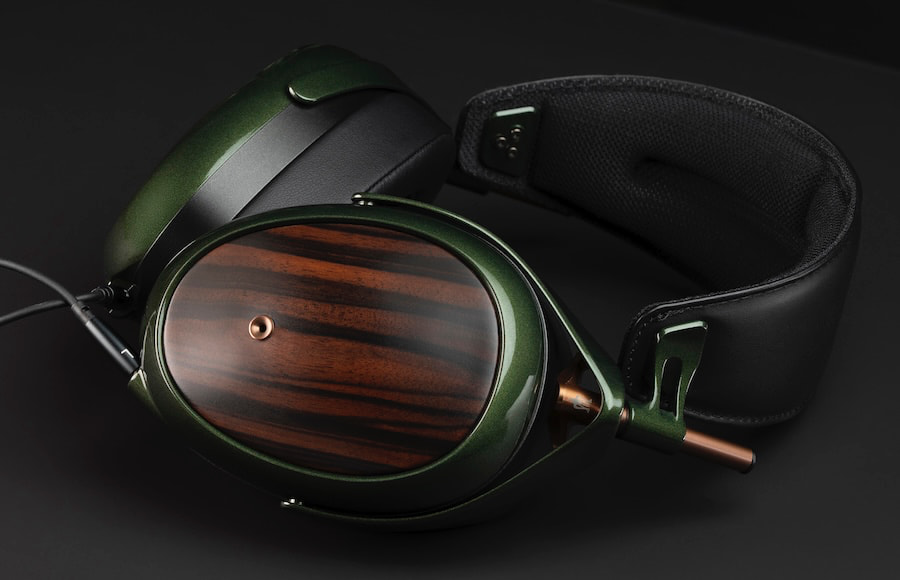
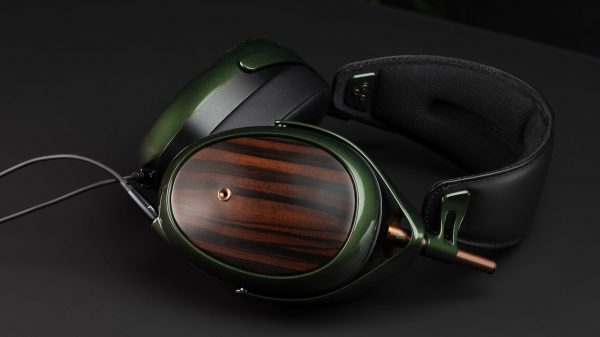
What has consistently allowed Meze to stand apart is not hype, but execution: modern, practical industrial design that looks like nothing else in the category, is engineered for long-term durability, and is built to be serviced rather than discarded. Add class-leading comfort, serious driver engineering, and sound quality that rarely feels like a compromise, and the brand’s appeal becomes easy to understand. The STRADA’s earcups are genuinely stunning — more like fine furniture than consumer electronics, and not something you normally see at this price point.
It’s also worth noting that Meze’s most recent releases — including the 99 Classics (2nd generation), 105 Silva, and POET — have been, let’s say, polarizing within parts of the Head-Fi community. Different strokes for different folks. And honestly, that’s healthy. If everything sounds the same and the differences are reduced to microscopic shifts in tonal balance, why bother?
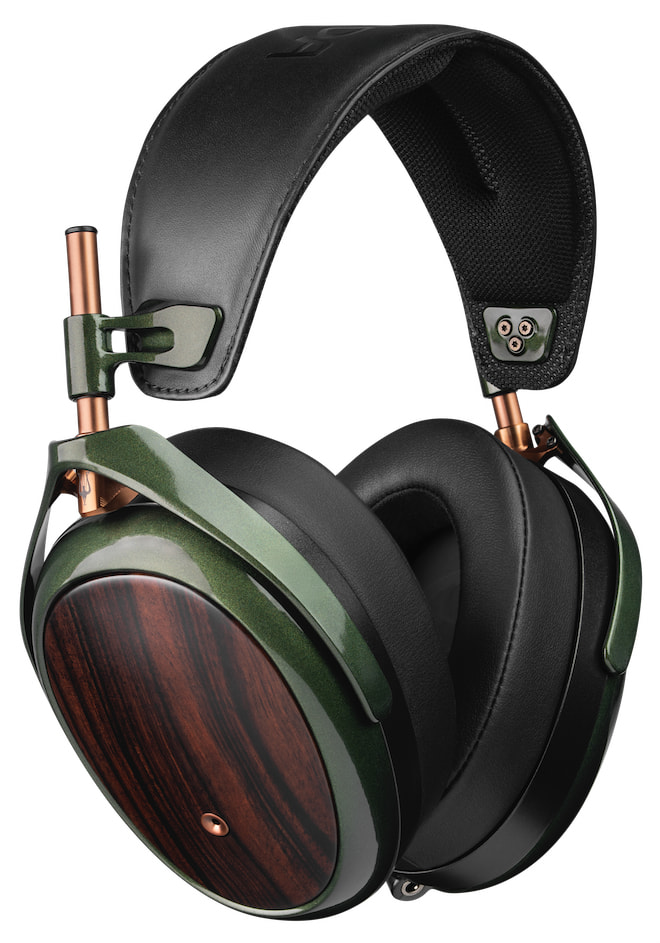
At $799, the STRADA steps into this knife fight with purpose. Closed-back, dynamic, and built for real-world listening, it promises isolation, control, and musical engagement without sacrificing refinement.
The question is simple: in a category this crowded, can STRADA still make itself heard?
Sound Tuning and Engineering Priorities Behind the Meze STRADA
With STRADA, Antonio Meze and his team are clearly aiming for a controlled, balanced tuning rather than a “wow factor” sound that only impresses for the first ten minutes. The published voicing points to a mild bass lift for weight and impact, a neutral midrange intended to preserve vocal and instrumental timbre, and a smooth, extended treble that emphasizes detail without crossing into fatigue. In other words, this is designed to be an all-rounder: engaging enough for casual listening, but linear and transparent enough for more critical sessions.
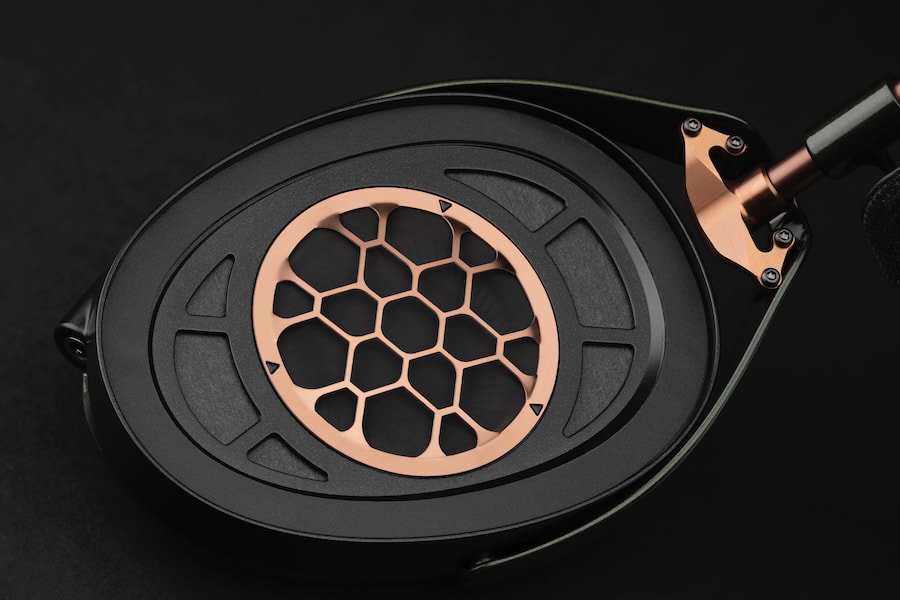
The technical specifications reinforce that intent. A 50 mm dynamic driver working across a wide 5 Hz to 30 kHz range suggests an emphasis on low-frequency extension and high-frequency headroom, while a low total harmonic distortion figure of under 0.1 percent at 1 kHz indicates a focus on clean, controlled reproduction.
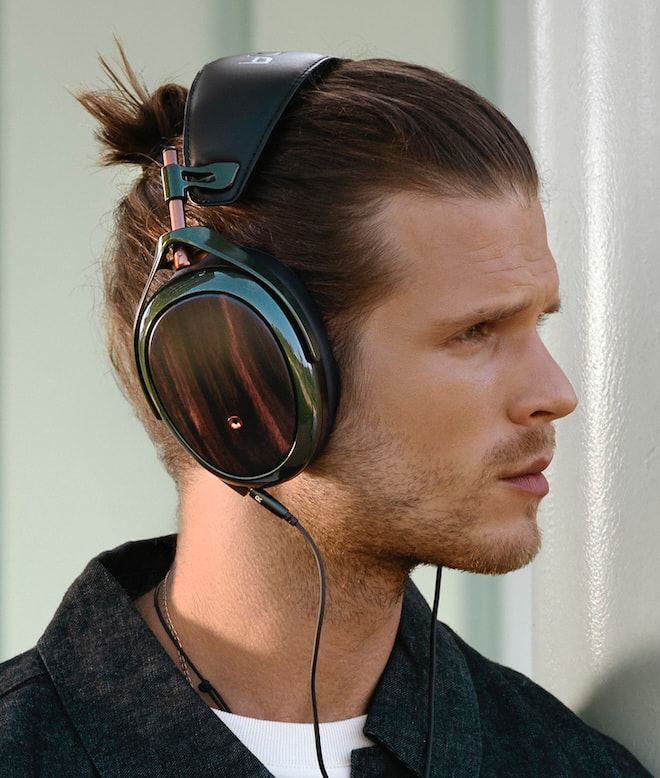
With a 40-ohm impedance and 111 dB sensitivity, STRADA is not a difficult load and should reach healthy listening levels from portable players, Dongle DACs, and integrated desktop gear without requiring a high-power amplifier. At 330 grams, it also sits on the lighter side for a full-size, closed-back design, supporting Meze’s long-standing priority on comfort for extended listening.
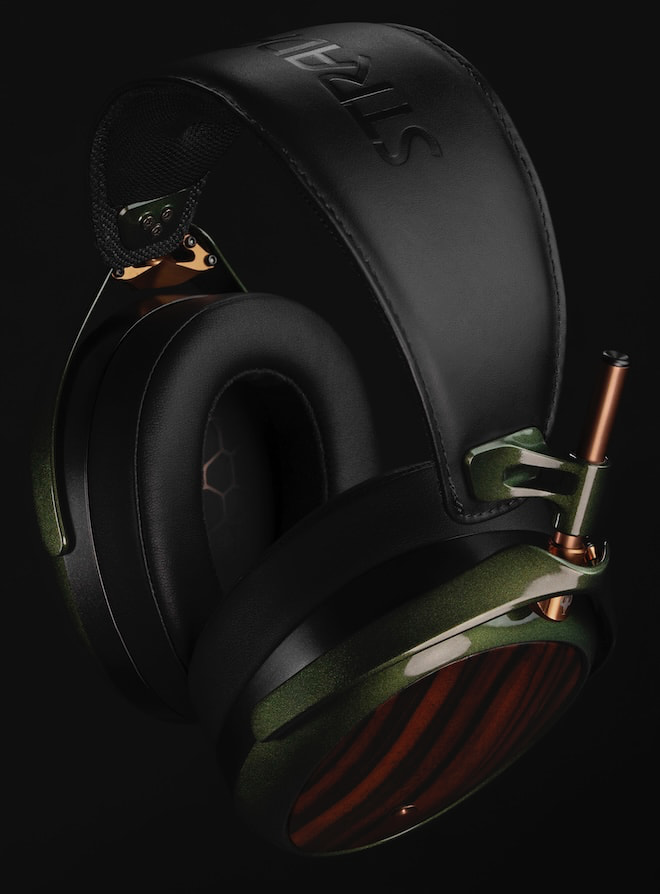
Meze STRADA Driver Technology and Acoustic Engineering
At the core of the STRADA is Meze’s latest dynamic driver platform, first seen in the 109 Pro and now specifically retuned for closed-back loading. The design focus here is not novelty, but control: improving clarity, transient speed, and long-term stability under real-world listening conditions.
The diaphragm uses a carbon fiber-reinforced cellulose composite dome to balance low mass with rigidity, helping to preserve high-frequency detail while keeping distortion in check. Surrounding this is a semicrystalline polymer torus coated with beryllium using a Physical Vapor Deposition (PVD) process, increasing stiffness and improving transient response. Precision-cut 45.5-degree surface grooves are applied to further manage diaphragm behavior and reduce resonant breakup.
A copper-zinc alloy stabilizer ring encircles the membrane to absorb micro-vibrations and improve mechanical damping, contributing to the STRADA’s low distortion performance.
This level of driver engineering is matched by equal attention to the physical structure that supports it, leading directly into the headphone’s chassis design, materials, and long-term serviceability.
Design, Comfort, and Build Quality of the Meze STRADA
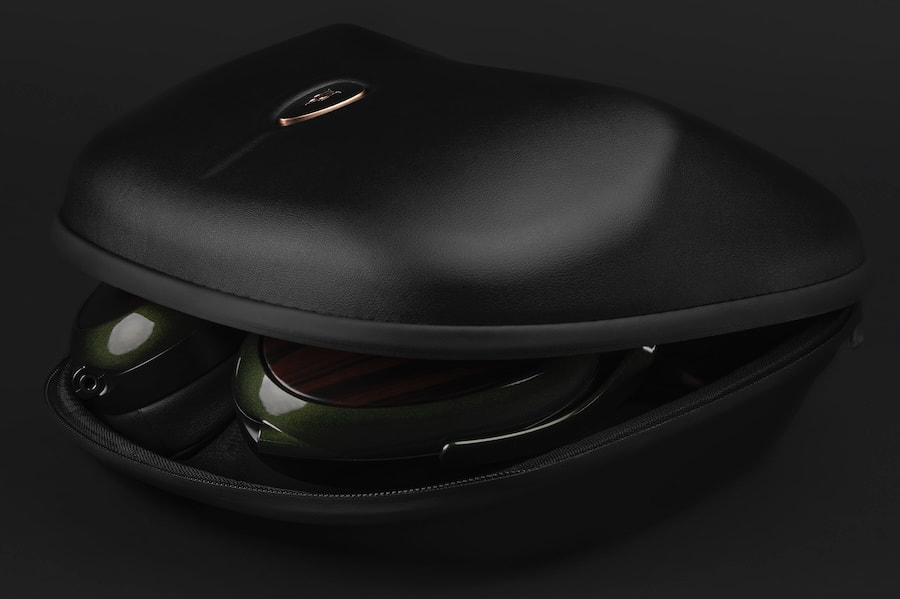
Borrowing the core structural approach of the LIRIC, STRADA uses a closed-back chassis optimized for dynamic driver operation rather than planar magnetic loading. The construction emphasizes low mass, structural rigidity, and long-term wearability, with every pair assembled from premium materials and tuned for a secure, natural fit.
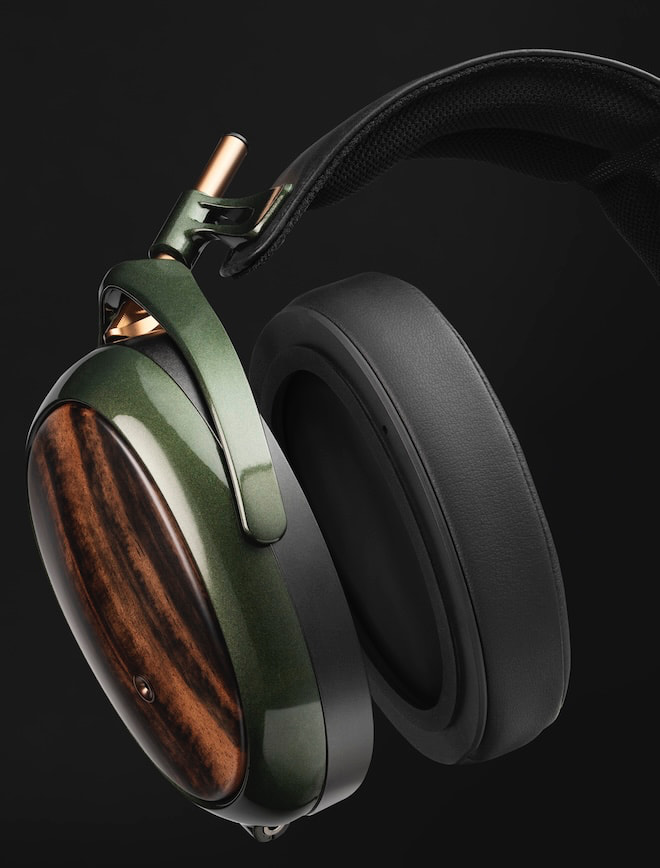
The ear pads attach via a magnetic mounting system that allows quick removal and consistent sealing, which is critical for maintaining bass response and isolation. The ear cups are formed from Macassar ebony, a dense hardwood chosen not just for appearance, but for its mechanical stability and acoustic properties. Each set shows natural variation in grain and color, giving the headphones a more refined, furniture-grade aesthetic than is typical at this price point.
Comfort remains a core design priority. The soft-padded headband uses a symmetrical cushion pattern to distribute pressure evenly, improve airflow, and reduce heat buildup during extended sessions. The magnesium frame is finished in a deep green, multi-layer paint process with a subtle metallic sheen, balancing durability with a restrained, modern visual identity.
The result is a closed-back design that prioritizes comfort, serviceability, and material quality as much as sonic performance without drifting into cosmetic excess.
The Bottom Line
The Meze STRADA is not trying to reinvent what a closed-back headphone is supposed to be. It is trying to execute the idea properly.
What makes it stand out is not a single headline feature, but the totality of the design: a modern, serviceable chassis derived from the LIRIC platform, genuinely premium materials including Macassar ebony ear cups, a lightweight 330-gram frame, and a carefully engineered dynamic driver that traces its lineage back to the 109 Pro but is tuned specifically for closed-back control.
On paper, the 40-ohm impedance and 111 dB sensitivity suggest that STRADA should be easy to drive from portable sources and modest desktop gear, without the need for a high-power amplifier. We’ll confirm how well that holds up in real-world use in our full review next week.
As with any closed-back design, there are trade-offs. Isolation and bass control come at the expense of ultimate soundstage width and air compared to open-back alternatives. STRADA is not meant to replicate the openness of a large planar or reference open-back dynamic. It is meant to deliver focus, intimacy, and consistency in environments where noise, leakage, and practicality matter.
These are headphones for listeners who want serious sound without committing to a desk-bound, open-back setup. For those who value comfort, build quality, isolation, and a balanced, musically engaging presentation in the $800 class, STRADA enters a crowded field with a clear, well-defined purpose.
Where to buy: $799 at Meze Audio
Related Reading:
- Best Audiophile Headphones (Wired): Editors’ Choice
- Meze Audio 99 Classics 2nd Generation Review: Ten Years Later, Romania Still Knows How to Build a Better Headphone
- Review: Meze Audio 105 SILVA Headphones — Beauty, Brains, and the Pressure of Perfection in a Crowded Head-Fi World
- Meze Audio POET Headphones Review: The Right Blend of Sound and Portability?





















Randy Andy
January 21, 2026 at 1:34 pm
When does the review come out?
Price isn’t bad.
Not so sure about that green finish option. Yikes.
Ian White
January 21, 2026 at 8:30 pm
Andy,
There’s a shot for that.
Next week.
IW