
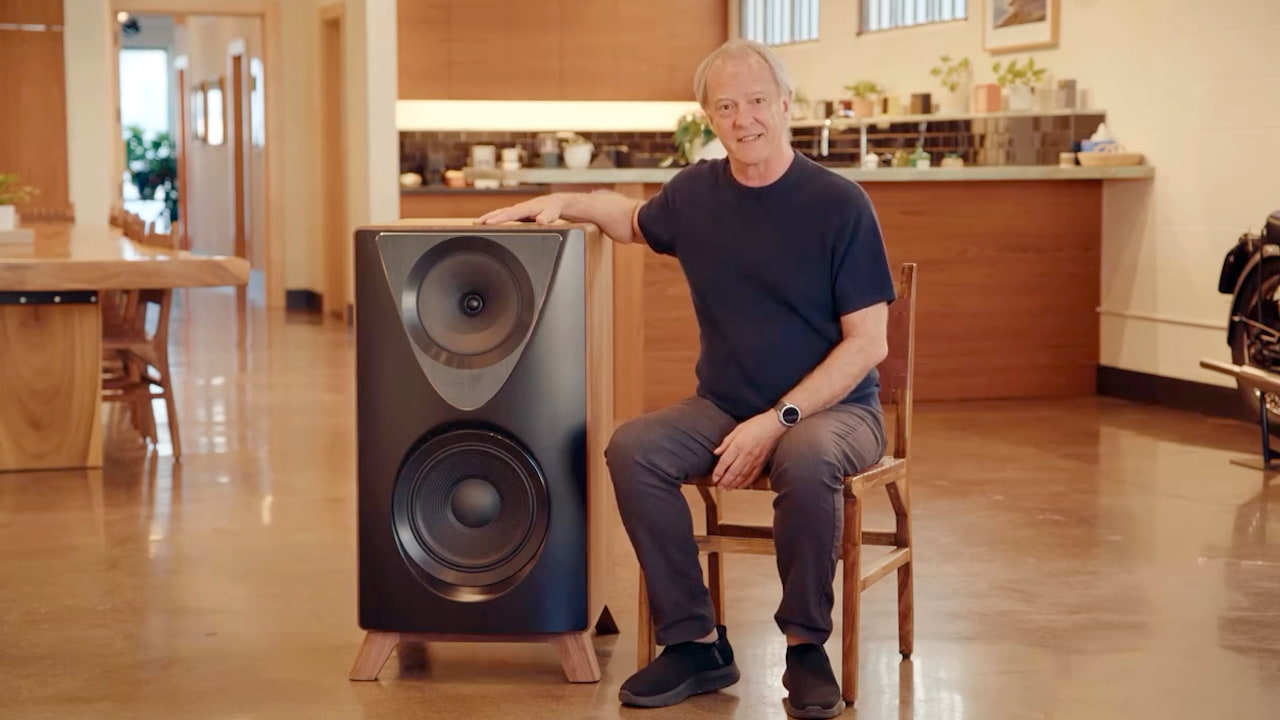
Andrew Jones doesn’t need a reintroduction, but he’s getting one anyway. After shaping some of the most important loudspeakers of the past three decades at KEF, Pioneer, ELAC, and now MoFi Electronics, where he still leads loudspeaker design—one of the industry’s most respected and technically grounded engineers is stepping out with something new. Jones and Cerreta, a Los Angeles based speaker company co-founded with Jamie and Bill Cerreta, marks the first time Andrew Jones has put his name on the door.

Set to debut in just 17 days at AXPONA 2026, the new brand signals more than another product launch. It’s a reset. Known for delivering reference level thinking at real world prices, Jones is now pairing that engineering discipline with a more design forward approach aimed at listeners who want both sonic credibility and visual impact. The debut Troubadour loudspeaker is being positioned as a clear departure from his previous work, but the core philosophy remains intact: engineering decisions that serve the music first, not the spec sheet.
Who Is Behind Jones and Cerreta?
Jones and Cerreta brings together three partners with very different backgrounds across engineering, music, and technology, all focused on how music is created, reproduced, and experienced.
Andrew Jones – Lead Speaker Designer and Co Founder

Andrew Jones is one of the most experienced loudspeaker designers working today, with a career that spans KEF, Infinity, Pioneer, TAD, ELAC, and now MoFi Electronics, where he continues to lead loudspeaker design. He studied physics with a focus on acoustics and has worked extensively on crossover design and driver integration.
At KEF, he worked with concentric driver technology, and later at Pioneer helped establish TAD’s transition into the home audio market, including the development of a beryllium concentric driver. At ELAC, he played a key role in building out the company’s North American speaker lineup. Jones and Cerreta is the first company where his name is directly attached as a co founder.
Jamie Cerreta – Creative Strategy and Co Founder
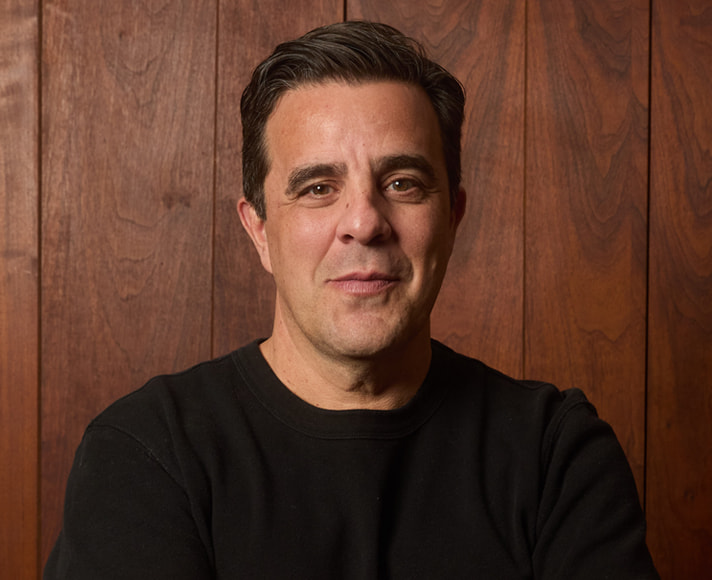
Jamie Cerreta brings more than 25 years of experience in the music industry. He currently serves as President of Peermusic in the U.S. and Canada and has worked closely with artists, producers, and songwriters across a wide range of genres.
His experience includes working with artists such as Ray LaMontagne, My Morning Jacket, and Manchester Orchestra, as well as supporting the development of newer artists and writers. He also serves on the Executive Board of the National Music Publishers Association S.O.N.G.S. Foundation. His role focuses on how recorded music translates from the studio to the listener.
Bill Cerreta – CEO and Co Founder

Bill Cerreta is an electrical engineer with more than 30 years of experience in Silicon Valley, currently working at Pure Storage on data infrastructure technologies. He brings experience in product development, team leadership, and business operations.
He is also an active record collector and has spent years sourcing vinyl pressings internationally. In addition, he restores and builds vintage audio equipment, including tube gear and speakers. His role combines technical knowledge with operational oversight as the company launches its first products.
What Is Jones and Cerreta Bringing to AXPONA 2026?
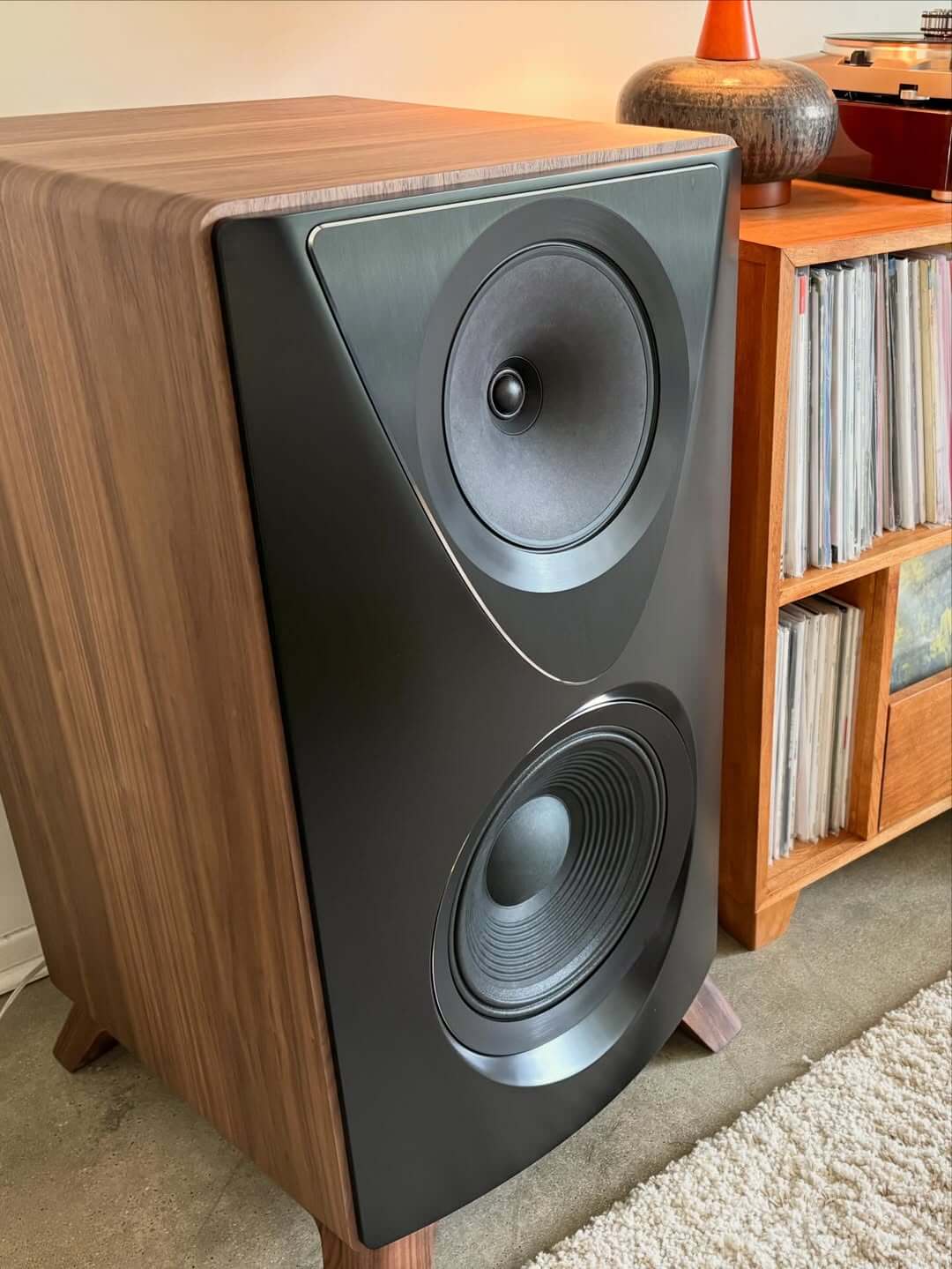
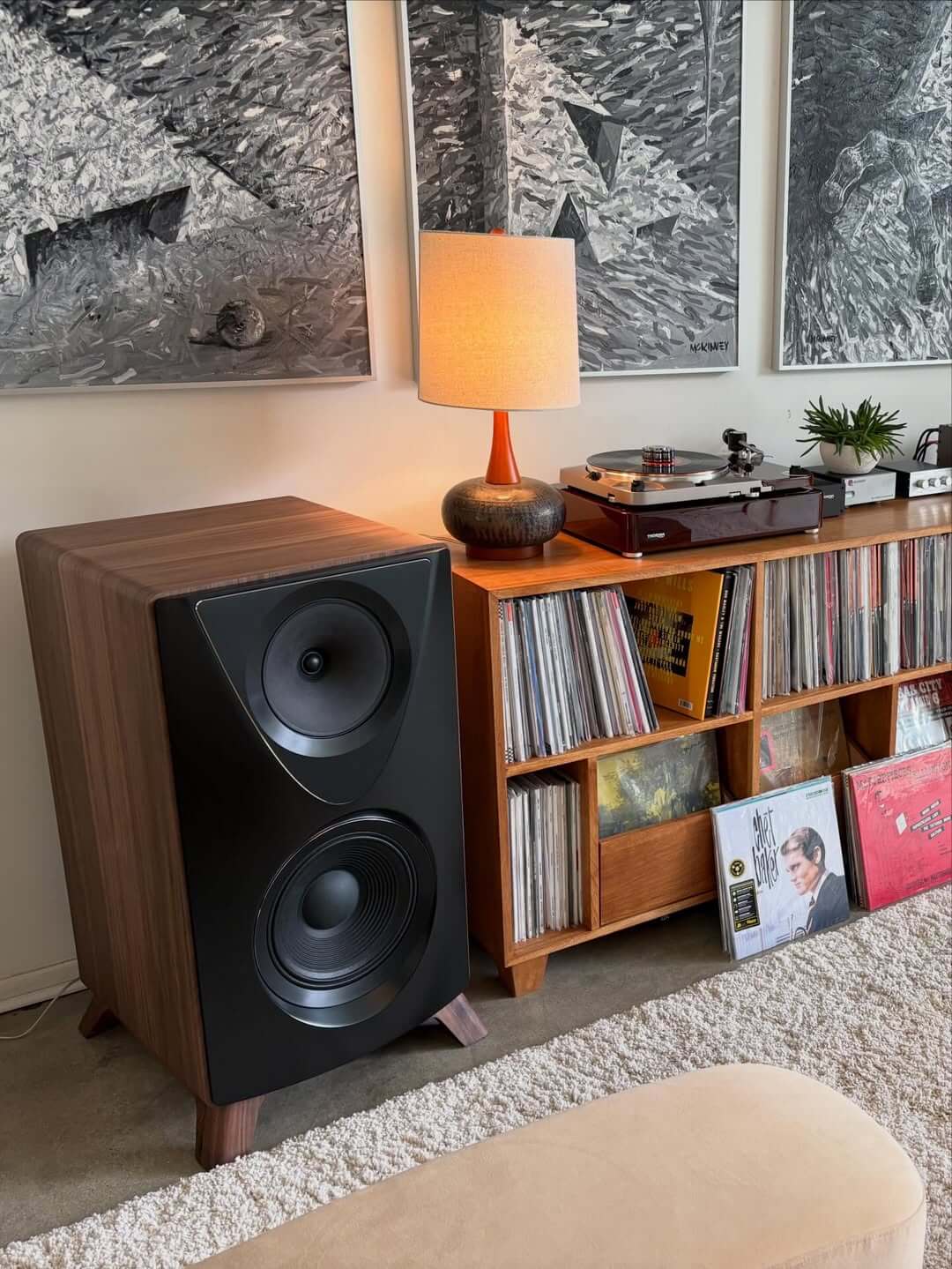
Here’s what we actually know so far—and it’s just enough to raise eyebrows. The Troubadour is a floorstanding design with no announced pricing, although nobody should expect this to land anywhere near entry level.
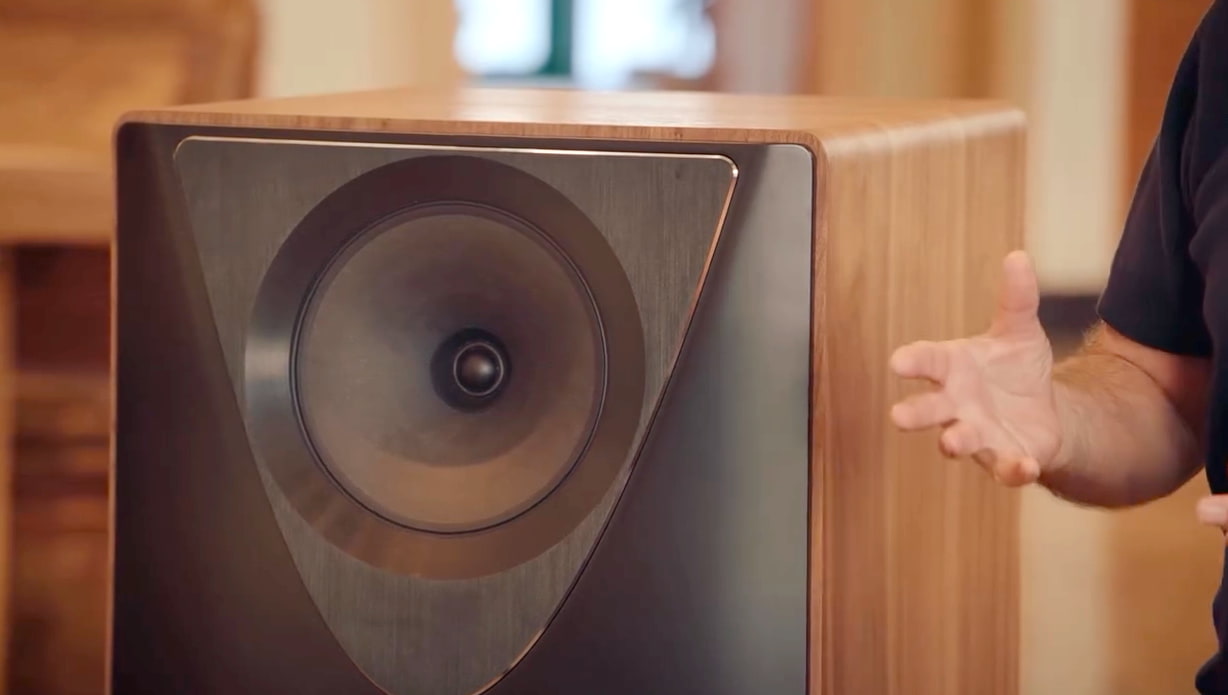
The headline detail is the use of a concentric driver, which tracks with Andrew Jones’ long history at KEF and TAD—but this time it is paired with field coil, a technology rarely seen in modern loudspeakers due to cost, complexity, and power requirements. That combination alone suggests this is not a continuation of his ELAC or MoFi playbook.
Details are still thin, but we’re not completely in the dark anymore. What’s headed to Room 302 at AXPONA is starting to take shape and it doesn’t look like anything playing it safe.

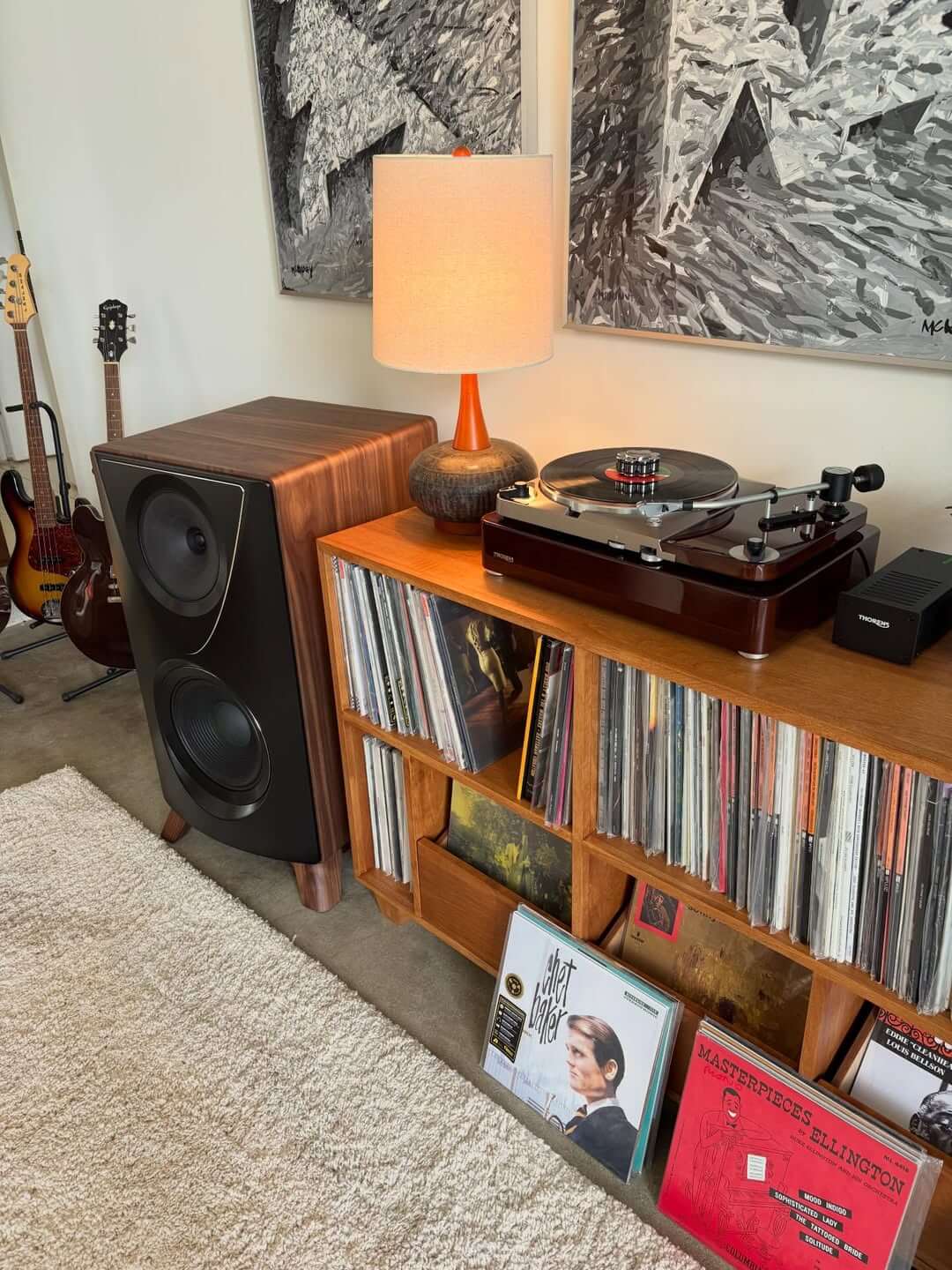
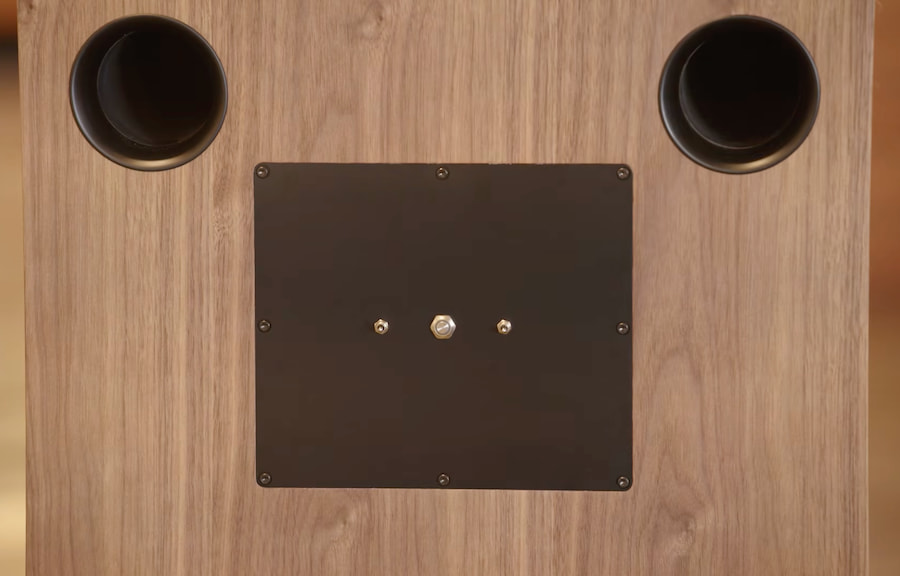
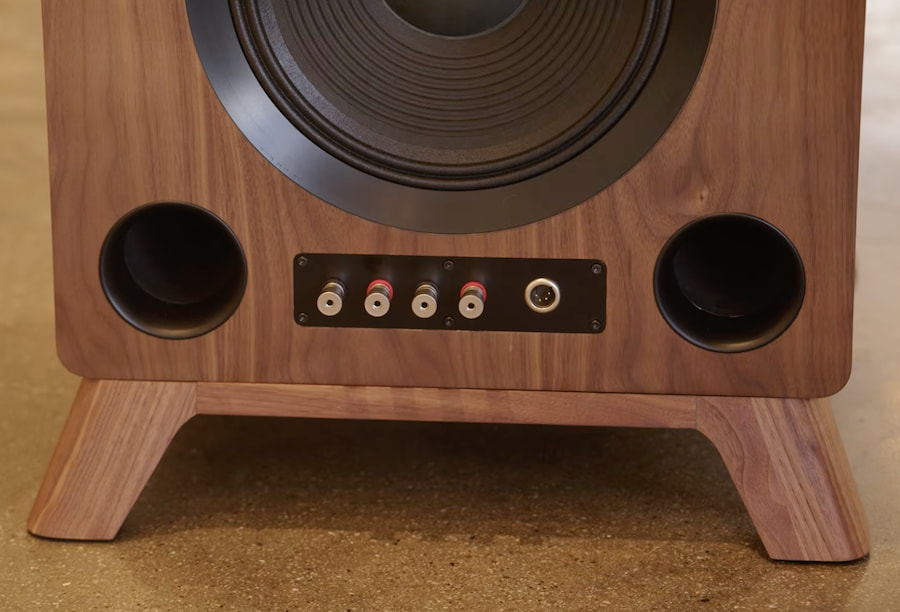
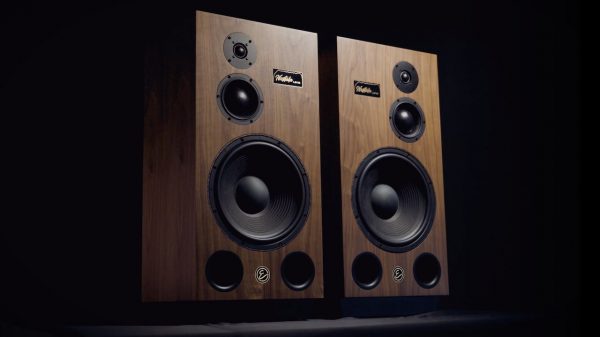
The floorstanding design measures 38.4 inches with the stand, or 34.4 inches without it, and uses a dual 12-inch woofer configuration with drivers mounted front and rear. Around back, there are four ports, which suggests they’re doing more than just chasing extension, they’re likely shaping how the speaker interacts with the room.
This is also a field coil design, which means it requires external power. There’s a rear-mounted power switch, along with auto-sensing for signal detection, so it won’t just sit there drawing power for no reason. Two rear toggle switches allow for ±1 dB adjustments to both midrange and tweeter output—small tweaks, but enough to dial things in depending on placement or room issues.
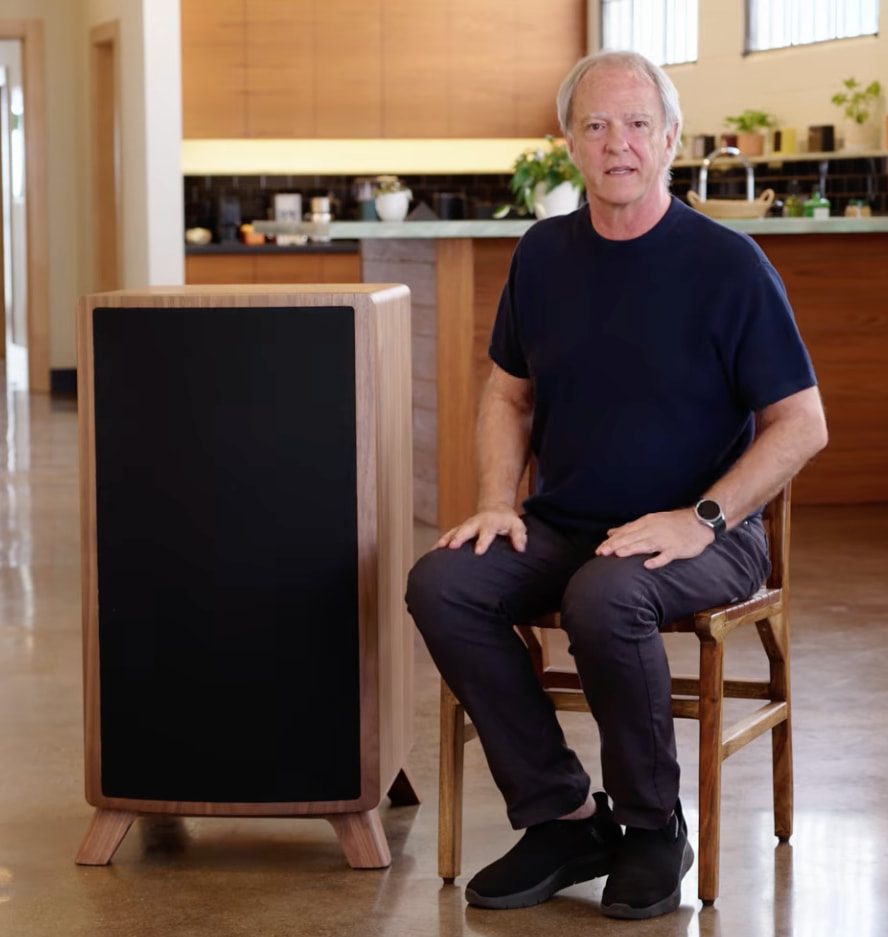
A grille is included, but like most things in this hobby, it’s apparently better left off unless you’re trying to keep fingerprints or pets out of trouble.
There’s still no official word on materials, crossover design, or performance targets. That’s either calculated restraint or a sign that what they’re doing doesn’t fit into the usual spec sheet bullet points. We’ll find out soon enough. Room 302 isn’t going to be a quiet place.
What Is a Field Coil Driver?
Field coil drivers are an old idea that never fully went away, they just became too complicated and expensive for most modern loudspeakers. Instead of using a permanent magnet like almost every speaker today, a field coil driver uses an electromagnet powered by an external power supply to generate the magnetic field that drives the voice coil.
That difference matters. Because the magnetic field is actively generated, it can be stronger, more stable, and in some cases adjustable, which can improve control, dynamics, and overall efficiency. It’s one of the reasons field coil designs have a reputation for sounding exceptionally clean and immediate when done well.
The tradeoffs are real. Field coil systems require an external power supply, add complexity, generate heat, and significantly increase cost. That’s why they’re mostly found in ultra high end or boutique speakers, often from companies like Cessaro, Voxativ, Tune Audio, Line Magnetic, and Feastrex.
What makes this relevant now is that Andrew Jones is reportedly using a field coil concentric driver in a floorstanding speaker. That’s not how this technology is typically deployed. It’s usually seen in horn systems or single driver designs, not something that looks like it could scale into a broader product line.
In other words, the technology itself isn’t new. Where and how it’s being used this time might be.
Where and When to Hear Andrew Jones’ New Speaker at AXPONA 2026
Jones and Cerreta will make its public debut at AXPONA 2026, taking place April 10 to 12 in Chicago, Illinois, with demonstrations scheduled in Room 302 throughout the show. Attendees will be among the first to see and hear Andrew Jones’ latest Troubadour loudspeaker design, which promises a fresh take that blends legacy ideas with new engineering approaches.
Andrew Jones will also host a Master Class on April 11 from 5:00 to 5:45 PM in Expo Hall, titled Reimagining the Dual Concentric Driver, offering insight into the thinking behind the new design and how it challenges traditional implementations.
We’ll be there for a first listen—and if history is any guide, this won’t be a quiet debut.
For more information: https://jonesandcerreta.com
First look video with Andrew Jones on YouTube by Jana Loves Hi-Fi.
Related Reading:
















Donald Bingaman
March 23, 2026 at 9:18 pm
Anything Andrew does is magic ! Looking forward to hearing his new floorstander at AXPONA 2026.
Ian White
March 23, 2026 at 11:06 pm
Donald,
I agree. It also helps that he’s a very nice guy. He has time for consumers at shows and his thought process on design is most fascinating.
The field coil aspect of this driver is very exciting.
IW
andrew jones
March 27, 2026 at 10:54 pm
“sightly polarizing”? I guess I need to turn the bias field up, or down “-)
Ian White
March 28, 2026 at 11:16 am
Andrew,
Based on the response so far, I think he’s in the minority. And nothing wrong with turning it up! Can’t wait to listen in Chicago.
IW
Gerry E.
March 27, 2026 at 1:50 pm
I’ll take a semi-educated guess that this speaker will be special. The real question is how much will it cost? $5K (not likely), $10K or $20K? If it’s closest to that middle figure it could be a top choice in that price range!
Ian White
March 27, 2026 at 2:05 pm
Gerry,
Depends on where it is made.
$15,000 to $25,000 if made domestically.
Does the market need another $25,000 speaker?
IW
Metalhead
March 27, 2026 at 2:16 pm
If Andrew Jones is involved I am interested in listening
My friend has big TAD drivers in Maple wood horns and what a fantastic driver.
Would love to get in front of these for a modern interpretation of old school
Ian White
March 27, 2026 at 2:27 pm
Metalhead,
We have an exclusive session planned for AXPONA in less than 2 weeks, so expect to see group commentary, an interview with Andrew, and some video coverage.
I’m wondering about the price. If this is made overseas, it will be under $15,000. If it’s made in the United States, I would expect to see it between $20,000 and $25,000.
Andrew is slightly polarising. I personally love his stuff but another Hi-Fi EIC (someone I’ve known and been friends with for 28 years) doesn’t share that viewpoint. He wasn’t thrilled to see our IG and Facebook coverage garner tens of thousands of views this week and wrote me privately to go after him. Guess he didn’t advertise. Dunno.
IW
Highfigh
April 6, 2026 at 3:46 pm
The article mentions the heat created- what’s the load of the field coil? If it’s high enough, the current needed to drive it shouldn’t create much heat, right?