HARMAN Luxury Audio Group isn’t easing into ISE this year — it’s flooring the accelerator. With the introduction of nine new JBL Synthesis custom loudspeakers and three next generation processing and amplification components, the company is rolling out one of the most significant expansions of the JBL Synthesis ecosystem in years, set to make its global debut at ISE 2026.
The message is clear: reference level home cinema is no longer a one size fits all proposition, and JBL Synthesis wants to own every serious installation conversation — from architectural in wall designs to full scale dedicated theater rooms.
What makes this move even more telling is the timing. HARMAN Luxury Audio has already been busy at the show with a wave of major announcements from Arcam, including new RADIA loudspeakers and updated audio video amplifiers, and the JBL Synthesis launch adds yet another layer of choice for integrators building high end media rooms and no compromise home theaters.
This isn’t product padding; it’s a deliberate broadening of the toolbox for designers and installers who want scalable performance, consistent voicing, and system driven flexibility without mixing brands or crossing their fingers.
JBL Synthesis SCL XL In-Wall Speakers Lineup for Reference-Level Architectural Home Cinema
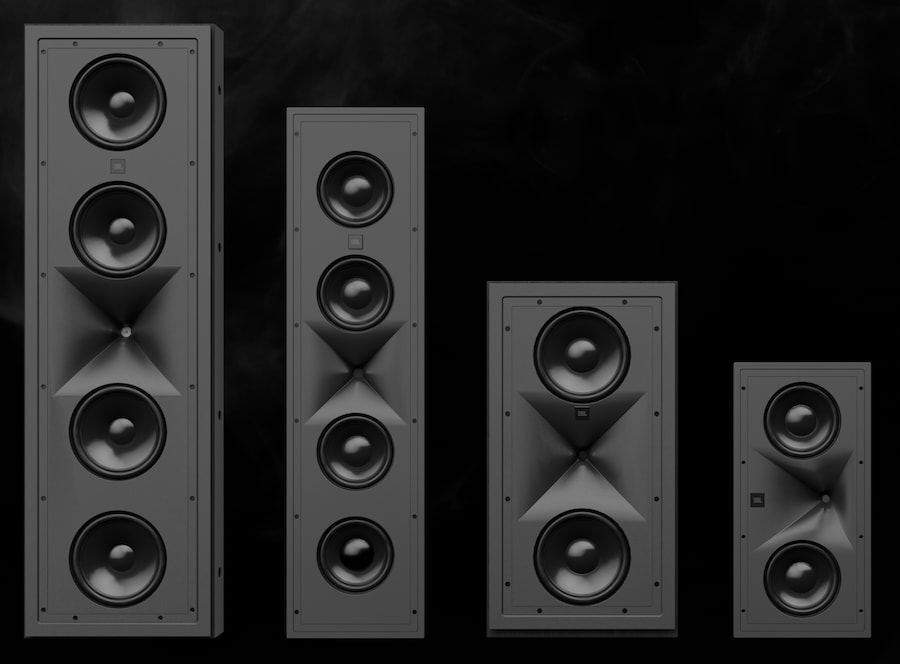
JBL Synthesis is clearly doubling down on serious architectural installs with a new generation of SCL XL in-wall loudspeakers aimed squarely at high-output, no-excuses home cinema rooms. Built around the brand’s latest transducer technology, updated compression drivers, and precision HDI horn geometry, the new models are designed to disappear into the wall while delivering the kind of scale and dynamic headroom integrators usually associate with large floorstanding systems. All four are timbre-matched and intended to work as part of a complete JBL Synthesis system, whether they’re handling front-stage LCR duties behind an acoustically transparent screen or anchoring surround and immersive channels in larger rooms.
SCL-2XL is now the undisputed heavy hitter of the lineup—and officially replaces the SCL-2 as JBL Synthesis’ top in-wall model. With quadruple 8-inch woofers and a high-output compression driver, it’s engineered for reference-level LCR duty in large and extra-large theaters, while still having the headroom to handle demanding surround roles where lesser in-walls simply run out of gas.
SCL-4XL steps in as the new core in-wall model, replacing the SCL-4. It takes a more versatile approach, combining dual 8-inch woofers with a compression driver optimized for wide, consistent coverage. The focus here is balance and uniformity across multiple seating positions, making it a strong fit for premium cinema rooms where even coverage matters just as much as output.
SCL-6XL steps slightly down in size with a quad 6.5-inch configuration, but don’t mistake that for a compromise. It’s engineered to deliver serious performance while offering more installer-friendly proportions, making it easier to integrate into high-end architectural designs without sacrificing dynamics. The existing SCL-6 remains in the lineup.
SCL-7XL is the most surgical of the four. Its dual 6.5-inch layout is paired with an offset HDI horn that allows the sound to be aimed precisely at the listening area. That makes it an ideal choice for surround and center-channel applications where directivity control is critical and placement options are less forgiving. The existing SCL-7 also remains in the existing lineup.
JBL Synthesis In-Ceiling Loudspeakers: Reference Performance from Above
SCL-5 is the flagship traditional round in-ceiling model in the JBL Synthesis Custom Loudspeaker lineup, built for serious immersive theaters that refuse to treat height channels as an afterthought. Designed for use as height, in-ceiling LCR, or surround channels in medium to large rooms, the SCL-5 pairs an angled 7-inch Advanced Aluminum Matrix woofer with JBL’s 2409H one-inch compression driver and an offset HDI horn.
The result is smooth, tightly controlled output with consistent tonal balance up to sixty degrees off-axis—exactly what you want when speakers aren’t aimed straight at your head. With solid power handling, wide bandwidth, and seamless voicing to the rest of the SCL family, the SCL-5 is meant to disappear into the ceiling while keeping pace with serious front-stage speakers.
SCL-8 takes the same engineering philosophy and scales it down for smaller spaces. As the most compact round in-ceiling model in the SCL series, it’s designed for height, in-ceiling LCR, or surround duty in small to medium rooms where placement flexibility matters as much as performance.
Dual to its bigger sibling in concept, the SCL-8 combines a 5.25-inch Advanced Aluminum Matrix woofer with JBL’s 2410H-2 compression driver and offset HDI horn, delivering wide, even coverage and a coherent soundfield well beyond the sweet spot. It’s a practical solution for immersive layouts that still demand timbre matching and controlled directivity—without overspec’ing the room or the ceiling.
JBL Synthesis SCL In-Room Loudspeakers for High-Performance Home Theater
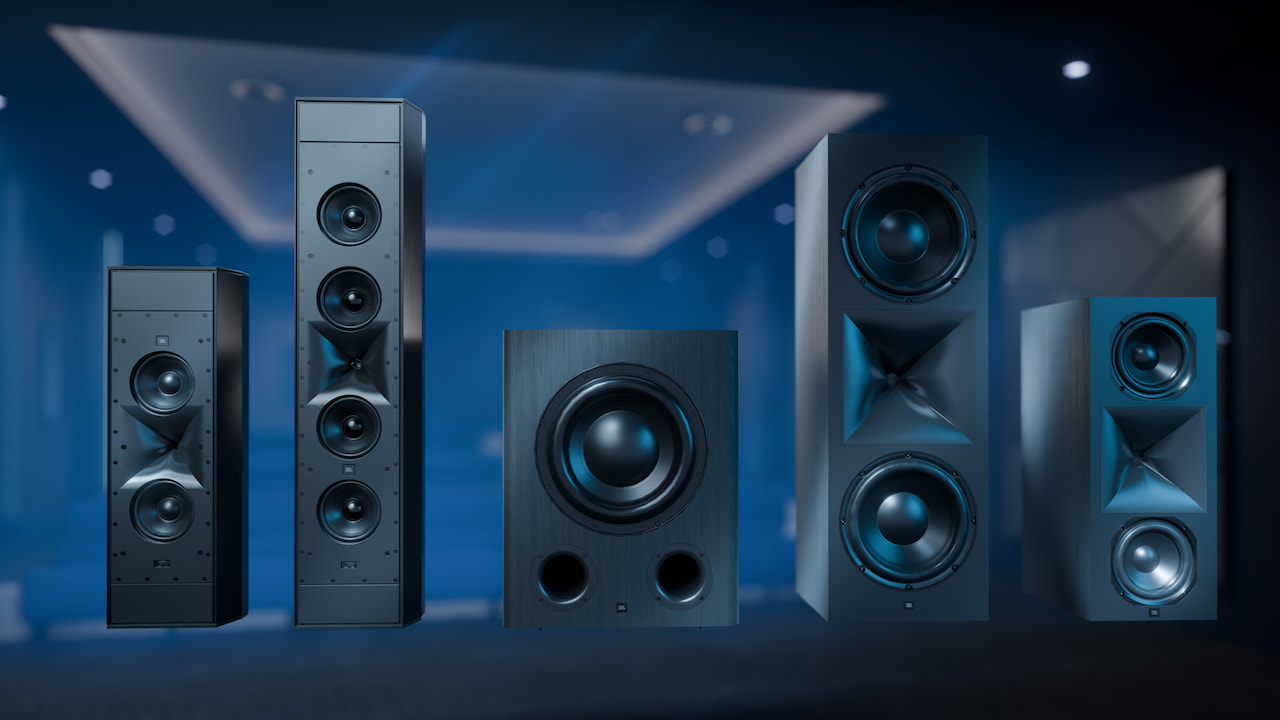
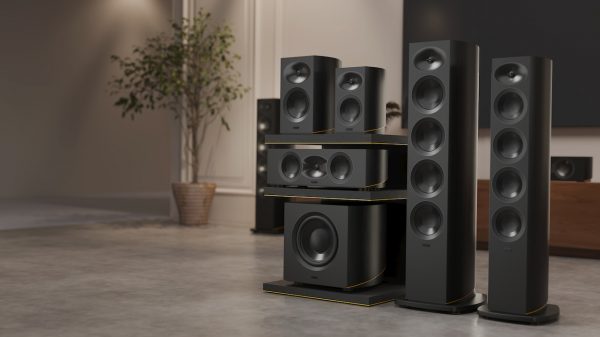
Not every serious media room can be carved into the walls, and JBL Synthesis knows it. The new SCL in-room and on-wall loudspeakers are designed for installations where in-wall mounting isn’t practical, but reference-level performance is still non-negotiable. These models bring the same system-driven voicing, compression-driver dynamics, and output capability associated with JBL Synthesis theaters into spaces that rely on cabinetry, on-wall placement, or traditional in-room solutions.
SCL-10XL sits at the top of the in-room range. With dual 10-inch woofers, it’s engineered for serious output and scale, whether it’s placed behind a projection screen or integrated into custom cabinetry. This is the kind of speaker meant to anchor large rooms where dynamics and headroom matter more than visual subtlety.
SCL-10 takes a more compact approach while retaining the core JBL Synthesis character. Its dual 6.5-inch configuration delivers strong dynamics and flexibility for medium to large rooms, making it a practical choice when space or sightlines limit larger enclosures.
SCL-9XL is built for impact. Using a quadruple 5.25-inch driver array and a high-output compression driver, this on-wall model is designed to keep up with large displays and immersive systems that demand scale and punch without stepping into the room.
SCL-9 is the slimmer, more design-friendly on-wall alternative. With dual 5.25-inch drivers, it’s intended for LCR or surround duties in spaces where aesthetics are just as important as performance, without abandoning the JBL Synthesis sound.
SCL-1 sits at the very top of the JBL Synthesis SCL loudspeaker range and exists for one purpose: uncompromised front-stage performance in no-excuses theaters. Designed as a custom in-room or built-in LCR solution, the SCL-1 pairs JBL’s flagship D2430K dual three-inch compression driver with a large-format HDI horn, delivering extreme output, clarity, and controlled directivity that simply doesn’t flinch at reference levels. Anchoring the system are dual twelve-inch Carbon Cellulose Composite woofers loaded into JBL’s patented Complementary Bass Alignment System enclosure, providing serious low-frequency authority while remaining an easy, amplifier-friendly load.
This is a speaker built for integrators and enthusiasts who want absolute control. A front-panel configuration system supports bi-wiring, bi-amplification, or full crossover bypass for active operation with external DSP and amplification. With high sensitivity, massive power handling, and bandwidth that comfortably spans the demands of modern cinema soundtracks, the SCL-1 is designed to serve as the foundation of a true JBL Synthesis reference theater—where compromise simply isn’t part of the brief.
JBL Synthesis Passive and Active Subwoofers: Scalable Bass for Custom Cinema
The JBL Synthesis SSW subwoofer family is built around one core idea: deliver serious low-frequency performance using passive designs that integrate cleanly with external amplification and system DSP. The lineup now spans five models, covering everything from large, dedicated theaters to space-constrained in-wall installations. Options include the dual fifteen-inch SSW-1, dual twelve-inch SSW-2, dual ten-inch SSW-3 in-wall, and the compact dual eight-inch SSW-4, giving installers the flexibility to scale output and placement without breaking system voicing or dynamic consistency.
The newest addition to the SSW lineup extends that philosophy further, targeting higher-output applications where headroom, control, and system integration matter more than convenience features. Rounding out the lineup is the SSW-5, a new 12-inch powered subwoofer rated at 1,000 watts. Designed to integrate seamlessly with the SCL speakers, it delivers deep, controlled low-frequency performance and completes the ecosystem for in-room, on-wall, and mixed installation systems.
The takeaway is simple: whether the speakers live in the wall, on it, or behind a screen, JBL Synthesis is giving integrators more ways to deliver a cohesive, high-output theater experience without architectural gymnastics.
JBL Synthesis Next-Generation Processing and Amplification
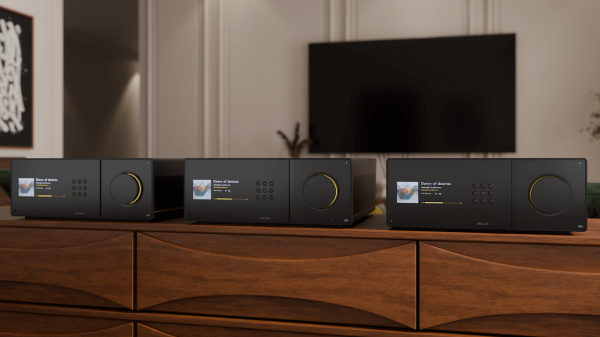
JBL Synthesis isn’t treating electronics as an afterthought. Alongside the expanded SCL loudspeaker lineup, the brand is rolling out three new processing and amplification components designed to serve as the backbone of modern immersive home cinema systems. Built for flexibility, scale, and real-world installation demands, these electronics are aimed squarely at integrators who need predictable performance across complex Dolby Atmos, DTS:X Pro, IMAX Enhanced, and AURO-3D systems — without stacking mismatched boxes and hoping for the best.
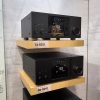
SDP-80 Immersive AV Processor (previously announced April 2025 to replace the SDP-75) is the flagship model featuring support for 36-channels, Dolby Atmos, DTS:X Pro, and Auro-3D with Trinnov Optimizer EQ room correction.
SDP-70 Immersive AV Processor is all-new with JBL’s own 24-channel processor for large-scale immersive designs where channel count, routing flexibility, and network integration matter. Support for Dirac Live Active Room Treatment (ART) allows for advanced low-frequency control across multiple speakers and subwoofers, making it well suited to dedicated theaters and high-end media rooms with ambitious layouts.
SDP-60 Immersive AV Processor (replaces the SDP-58) brings much of that capability into a more streamlined 16-channel platform. It offers reference-grade decoding, fully balanced outputs, Matrix Channel Assignment, and support for Dirac Live ART optimization. This is the processor aimed at serious cinema rooms that don’t need extreme channel counts but still demand precision and consistency.
SDR-40 Immersive AV Receiver (replaces the SDR-38) takes an all-in-one approach without dumbing things down. It combines 16-channel processing with nine channels of Class G amplification, delivering high output and improved efficiency in a single chassis. For integrators looking to simplify system deployment without sacrificing immersive performance, it’s a practical solution for premium installations.
What ties these components together is intent. They’re engineered to integrate seamlessly with the expanded SCL loudspeaker family, ensuring consistent voicing and predictable results across a wide range of room sizes and configurations.
The Bottom Line
This is one of the most meaningful JBL Synthesis updates in years, not because of a single headline product, but because of how broad and deliberate the changes are. JBL Synthesis isn’t just adding more speakers or chasing higher channel counts — it’s reshaping the lineup to cover far more real-world use cases. The expansion spans in-wall, on-wall, and in-room loudspeakers, paired with updated processing and amplification that now scales both up and down, from large, complex immersive theaters to more approachable systems with lower channel counts.
That last part matters. While the SDP-70 headlines the launch with 24-channel capability, the SDP-60 and SDR-40 clearly signal that JBL Synthesis is paying attention to integrators building serious cinemas that don’t require extreme channel layouts. Sixteen-channel processing, all-in-one receiver options, and Class G amplification make the ecosystem more flexible and easier to deploy without forcing every project into flagship territory.
What’s still missing are the details that ultimately define value. JBL Synthesis has not yet released full technical specifications, complete dispersion data, detailed amplifier performance figures, or pricing. Until those are on the table, this remains a strong directional statement rather than a final verdict on performance or competitiveness.
So who is this for? This lineup is aimed squarely at custom installers, system designers, and homeowners building dedicated theaters or premium media rooms who want a cohesive, system-validated approach instead of piecing together components from multiple brands. If you value scalability, predictable results, and a single ecosystem that can grow from a refined sixteen-channel setup into a full reference-grade immersive theater, the appeal is obvious. Whether it becomes a must-have will come down to specs, pricing, and how aggressively JBL Synthesis positions this lineup once those numbers finally land.
Related Reading: