

Eversolo’s SE100 Passive Bookshelf Speakers arrive at a moment when a lot of audiophiles have quietly come to the same conclusion: big floorstanders are great—if you have the room, the patience, and a tolerance for acoustic compromises. For everyone else, bookshelf speakers keep winning on practicality. Their smaller cabinets are easier to place, more forgiving in real-world rooms, and ideally suited for near-field listening in studies, bedrooms, or on a desktop. When done right, a compact enclosure can still deliver clean, uncolored midrange and treble detail by focusing engineering effort where it matters most, instead of trying to move air for the sake of spectacle.
That’s also where the passive vs. active divide comes into play. Brands like Edifier and Audioengine have proven there’s a strong market for powered, wireless bookshelf speakers that sound good, are well built, and don’t cost a fortune. They’ve done a lot right—and earned their success—but that approach locks the amplification and voicing into one box.
Eversolo is taking a different path. Like WiiM, which rewrote expectations in the network streamer and amplifier space, Eversolo built its reputation with digital sources and networked components first. The SE100 signals the next step: completing the system with passive speakers designed to pair naturally with its own electronics, including products like the Eversolo Play. It’s a more traditional hi-fi move—but one that fits the new playbook, where compact systems, smart integration, and real-world usability matter more than owning the biggest and most expensive boxes on the block.
Eversolo SE100 Passive Bookshelf Speakers

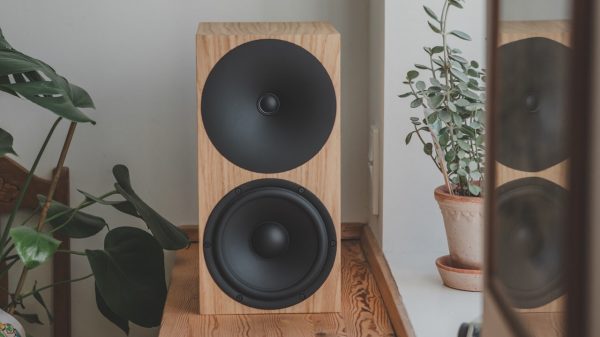
The Eversolo SE100 passive bookshelf speakers represent a deliberate extension of the company’s ecosystem beyond streamers and network amplifiers. Built around what Eversolo refers to as its BLACKEDGE CORE platform, the SE100 is a compact two-way passive design intended to integrate cleanly with traditional hi-fi systems and with Eversolo’s own electronics. The focus here is not novelty but balance, consistency, and predictable performance in real listening spaces.
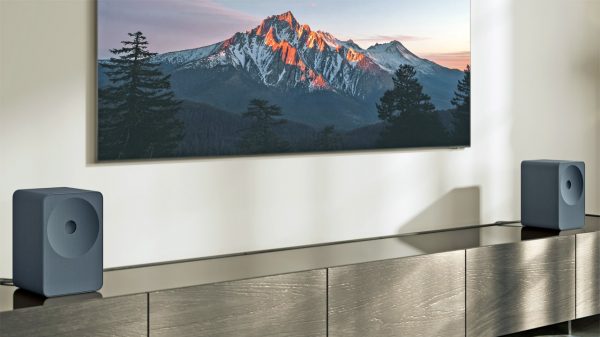
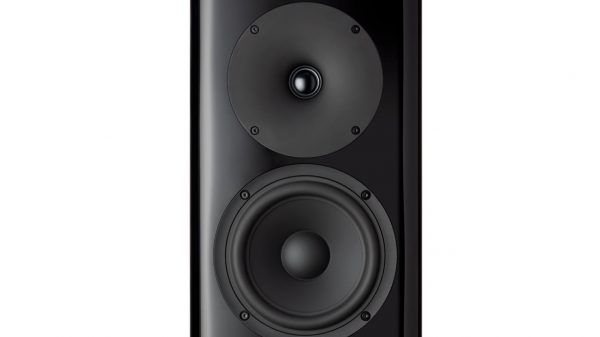
The cabinet departs from the typical narrow bookshelf profile in favor of a square 1:1 enclosure. Measuring 290 x 180 x 290 mm (approximately 11.4 x 7.1 x 11.4 inches), the design emphasizes structural symmetry and controlled internal volume. High-density MDF is used throughout, with internal damping to reduce standing waves and cabinet resonance. The matte black PU finish is understated and functional, avoiding decorative elements that add cost without improving performance.

The SE100 uses a two-way driver layout with attention paid to phase and time alignment through the crossover network. The crossover point is set at 2.6kHz, and Eversolo reports extensive listening and measurement work behind the final component values. The stated goal is even energy distribution across the frequency range rather than emphasizing any one band.
Sensitivity is rated at 88dB, with a nominal 4-ohm impedance and a minimum impedance of 3.2 ohms, placing it squarely in the range of modern integrated and network amplifiers.

High frequencies are handled by a 25mm silk-dome tweeter driven by a neodymium magnet. The design prioritizes controlled extension and smooth response rather than forward or exaggerated detail. The mid-bass driver is a 5.25-inch paper-pulp cone, chosen for its natural damping characteristics and predictable tonal behavior. According to Eversolo’s specifications, bass extends to 50Hz at minus 6dB, with a rated frequency response of 55Hz to 20kHz within plus or minus 3dB.
Power handling is rated at 20 to 100 watts recommended, with peak power handling of 180 watts and a maximum SPL of 96dB. These figures point to a speaker intended for near-field and small-to-medium room listening rather than high-output home-theater use. Placement flexibility and system compatibility appear to be the priorities, not brute force.

The Bottom Line
At $499 USD / € 499 EUR per pair, the SE100 makes a very clear case for itself. It is compact enough to fit inside an IKEA KALLAX shelving unit, easy to drive, and voiced to work as part of a modern, system-centric setup rather than as a standalone statement piece. That price point matters. You are not paying for exotic finishes or furniture-grade cabinetry. You are paying for a competent passive bookshelf speaker that lets the rest of the system do its job.
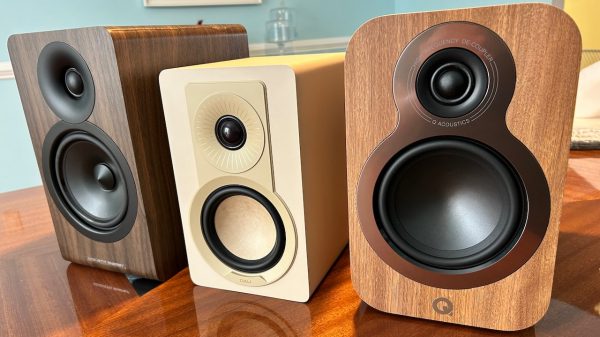
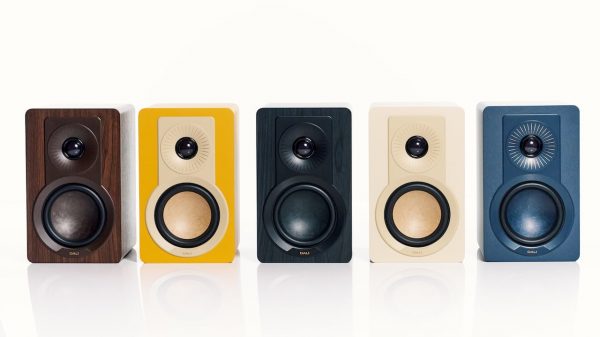
Eversolo does leave money on the table by offering the SE100 in only one color. That feels like a miss. A page from DALI’s playbook with the KUPID, offered in multiple colors, would have broadened its appeal to younger buyers and apartment dwellers. The difference is cost: the KUPID sits closer to $600 USD, and that extra $200 can go a long way elsewhere in the system.
That savings is the point. Pair the SE100 with an Eversolo Play, a WiiM Amp Ultra, or even a Bluesound Powernode, and you have a compact, coherent setup that makes sense in real rooms and real budgets. This speaker is for listeners who want proper passive hi-fi without overspending on boxes that dominate the space.
For more information: Eversolo SE100 Passive Loudspeakers
Related Reading:
- Best Bookshelf Speakers: Editors’ Choice
- DALI KUPID Review: A Compact Danish Speaker That Sounds Bigger And Less Polite Than It Looks?
- Vera-Fi Vanguard Scout Bookshelf Speakers And Caldera 10 Subwoofer Review: Budget Bliss
- Eversolo Play Network Amplifier Cracks A Paulaner At High End Munich—Says “Hold My Beer” To WiiM’s Amp Ultra









Larry
January 12, 2026 at 4:43 pm
Hi Ian,
I hope you continue to be on the mend.
I saw this on John Darko’s site:
“Pricing sits at a wallet-friendly US$399/€399 per pair.”
UPDATE 12th Jan: Eversolo HQ emails, “Regarding the press release for the SE100, the pricing information requires a correction. The market price should be listed as: MSRP: $499 USD / €499 EUR per pair.”
Larry
Ian White
January 12, 2026 at 5:15 pm
Larry,
Getting there. Thank you for asking.
I will update accordingly.
IW