

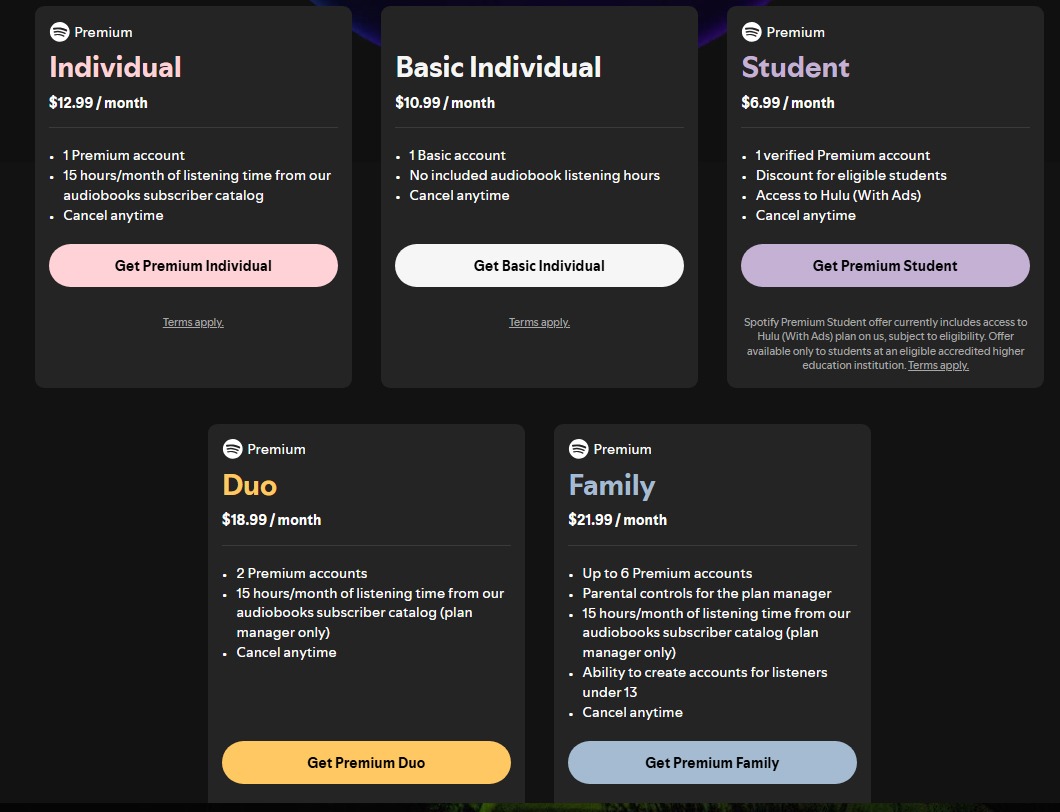
Spotify is raising prices again, and this time U.S. subscribers are firmly in the crosshairs. Following recent increases in the UK and Switzerland, Spotify has confirmed that Individual Premium will rise from $11.99 to $12.99/month starting with February 2026 billing. Duo climbs to $18.99, Family moves to $21.99, and Student plans increase to $6.99/month. The lone exception is Basic Individual, which remains $10.99, provided you’re willing to give up audiobooks entirely.
The timing isn’t subtle. Spotify finally rolled out Lossless audio in Q4 2025, years after rivals made high-quality streaming table stakes. While Premium subscribers now get access to lossless playback, real-world listening reveals the uncomfortable truth: Spotify may not sound as good as Apple Music, Amazon Music HD, TIDAL, or Qobuz, all of which have offered true hi-res catalogs for years—often at the same price or less. Spotify is asking users to pay more just as it catches up on paper, not as it pulls ahead in practice. Which raises the unavoidable question: is this still about value, or just inertia—and is this finally the moment to move on?
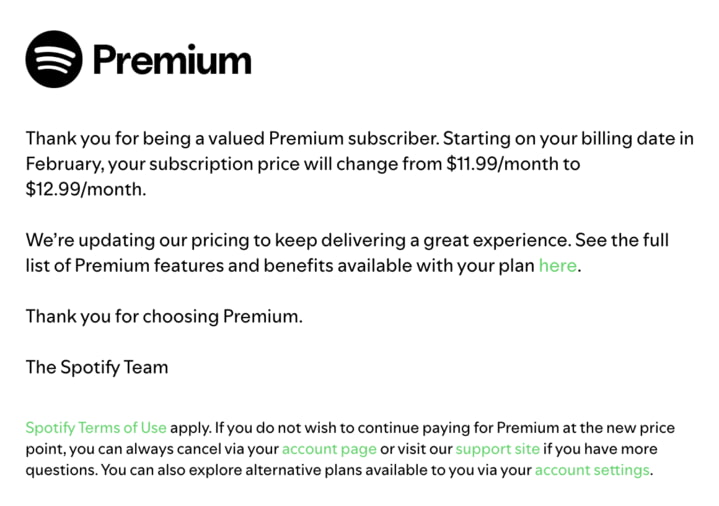
Spotify’s explanation is brief and carefully polished. According to the company, “Occasional updates to pricing across our markets reflect the value that Spotify delivers, enabling us to continue offering the best possible experience and benefit artists.” That is the full rationale. There is no detail on rising licensing costs, no explanation for why prices are increasing now, and no clarity on how much of this additional revenue actually reaches artists.
If this is truly about value and creator support, the hard question remains unanswered: what specifically changed to justify charging subscribers more this year, beyond the assumption that most of them will keep paying anyway.
Say what you will, price increases are a fact of life, but Spotify seems to encounter them more often than most, having already raised prices in both 2023 and 2024. This latest round only reinforces the sense that higher monthly fees have become a regular part of the company’s playbook rather than an exception.
According to Variety, the increase could generate as much as $500 million in additional annual revenue for Spotify, though it remains unclear how much of that money will actually make its way to artists. Spotify says it has paid out more than $40 billion since launching in 2006, a headline figure that sounds impressive until you realize it spans nearly two decades and hundreds of millions of tracks. By contrast, Qobuz continues to position itself as the service that pays the most to individual artists, a claim that resonates with musicians even if it lacks Spotify’s scale.
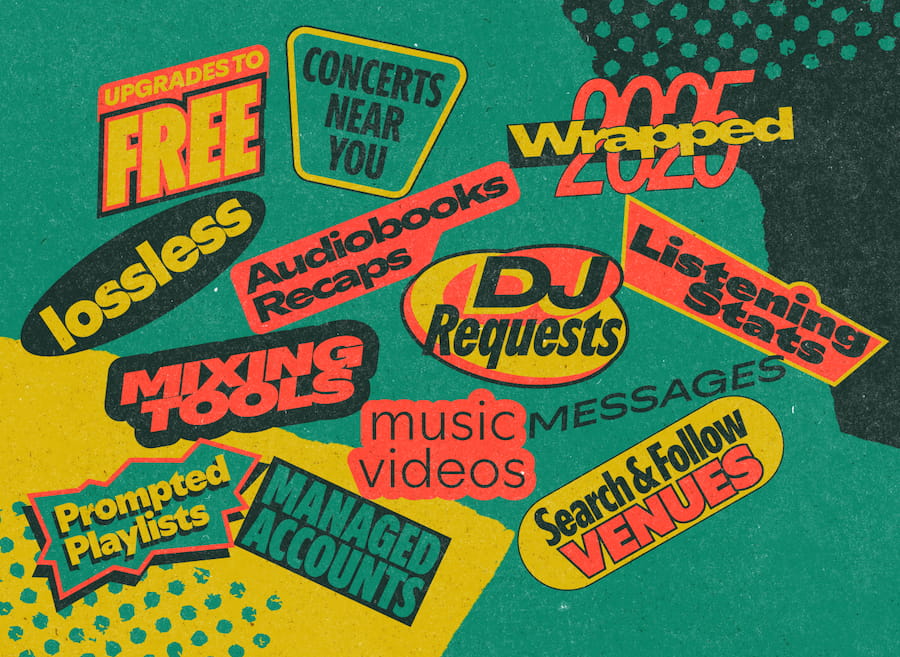
Spotify Premium Plan Features and What You Actually Get
Here is what Spotify Premium Plan subscribers get access to.
Ad-Free Music Listening: This is the backbone of not only Spotify, but any music streaming service that aims to attract paid subscribers, which is the offering of ad-free music listening.
Listen to Music Offline (Download): Spotify provides offline music listening via downloads. In addition, music can be downloaded to other devices via your smartphone. However, there is a limit of 10,000 tracks that can be downloaded to up to 5 devices.
Offline Backup: If you forget to download ahead of time, listeners can still listen via Offline Backup. This includes recent listens, queued tracks, and more, all set for offline play. No downloads needed.
Play Songs in Any Order/Mix Playlists: Subscribers can play songs in any order and also create mix playlists and add transitions between playlist songs.
High Quality and Lossless Audio Streaming: Listeners have the option of higher-quality streaming up to 320k bits/s or Lossless 24-bit/44.1 kHz FLAC streaming. Lossless audio is available on mobile, desktop, and tablet apps, as well as on compatible Spotify Connect devices. You can enable it in the Audio Quality settings. Wi-Fi or strong data connections are recommended for the best performance. Dig more into Spotify Lossless audio in our previous article: Spotify Premium Finally Goes Lossless, Unlocking Higher Quality Music Streaming to Millions
Audiobooks: In addition to music, eligible subscribers can access several thousand audiobook titles from Spotify’s subscriber catalogue. Eligible Premium plans include a monthly allocation of audiobook listening hours. If users reach their audiobook time limit and want more, Spotify offers an Audiobooks+ add-on or purchase a one-time top-up.
Note: Audiobook listening hours are only included with Premium Individual and Family/Duo plans (for the plan managers only). Plan Members can get access to the audiobooks subscriber catalogue with the Audiobooks+ add-on.
Music Videos: Subscribers can watch music videos without ad breaks. There are several thousand music videos to browse through, with more on the way. Users can switch between audio and video, with playback continuing from the closest matching timestamp. You can watch music videos from: Smartphones, Desktop PCs, TVs, and via the Spotify WebPlayer.
DJ Host: This is an interesting feature still in Beta. This allows users to listen to tracks selected for you from your current favorites, mixed with new selections. You can even make requests.
DJ Integration: Beyond the DJ Host feature, Premium subscribers can link their Spotify accounts directly to supported DJ software including rekordbox, Serato, and djay. This integration provides access to their full Spotify library, spanning editorial playlists as well as personal collections, allowing DJs to pull tracks seamlessly into their workflow without leaving their preferred mixing environment.
AI Playlists: AI is the big thing these days, and Spotify has jumped on board when it comes to accessing content. This feature allows users to create a playlist by typing an idea into the chat. AI Playlist (Beta) will use it to build a selection of songs tailored to listener preferences.
Host a Jam: This feature allows subscribers to start a Jam session. This means they can invite friends to join in real time. Friends who join a Jam can listen together and add songs to the queue, sharing control of what’s playing, whether you’re in the same room or tuning in remotely.
K Pop ON! Hub: Available to all Spotify users, the K Pop ON! Hub serves as a centralized destination for major releases, trending tracks, and ongoing updates from across the genre. Premium subscribers gain access to additional perks, including exclusive video content, Listening Parties, and digital collectibles. The hub also includes the K Pop ON! Video Podcast, which features artist interviews, behind the scenes content, and fan focused moments designed to deepen engagement beyond the music itself.
The Bottom Line
The impact of Spotify’s latest price increases will be felt very differently depending on who you are. For the vast majority of its hundreds of millions of paying subscribers, audio quality still isn’t the deciding factor, and only a negligible percentage are actually using the new Lossless tier in any meaningful way. Spotify’s real advantage has never been sound quality; it’s scale, convenience, habit, and an ecosystem that most users are deeply embedded in.
When you control roughly 30 percent of the global streaming market and operate at that scale, incremental price increases become less risky, even when value gains feel marginal. Pushback will be loud, cancellations will be negligible, and growth will likely continue anyway. Netflix has already proven the model on the video side. Spotify appears to be betting that music subscribers will behave the same way.
Related Reading:
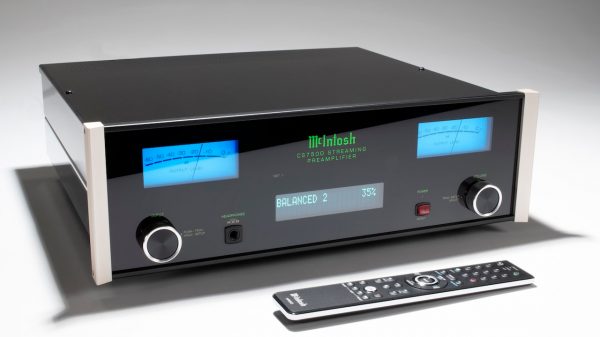
- McIntosh Bows to Spotify Lossless — Even the Blue Meters Can’t Resist
- Tivoli Audio Unveils Model One Digital Generation 3 Tabletop Radio With Support for Spotify Connect
- Cambridge Audio Joins Spotify Lossless Push, JLab Expands with JBuds Open & Epic Pods, and Nothing Launches Ear (3): Editor’s Round-Up
- Where to Find Independent Record Stores Spotify Can’t Kill: Your 2025 Guide



































David
January 18, 2026 at 9:31 pm
Ian,
The best alternative? Tidal Family for $16.99. You can share with 5 family members in the same country. That’s $2.83 per membership!
It’s what I’ve been using and sharing for more than a year now.
David
Ian White
January 18, 2026 at 11:04 pm
David,
I refuse to pay for Spotify. My kids have their mother do it. I’m a lifer at Qobuz and recently dumped TIDAL.
IW
Asa
January 19, 2026 at 12:33 am
Same…except my mother won’t pay for it.😅 Trying to get my better half to switch.
David
January 18, 2026 at 9:34 pm
Apologies to Robert Silva regarding my comment. I am used to responding to Ian’s articles and didnt read the byline.
Ian White
January 18, 2026 at 11:05 pm
All good.
He’s working like a finely tuned machine these days. The team produced close to 55 articles and videos from CES in less than 10 days which was a record for us. More than any of the competition. Who didn’t even show.
IW
David
January 19, 2026 at 12:18 am
Yes. Y’all are putting out a consistent stream of quality content and I greatly appreciate the focus on affordable gear.
Much appreciated.
Robert Silva
January 19, 2026 at 1:13 am
No problem David 🙂