
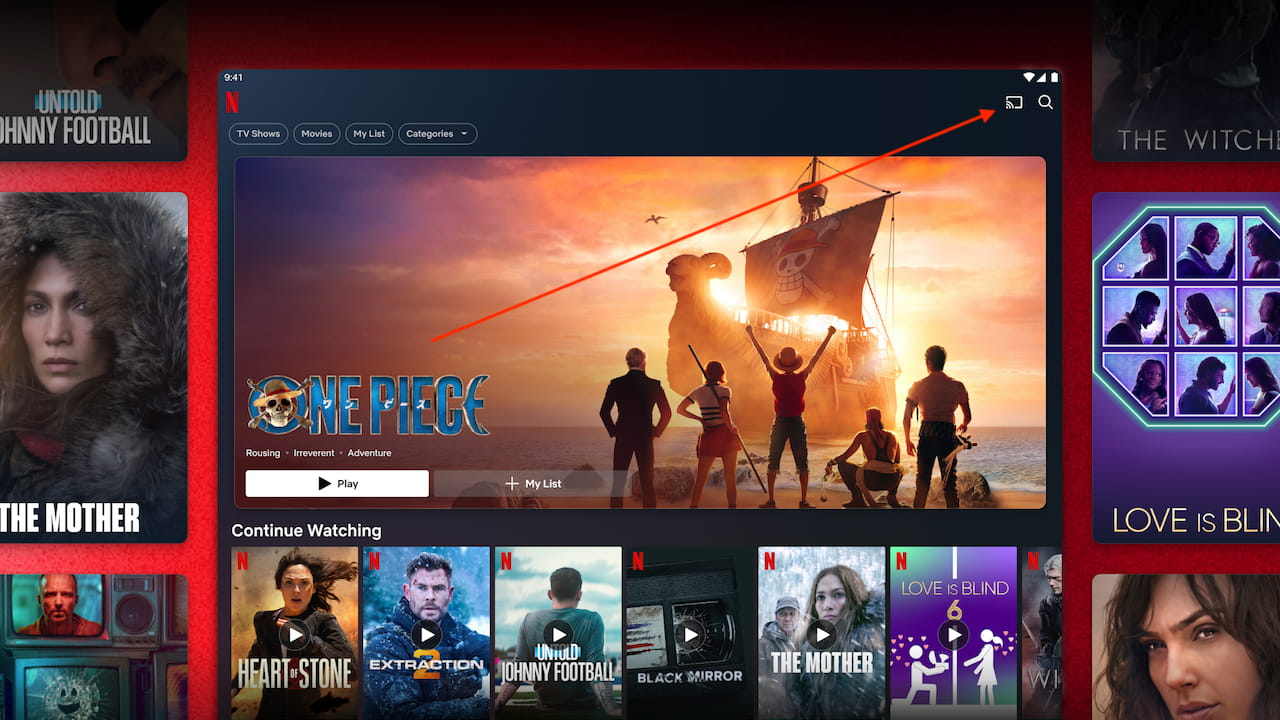
Netflix is no stranger to pulling features without warning, but this one is going to sting. Back in 2019, the company abruptly killed AirPlay support. Now, in 2025, Netflix has quietly removed the ability for smartphones to cast to newer Chromecasts, Google TV streamers, and most smart TVs with Chromecast or Google TV built in. It doesn’t matter which plan you pay for; ad-supported or premium — the Cast button has been disappearing from the Netflix app over the past few weeks with zero notice to subscribers.
The timing couldn’t be more surreal. Netflix is enjoying record viewership and a tidal wave of new subscribers thanks to the launch of Stranger Things Season 5, all while construction ramps up at Netflix Studios Fort Monmouth on the Jersey Shore — the company’s massive new East Coast production hub. And yet, instead of celebrating momentum, Netflix is quietly stripping out one of the simplest, most widely used features in the streaming ecosystem.

Why Would Netflix Do This?
Netflix’s official line isn’t exactly illuminating: “Netflix no longer supports casting shows from a mobile device to most TVs and TV-streaming devices. You’ll need to use the remote that came with your TV or TV-streaming device to navigate Netflix.”
That’s it. No technical explanation. No compatibility notes. No roadmap. Just a corporate shrug wrapped in a support-page sentence.
So… why would they do this?
Casting Netflix from a smartphone has always been the easier way to navigate, control playback, and avoid the clunky, ad-stuffed interfaces that come baked into many smart TVs. For some users, it also quietly doubled as a loophole around Netflix’s household/password crackdown — casting from a phone could sometimes trick a TV into thinking it was part of the “primary household.”
That workaround is now gone. Netflix has removed casting support from most new Chromecasts, Google TV streamers, and nearly every TV with Chromecast or Google TV built in. Only older Chromecast models and TVs that still rely on the legacy Google Cast protocol are hanging on.
It gets even more restrictive. According to Netflix’s own support pages, casting isn’t available for ad-supported plans at all. Only non-ad-supported plans can cast to the remaining legacy devices — and that list is shrinking fast.
The reasoning is pretty straightforward: control. Casting lets users sidestep Netflix’s own app experience — and more importantly, the device-level restrictions, ads, tracking, experimental features, and future monetization layers the company wants to enforce directly on the TV. Casting is platform-agnostic and unpredictable, which makes it difficult for Netflix to standardize behavior or roll out new features across the massive, messy universe of Chromecast-enabled hardware.
By forcing everyone to use the TV’s native Netflix app with the included remote, Netflix corrals all viewing into an environment it fully owns. That’s where it can dictate playback rules, enforce household verification, run ad tests, gather engagement data, and roll out whatever comes next. In short: if Netflix can’t control the path you take to watch, they’d rather close the path entirely.
Netflix does still support casting — for now — but only on a shrinking island of older and obscure hardware. As of today, casting still works on:
- Chromecast 3rd gen or earlier — specifically the puck-style models without a physical remote.
- Google Nest Hub smart displays — the kitchen-counter survivors of the Chromecast era.
- Select cast-enabled Vizio TVs — emphasis on select.
- Select cast-enabled Compal TVs — and yes, Compal is an ODM that builds sets for multiple brands, so good luck figuring out which ones make the cut.
Note: Netflix doesn’t publish a model list. There’s no compatibility chart, no official breakdown. It’s pure hunt-and-peck for users — trial, error, and maybe a little prayer. Here’s the latest Netflix support page for casting.
Netflix Plans (2025)
| Netflix Plan Features | Standard with Ads | Standard Plan | Premium Plan |
| Price per month | $7.99 | $17.99 | $24.99 |
| Resolution | Full HD (1080p) | Full HD (1080p) | 4K UHD (2160p) |
| HDR/Dolby Vision | No | No | Yes |
| HDR10+ | No | No | Yes |
| Dolby Atmos/Netflix Spatial Audio | No | No | Yes |
| Number of Screens you can watch at the same time. | 2 | 2 | 4 |
| Number of phones/tablets you can store Netflix downloads on | 2 | 2 | 6 |
| Unlimited Movies, Shows, and Games | No – A lock icon will appear on unavailable titles. | Yes | Yes |
| Watch on TV, Laptop, Phone/Tablet | Yes | Yes | Yes |
| Extra Members Option | No | Add 1 extra member for $6.99 / month with ads or $8.99 / month without ads | Add up to 2 extra members for $6.99 each / month with ads or $8.99 each / month without ads |

The Bottom Line
Just what everyone needed — more chaos in a streaming landscape already held together with duct tape and monthly price hikes. For a service as expensive and dominant as Netflix, users deserve flexibility in how they watch. Instead, Netflix has killed AirPlay, gutted casting support across Google’s newest devices, and left subscribers guessing which legacy boxes still work. The “why” isn’t complicated: control. Netflix wants every stream happening inside its own TV app, where it can enforce household rules, test new ad formats, and shape your viewing habits without any detours.
And the impact on you is simple: fewer options, more friction, and the sense that Netflix holds all the cards — because they do. With the company now rolling out AI-powered search and recommendation tools, the idea that Netflix might one day decide what you watch as tightly as it controls how you watch doesn’t feel that far off. Even in the Upside Down, at least the monsters don’t rearrange your remote.
Note: If you have Netflix with a package or through a third party, check with your provider to confirm if an ad-supported experience is available.
Related Reading:
- Premium TV Streaming Plans are Getting Messy: Prices Up, Quality Down
- Netflix Unveils New Homepage With AI Search: Because Free Will Was Overrated Anyway
- Netflix AI Search: Because Apparently, the Algorithm That Keeps Recommending Bad Influence Wasn’t Sensitive Enough
- Netflix Adds HDR10+: Samsung TV Owners Rejoice!























Asa
December 3, 2025 at 5:35 pm
As you say, Netflix is in the driver seat, not just here, but in the movie studio space, creating all-encompassing ‘entertainment’.
Ever since the plandemic(sic), movie studios have been bleeding money and laying off staff. Generally, a studio would ramp up, create a company/LLC based on the film they were producing, hire all the those involved, pay staff (sometimes not), and then dismantle the entire thing when movies went live. Now there’s not much support for making a film where fewer audiences attend ‘in-person’ and cash seems to be limited. I’m not even sure they’re capable of making a decent film beyond the extremes in one genre or another.
Add AI into the mix, and it seems like Netflix may be in the driver seat, but tech always seems to find cracks in the armor. Will their plan backfire? Maybe, but like most things, the future is uncertain.
Also, can you not view Netflix on a computer and plug it into your TV (via HDMI, etc.) to view? Not as convenient, but doable.
Thanks for publishing this, Robert. It’s another good reminder to own real media.
Ian White
December 3, 2025 at 11:10 pm
Asa,
You are mostly correct here. If you look through the archives in 2025 and read my coverage of box office numbers, Hollywood has a huge problem. For every high budget film that makes money, 25 lose money. You have outliers like “Weapons” or “Demon Slayer” that didn’t cost a lot compared to any Marvel film, yet made hundreds of millions of dollars. Indie films are not drawing dust. 3 of the best films I saw this year were “indie” and none of them made money. How bad is it? 3 Marvel films barely broke even. Avatar (Part III) is coming out in 2 weeks and will make over $1B without much effort. 25 other films will come out after it and not make money.
Netflix is a completely different animal. With the studio building its new facility here, I’ve started to meet some industry people in the strangest of places. Had my colonoscopy and endoscopy today (clean…thank G-d) and my pre-op nurse is married to an indie filmmaker who works in the horror genre. She told me all about his attempt to sell his movies to Netflix and how hard that was. Stranger Things is definitely a rare example of something that large and expensive actually working. Netflix does hold all of the cards. Studio. Marketing. Distribution. They also have the largest audience and will (using AI) tell you what you “want” to watch. I have run my MacBook direct into a TV but it’s not very convenient.
Physical media matters. I’ll keep screaming until they pull the damn IV out of my arm.
IW