
There’s something off in the audiophile world right now, and it’s not just coming from Denmark. Between audiophile media excess that feels increasingly detached from reality, a long overdue Qobuz CarPlay update that finally fixes a daily annoyance, and a reminder from Wes Montgomery that timeless music outlasts every format war, this week’s news cuts in a few different directions. Add in the Marantz M1 earning an Editors’ Choice nod for doing the sensible thing exceptionally well, and the picture gets clearer: good engineering and good music still matter more than hype cycles, press junkets, or how many zeros are on the invoice.

This coming weekend marks the beginning of the silly season I mentioned last week. The calendar fills quickly with hi-fi shows that will get covered whether anyone really needs another one or not. FLAX arrives next weekend in Tampa, and the press will enjoy the warmth while it lasts. The Olympics are still underway, which means no Tampa Bay Lightning NHL games, still the best show in town. Shows are work, not vacations, and covering them costs money. Airfare, taxis, meals, and the quiet expenses nobody lists on a receipt add up fast.
It is also worth being clear with readers about how this works. Some shows cover hotel costs for media because without coverage there is no visibility, no buzz, and no record of what actually happened. Transparency matters. The media business is under real pressure right now. Publications are shrinking, budgets are tight, and layoffs have been widespread over the past year. Ask the people at the Washington Post, Tech Radar, Digital Trends, Sound & Vision, and others. We have been fortunate to add experienced talent because of that reality, but nobody should assume that publications are rolling in money. Even the biggest names are watching every dollar.
When it comes to press junkets, not everyone gets invited. These trips are usually reserved for high profile journalists from mainstream outlets like Forbes, T3, Wall Street Journal, and the New York Times, along with editors from specialist publications. We are not excluded from that group, which likely reflects our growing influence. I have been invited on overseas trips for product launches, factory tours, listening sessions, luxury car drives, and early looks at new TV technology in Asia, but illness, family emergencies, or other obligations have always gotten in the way. I have never been able to go.
Domestically, the rules are simple. We pay our own way. That has always been policy at eCoustics, with reimbursement handled later. Overseas press junkets are where things start to feel off, when necessary access blurs into hospitality and the line between reporting and obligation gets harder to see. Audio Group Denmark’s recent introduction in Aalborg of its $1.1 million flagship loudspeakers and $115,000 mono block power amplifiers for a very select group of the press sharpened that concern and has become a topic online in recent days.
When you are flown overseas, wined and dined, there is an unspoken expectation that coverage will reflect the experience. They are hardly alone in this practice, and it says nothing about the quality of what was introduced. By every account I have heard from those who were there, the experience was out of body phenomenal. The harder truth is that entry into this level of audio now borders on the absurd. One might need to sell off body parts just to get in the door, and even that feels optimistic given the general condition of most of the audiophile press.
Audiophile Excess Runs Wild in Denmark

Back in October at T.H.E. Show New York, which was held in New Jersey despite the branding gymnastics, I had my first real exposure to Audio Group Denmark. Calling it New York clearly sounds better on a banner, even if the venue landed nowhere near the part of the Garden State where I actually live. Still, it was enough to make one thing clear: Danish high-end audio is having a moment, and it is not subtle.
That moment extends well beyond Audio Group Denmark. Denmark has been quietly exporting serious audio thinking for decades, with brands like Gryphon, Dynaudio, Buchardt, DALI, Bang & Olufsen, Audiovector, Lyngdorf, Ortofon, and Raidho all contributing to Denmark’s oversized footprint in the high end. Different philosophies, different price brackets, same national tendency to push engineering harder than the market sometimes expects.

Audio Group Denmark sits firmly in that conversation but plays its own game. Its core brands Ansuz, Børresen, and Aavik were out in force, supported by their North American team and HiFi Loft, their dealer with locations on West 44th Street in Manhattan and in Glens Falls, just north of Saratoga Springs and not far from Lake George. It is a part of upstate New York where the term summer home tends to mean something very specific and very expensive.
What stood out was not just the technical ambition on display, but the pricing ambition as well. Danish brands across the board are pushing boundaries right now, both in how far they are willing to go technologically and how unapologetic they are about cost. Audio Group Denmark, in particular, has no interest in playing it safe. My first real exposure to them will not be my last. That was clear before I left the room.
Anyone thinking about a system designed to stay under $30,000 should stop reading now. Even a modest configuration built around their stand mount speakers, an integrated amplifier with streaming, and the required cabling clears that threshold quickly, before analog sources or outboard stages even enter the conversation.
At T.H.E. Show New York 2025, the two Danish systems on display occupied a very different financial lane, landing between $90,000 and $360,000 USD. Those figures are real. From a listening standpoint, the lower cost $90,000 system was far more compelling to me, but both already lived well beyond what most listeners would consider attainable.

What was introduced last week, however, makes those show systems look almost entry-level. When you factor in the Børresen M8 Gold Signature loudspeakers at roughly $1.15 million per pair and the Aavik M-880 monoblock amplifiers at $115,000 each, the scale shifts entirely. These are not conceptual exercises or dressed up prototypes.
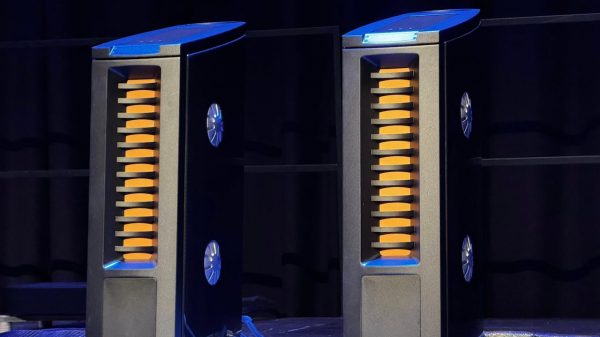
The Aavik M-880 uses a reworked Class A amplification stage that maintains its bias 0.63 volts above the required current level at all times. The goal is continuous Class A operation regardless of load or signal conditions, while keeping operating temperatures lower than traditional Class A designs to improve long term stability and reliability; which is a good plan when you consider the “rated” power output and size of these amplifiers.
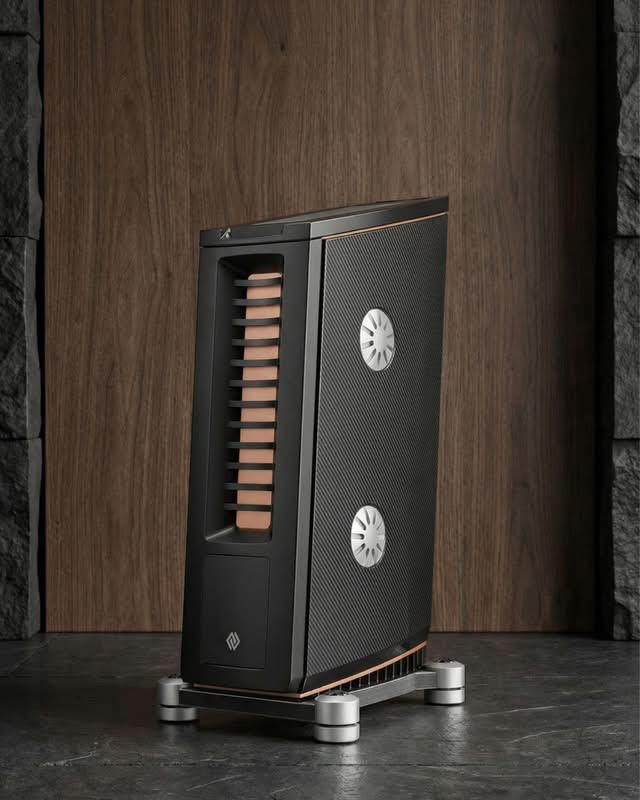
Power delivery is equally unapologetic. Each M-880 is rated at 400 watts into 8 ohms, 800 watts into 4 ohms, and approximately 1,300 watts into 2 ohms. Add sources, cabling, and the supporting ecosystem that inevitably comes with systems at this level, and it is very likely that the total system cost is approaching $2 million at its peak.
The Aavik M-880 mono amplifier measures 794.02 mm high, 342.00 mm wide, and 509.68 mm deep, which translates to 31.26 inches in height, 13.46 inches in width, and 20.07 inches in depth. Each amplifier weighs 70.0 kilograms, or 154.3 pounds.
The Gold Standard?
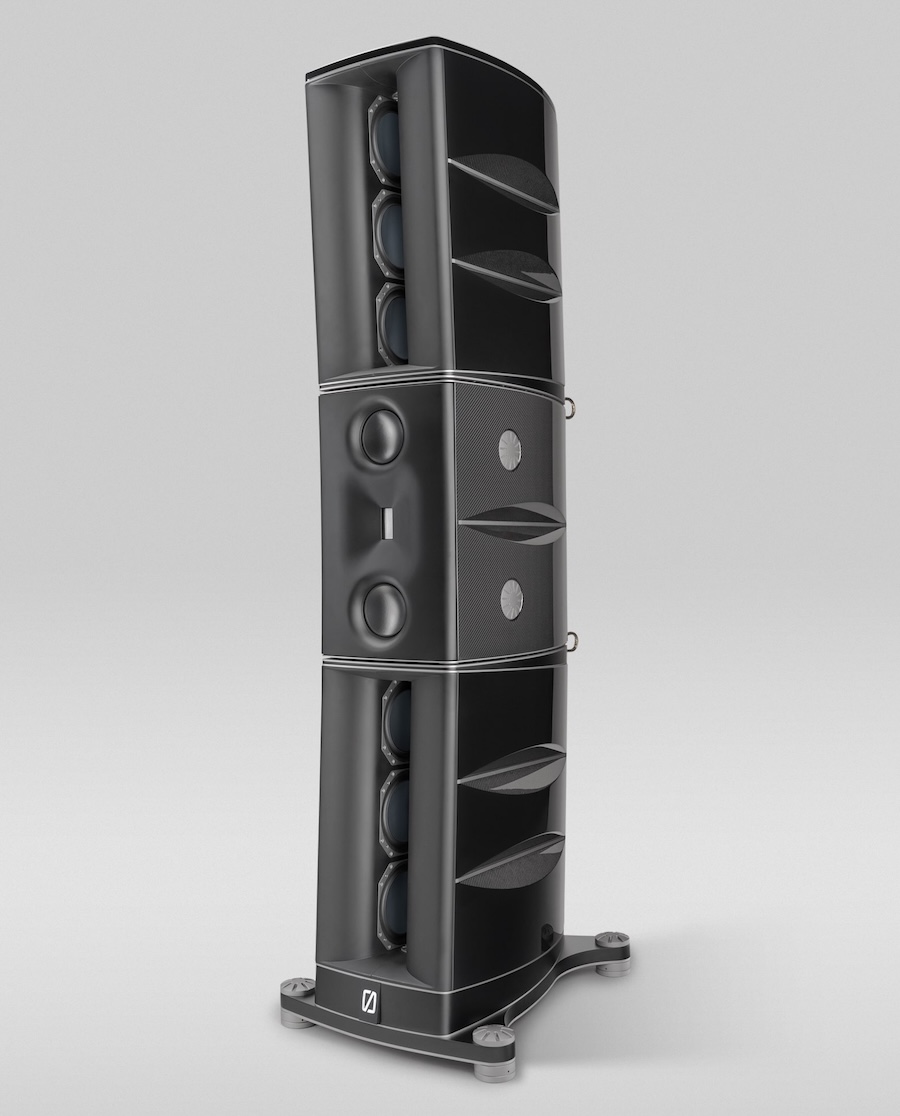
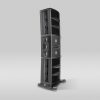
At the heart of the Børresen M8 Gold Signature is a folded dipole bass architecture that defines both its scale and its intent. Each loudspeaker uses two dedicated bass modules populated by twelve 8-inch drivers, firing forward and backward in opposing polarity. The idea is not brute force but control, managing low frequency energy before the room gets a chance to do what rooms usually do.
Every pair is built and calibrated in Denmark, with final measurements and listening sessions completed before the speakers leave the factory. The look is unapologetically serious: black high gloss lacquer, carbon accents, and zero attempt to disguise the mass.

That mass is substantial. Each speaker stands just over 87 inches tall, spans roughly 25 inches in width, and reaches more than 32 inches deep. At 325 kilograms per cabinet, or about 716.5 pounds, placement is a commitment, not a casual decision. The specified frequency range stretches from 20 Hz to 50 kHz, with a sensitivity rating of 87 dB.
The system is effectively tri sectional. Bass impedance is rated at 5 ohms, while the midrange and treble sections sit at 8 ohms, with each section requiring more than 100 watts of amplification.
The crossover between mid bass and tweeter is set at 2,400 Hz, while bass integration is handled externally via an active crossover that is not included. High frequencies are delivered by Børresen’s RP94 Gold Signature ribbon planar tweeter, supported by two IronFree5 Gold Signature drivers for midrange and upper bass duties, while twelve IronFree8 Gold Signature drivers handle the low end.
This is not a loudspeaker designed to coexist quietly in a room. The fact that it was demonstrated in an auditorium sized performance hall, elevated on a stage, says a lot about the assumptions baked into the design. Context matters here. These are loudspeakers that expect space, structural support, and a listening environment that can accommodate their scale and output without compromise.
We shall miss the children.
Craft Recordings Revives Wes Montgomery’s Full House for the OJC Series
This Craft Recordings OJC pressing of Full House ($38.98 at Amazon) is all analog from the original tapes, cut by Kevin Gray at Cohearent Audio and pressed on 180 gram vinyl at RTI. A 24-bit/192kHz high resolution digital edition is available for those who want it. Recorded live on June 25, 1962 at Tsubo in Berkeley, the album captures Wes Montgomery at a point where restraint and intensity exist side by side. He can sound smooth and measured one moment, then suddenly lean in hard enough to make you sit up and pay attention.
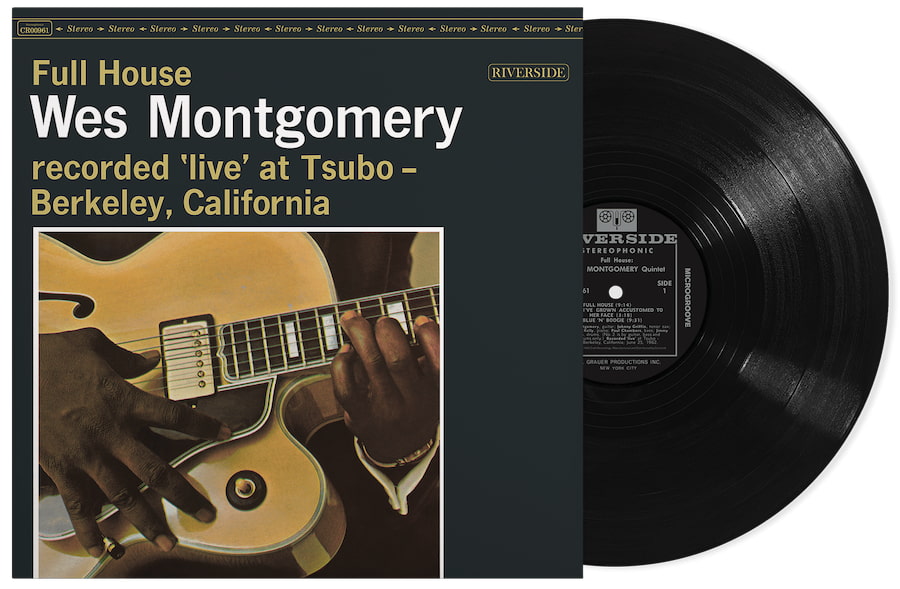
Johnny Griffin is on tenor sax, backed by the Wynton Kelly Trio with Wynton Kelly, Paul Chambers, and Jimmy Cobb, all fresh from their time with Miles Davis and fully locked in. The pressing itself is clean and well executed, with excellent clarity through the guitar and horns and a sense of presence that feels natural rather than hyped. It is the kind of record that makes you wish you had been in the room that night, even if only for a set.
An audiophile once told me, back in my twenties, that Wes Montgomery was mostly hype and not all that impressive. This came from the same guy who shushed me so we could sit through yet another Eagles demo on speakers neither of us could afford. I left the show, walked into Sam the Record Man, bought two Wes Montgomery records, and learned something useful very quickly. Some audiophiles know as little about jazz guitar as I know about the inner workings of nuclear propulsion, which is saying something considering my college roommate went on to become a USN captain running submarines and carriers.
Wes Montgomery was not hype. He was about feel, timing, touch, and control, with the ability to shift from calm to confrontation without losing the thread. Records like Full House make that obvious within minutes. Call it whatever you want, but the playing still holds up, and it still exposes bad takes just as efficiently as it did back then.
Where to buy: $38.98 at Amazon
Marantz M1 Streaming Amplifier Is Hiding in Plain Sight

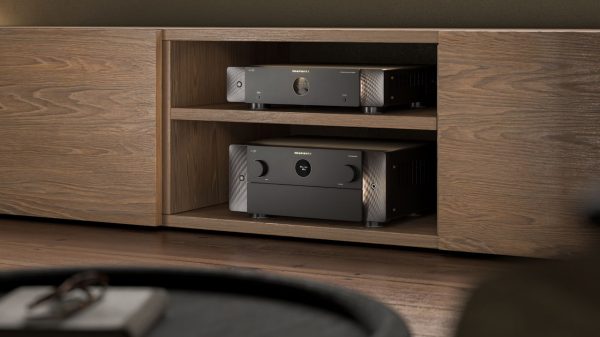
The Marantz M1 was released well over a year ago, but in a category that moves quickly, time can be useful. With so many network amplifiers competing on features alone, it is easy to miss products that take a more measured approach. The M1 does not try to dominate on paper. It focuses on stable performance, sensible design choices, and an emphasis on sound quality over spectacle.
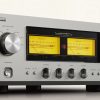
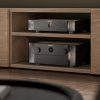
The M1 is rated at 100 watts per channel with a specified distortion figure of 0.005 percent THD. It includes HDMI eARC for television integration and provides a dedicated subwoofer output with adjustable crossover points and a plus or minus 15 dB level trim. That allows for proper configuration of a 2.1 system rather than a fixed one size approach. The amplifier operates fully in the digital domain and supports hi resolution PCM up to 24-bit/192 kHz as well as DSD playback.
Streaming and connectivity are well covered. Bluetooth, Spotify Connect, Qobuz Connect, AirPlay 2, and HEOS are all supported, with HEOS also enabling multi room playback and integration with control systems such as Control4, URC, and Crestron. There is no built in phono stage, so analog playback requires an external solution.
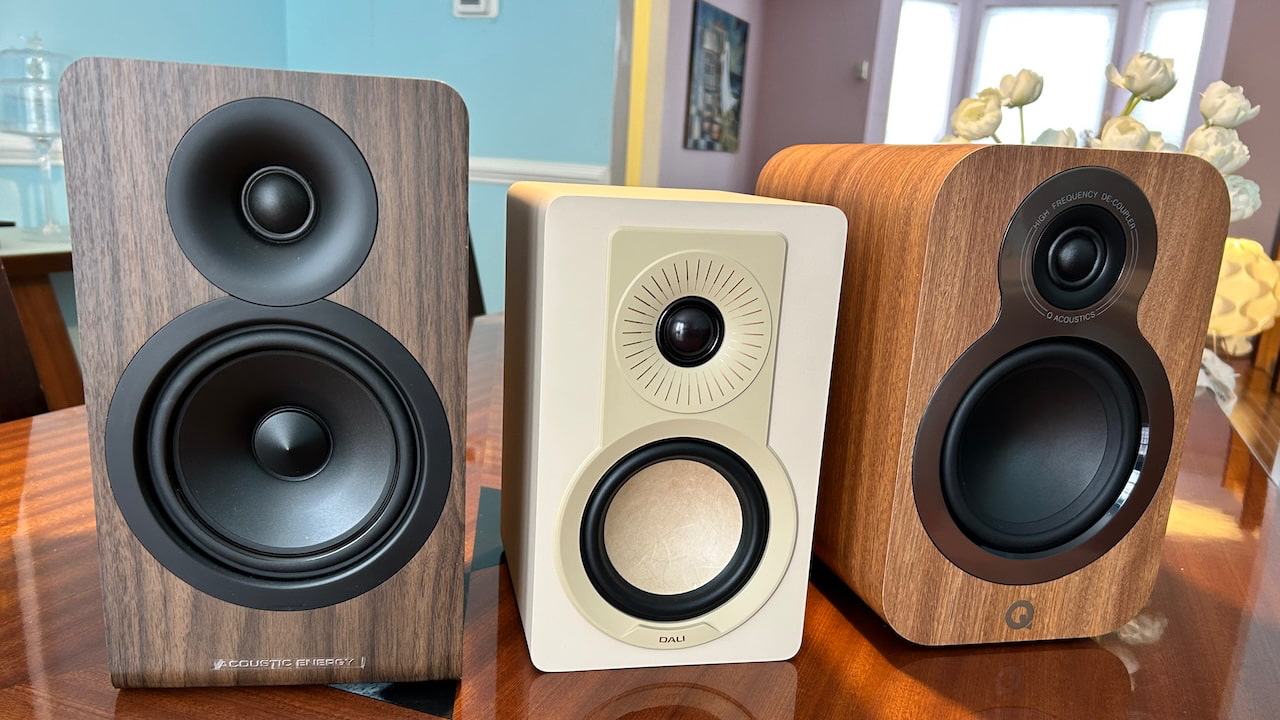
A full review is coming next week, but early listening with the DALI Kupid, Q Acoustics 3020c, and Acoustic Energy AE100 MK2 was telling. Fireworks may be a strong word, but Bluesound and WiiM may not love what follows.
Where to buy: $1,000 at Crutchfield | Amazon
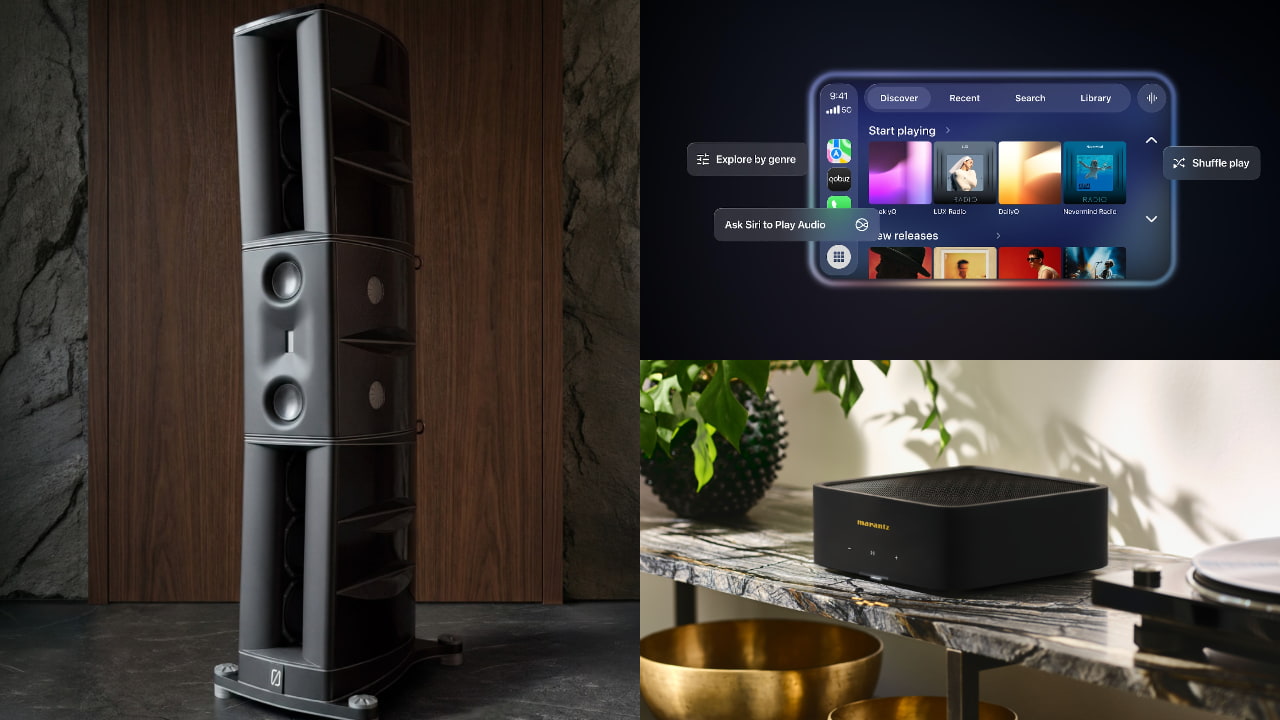
Qobuz Fixes CarPlay and Brings Siri Into the Loop
If you use Qobuz at home, great. If you use it in the car through Apple CarPlay, the experience until now has been less convincing. Scrolling through playlists while driving was awkward, the interface was not doing anyone any favors, and asking Siri to find a specific track or playlist went nowhere. That is the kind of thing that earns looks from the passenger seat that suggest you should keep both hands on the wheel.
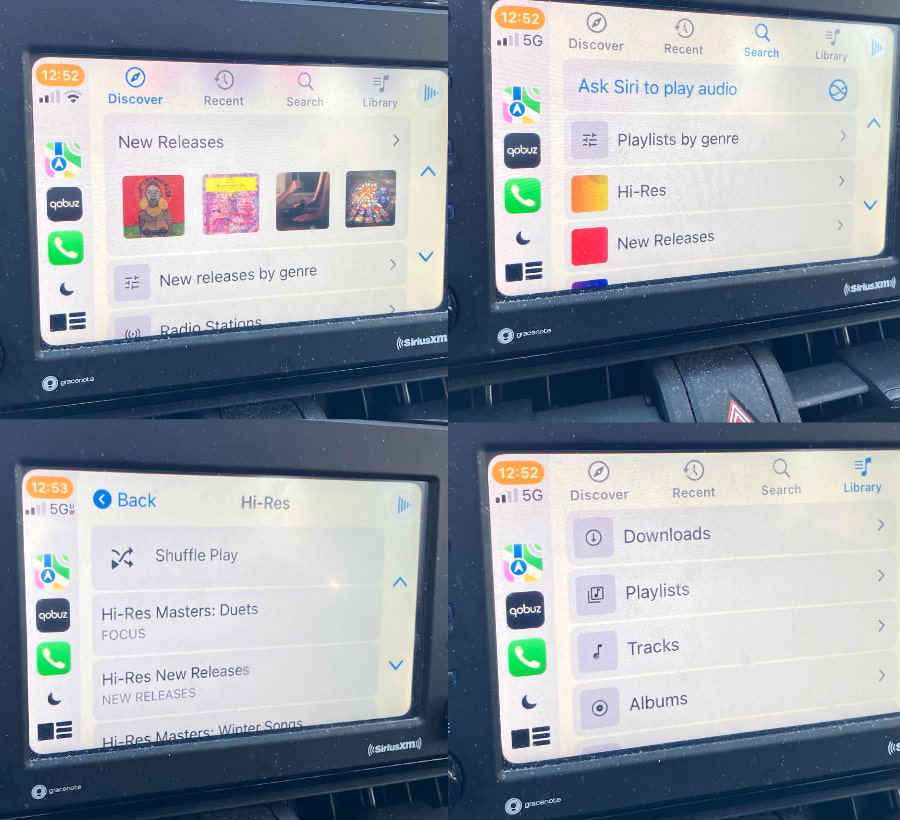
For anyone who spends real time behind the wheel, those small frustrations add up. I average 30,000 to 40,000 miles a year, and there are only so many times you can give up and start jabbing at the dashboard while the NHL Network blares on SiriusXM before it becomes a pattern. The latest Qobuz CarPlay update tackles those pain points in a practical way, improving day to day usability and finally making Siri a functional part of the experience. It does not reinvent in car listening, but it makes Qobuz far more livable where many of us use it the most.
So what did Qobuz actually change, and why does it matter. The CarPlay experience has been rebuilt from the ground up, with a cleaner interface and features that users have been asking for since CarPlay support first arrived. The biggest day to day fix is simple but overdue: shuffle is now available directly from the player, exactly where it should have been all along.
Just as important, Siri finally works the way it should. You can now search, browse, and control playback entirely by voice without poking at the screen. That includes asking Siri to play a specific playlist, artist, or favorite track, turning shuffle or repeat on and off, adding the current song to a playlist or your library, and even asking what is currently playing. The full Discover experience is also available in CarPlay, including personalized playlists, Release Watch, and Radio, all accessible safely while driving.
It is also a cosmetic update, and that part matters more than it sounds. You can now actually see things you could not before, with a cleaner layout that makes sense at a glance. Scrolling through your own playlists or Qobuz’s curated ones no longer frustrates, and discovery is finally usable on a CarPlay screen. The interface is clearer, more logical, and far easier to navigate, unlike the backseat of my car, which remains a lost cause thanks to kids and a dog.
More importantly, this cleanup makes Qobuz’s strengths visible. Hi-res playlists and editorial content are no longer buried or awkward to access, which means the stuff audio dorks and editors actually care about is front and center where it belongs. It does not just look better. It makes the service easier to live with, especially if you spend serious time behind the wheel.
David Solomon can relax. The Facebook messages will stop. Qobuz finally fixed what needed fixing, and for those of us who live in the car as much as the listening room, that actually matters. Long live Qobuz.
Related Reading:
- Culture Wars At The Super Bowl, Meze STRADA’s Curious Tuning, Record Store Day 2026, Hi-Fi Show Overload?: Editor’s Round-Up
- Jazz Dispensary At 10, Integrators In The Keys, Wireless Headphones On The Road, Catherine O’Hara, And Sinners Leading The Pack: Editor’s Round-Up
- Steve Cropper, FiiO Air Link, Wharfedale Diamond 12.3 & Other War Stories — An Editor’s Round-Up From A Hospital Bed
- The Biggest Consumer Audio & Video Stories Of 2025: What Mattered, What Changed, And Why Content Still Rules
























Candy Andy
February 15, 2026 at 9:26 pm
$2M for some speakers and amplifiers and a digital source.
This industry has lost the plot.
Only for the rich I guess.
And kudos for being transparent about how you guys operate. I can’t fathom how any of the magazines are making enough money to afford all of this coverage. At least you have writers spread out in different parts of the country and overseas to make it easier.
The YouTube crowd are definitely shady. Maybe not Darko or Gutenberg, but some are definitely in bed with the manufacturers.
Ian White
February 16, 2026 at 12:46 am
A lot to unpack here and I’m on the train but here we go.
Nobody forces anyone to buy anything and I know that they will only be making 6 pairs available per year for purchase.
At those prices, you don’t need to sell that many for it to be profitable.
The amplifiers are far more interesting to myself and the other editors that I’ve communicated with about them.
It’s a very unique design. Would love to hear them on some huge panels or very demanding full-range speakers.
Can’t imagine the power draw.
As to transparency, I think it’s important that readers know how publications operate.
You can’t take a lot of freebie trips and pretend to be objective. The reality is that you’re never being invited back if you don’t say something really nice about the products and company.
Readers should know that most brands; especially on the personal audio side, don’t play these games. Schiit Audio, FiiO, Grado, Audeze, Dan Clark, and Astell&Kern — no such freebies or junkets.
We’ve been invited to the Audeze factory in California, because Brian lives nearby.
I’ve been to Grado for a tour and to get something repaired.
Just my $0.02 for now.
IW
Francis King
February 16, 2026 at 10:06 pm
Have to agree that the rich are the only species affected by the segregation to the common folk this disply exhibits. There are limitations I as a blue collar grunt was raised to embrace as a standart. “Don’t take more than you can use/consume!” The rest is a vulgar display of greed and arrogance! Turns the dictionary meaning of ‘Elite’ to a derogatory word!
David
February 16, 2026 at 1:07 am
Ian,
Thanks to you (and the Marantz M1) for providing a bit of sanity here. These high-end manufacturer’s and their stratospherically priced gear ought not to be the focus of the bulk of the audiophile press. Nor should the press or we, as listeners, be concerned about saving the hobby or passing on our love of gear on to the next generation.
How legacy listeners enjoyed hi-fi is on the way out. The younger generations don’t see the appeal of multiple electronic boxes, or tower speakers with 15″ woofers, or even in owning a stack of vinyl records or a case of cds. They need only an smart phone and maybe a pair of BT earbuds. That is their hi-fi. Who are we to try to make sure they do it the “right way”?
David
Ian White
February 16, 2026 at 1:53 am
David,
You raise a few interesting points. I do think that the press have an obvious vested interest in saving the hobby because we won’t have anything to cover or review. What I object to is the insane amount of coverage that some of us give to these types of products that only a handful of people will ever experience or buy. I’m sure there are exotic car owners who would disagree with me on that last point (including my FIL) but I don’t see cars/audio as the same thing.
Readers have to understand that some reviewers will not cover affordable equipment because they think it’s beneath them and the hobby. That might sound crazy, but there are reviewers who will only review very expensive products (like these) because it’s their only way to experience them. And they feel special that brands will fly them out or send them out for review.
Those of us in the real world (who are actual journalists and editors) want to experience it all, but understand that if we don’t turn the next generation onto the really great sounding products that they can afford, the industry will die off.
I’ve tried (and failed) to convince my 3 children that this stuff matters. They have access to so many great products, but they don’t give a shit. They have AirPods, iPhones, and my wireless headphones (I do want them back). It’s good enough for them.
My 12 year-old daughter has been teaching herself Japanese and Russian online with her iPhone. Why? So she can understand the Japanese and Russian songs she’s found on TikTok and YouTube. I’m convinced she’s really KGB, but I’m hoping for the best.
IW