In This Article:
- The TV Market Landscape in 2025
- Best TV Overall: Sony BRAVIA 8 II QD-OLED TV
- Best Value TV: TCL QM8K
- Best Art TV: Samsung The Frame Pro
- Best Extra Large TV: Samsung 115-inch Micro RGB R95 LED/LCD TV
- Best Value Extra Large TV: Hisense 100-inch U7 Series MiniLED QLED TV
- Best Value OLED TV (TIE): LG B5 & Panasonic Z85A
- Best OLED TV for Daytime Viewing: Samsung S95F
- Best “Cost No Object” TV: Quantum Systems MicroLED Video Wall
- The Bottom Line
The TV Market Landscape in 2025
TV technology for the home has evolved over the years from CRT and rear projection displays to plasma to LCD, OLED and MicroLED. LCD TVs in particular, once the “budget option” have advanced in picture quality with highly precise MiniLED backlighting systems and Quantum Dot color technology to provide rich, bright and vibrant colors.
2025 saw the introduction of the first RGB-lit MiniLED TVs which use separate red, green and blue backlighting, instead of the white or blue backlights of traditional LED/LCD TVs. This has expanded the brightness, efficiency and color reproduction in significant ways. Both Samsung and Hisense came to market with RGB MiniLED/LCD TVs in 2025 while Sony has shown its own prototype and TCL introduced models outside the U.S. market.
OLED TVs have also advanced to add higher brightness and wider color gamut reproduction to their already exceptionally good contrast and black levels. In 2025, the two major OLED panel manufacturers, Samsung Display and LG Display, each made great strides in enhancing the brightness of their panels, and this improvement has trickled down to all the manufacturers who use these OLED panels in their TVs. These manufacturers includes Panasonic, Sony, Samsung, LG, Philips and Sansui.
The geographic landscape of the TV manufacturing market has also transformed over the years. American TV manufacturers have disappeared entirely and Japanese TV makers have exited the panel fabrication business, leaving Korean panel manufacturers like LG and Samsung and Chinese TV makers like Hisense and TCL (and others) to provide the bulk of the raw panels used in today’s TVs.
This is not to say that Japanese manufacturers have been idle – far from it. In fact, Sony offers some of the top performing TVs on the market today, with the actual OLED and LCD panels made by other manufacturers being driven by Sony’s industry-leading picture processing software. Panasonic also uses 3rd party panels in their OLED and MiniLED/LCD TVs and the company re-entered the U.S. TV market late last year with some really strong offerings.
Below are our picks for Editors’ Choice awards for best TVs in a number of different categories. All models included in our 2025 Editors’ Choice picks are those we have reviewed or spent extended viewing time with and, while not all models were first released in 2025, they are all currently in production and available to purchase in 2025 heading into 2026. Prices listed are current “street prices” in late November, early December, 2025.
Best TV Overall: Sony BRAVIA 8 II QD-OLED TV
New in 2025, Sony’s BRAVIA 8 II mates the latest QD-OLED panel from Samsung Display with Sony’s latest generation AI picture processing for stunning picture performance. With roughly 25% higher HDR brightness than its predecessor, the A95L, the BRAVIA 8 II can now actually perform well in rooms with moderately bright lighting while continuing to offer best-in-class picture quality in darker rooms. Combine this advanced picture performance with the robust Google TV streaming platform and you get a total package that’s hard to beat.
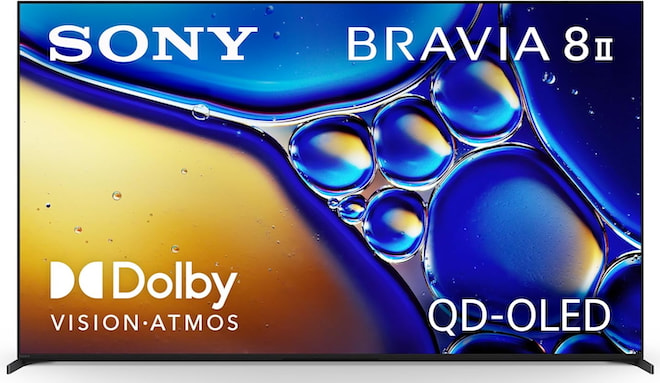
Winner of the 2025 TV Shootout, the Sony BRAVIA 8 II excels with perfect black levels, industry-leading contrast and advanced picture processing. It shines with wide gamut 4K Dolby Vision content but can even make low bandwidth streaming sources like YouTube videos and old school DVDs look eminently watchable. The BRAVIA 8 II also offers automatic “calibrated” modes for Netflix, Amazon and Sony Pictures Core, resulting in strong out-of-the-box picture performance on virtually any type of content.
Sony also offers unique features for audiophiles and videophiles with its Sony Pictures Core high quality streaming service and support for DTS:X surround sound on IMAX Enhanced titles on both Disney+ and Sony Pictures Core. The set also supports Dolby Atmos immersive surround. The company’s unique “Acoustic Surface Audio+” tech uses actuators to turn the entire screen into a speaker, which gives the BRAVIA 8 II fuller, more precise sound than most competitors and makes the TV a great center channel speaker when used with Sony soundbars like the BRAVIA Theater Bar 9 or the BRAVIA Theater Quad speaker system.
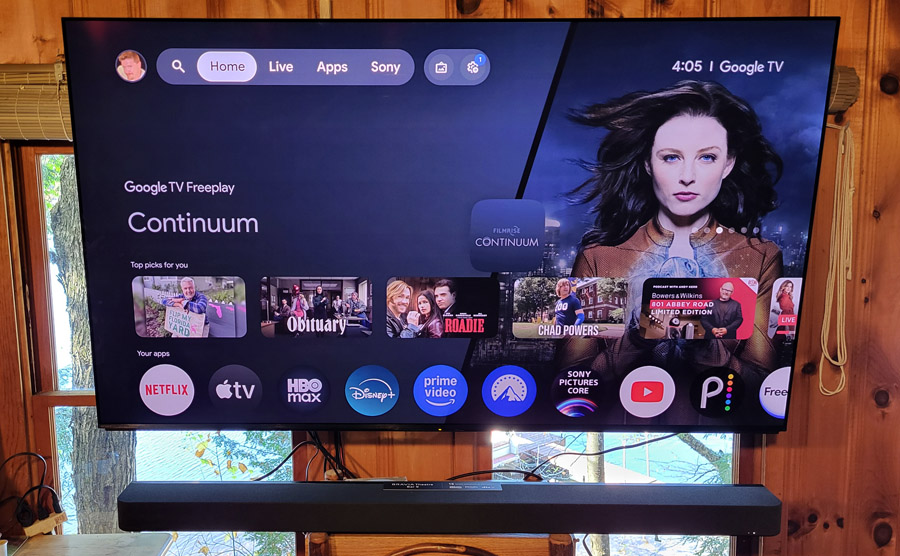
Sony list price of the 65-inch BRAVIA 8 II is $3,299 but it has been selling for $2,299 in late 2025 at authorized retailers.
Pros:
- Excellent black levels and contrast
- Outstanding detail
- Exceptional color accuracy and saturation
- Looks particularly good with high quality HDR10 and Dolby Vision 4K HDR sources
- Robust Google TV streaming platform
- Support for DTS:X in Disney+ and Sony Pictures Core
- Auto Calibration modes for Netflix, Amazon Prime and Sony Pictures Core offer excellent out-of-the-box performance optimized for content
Cons:
- Relatively expensive
- No support for HDR10+
- Only available in 55-inch and 65-inch screen sizes
Where to Buy:
- Check Current Price on the Sony BRAVIA 8 II OLED TV at Amazon or Crutchfield ($2,299 as of 12/2/25)
Best Value TV: TCL QM8K
While Sony’s flagship BRAVIA 9 was the highest performing MiniLED/LCD TV of 2024 and it remains current in Sony’s line-up for 2025, its relatively high price (currently $2,200 street price) makes it a bit of tough sell, particularly when competitive models sell for half the price, or less. Meanwhile one of those competitors, TCL, took last year’s “8” series Mini-LED TV, and made it better in 2025 in almost every way while still hitting a fairly affordable price point.

The 2025 model year QM8K offers a significantly improved Mini-LED backlight control system which greatly minimizes haloing of bright objects on a dark background and improves shadow detail in darker scenes. The company also improved the off-axis viewing as well as color accuracy and HDR performance courtesy of their “QLED Ultra” technology. It may not have the ultimate black levels of an OLED, but its MiniLED local dimming comes pretty close and its high peak brightness makes it a great candidate for bright room viewing.
This is why TCL’s latest “8” series model QM8K MiniLED/LCD TV (review pending) is getting our Editors’ Choice pick for “Best Value TV” of 2025. The 65-inch version is currently selling for just under $900 and the massive 98-inch model is just under $3,000 (both on Amazon).
Pros:
- Extremely bright
- Excellent color accuracy thanks to TCL’s QLED Ultra technology
- Improved shadow detail and reduced haloing compared to previous generation
- Google TV platform offers rich selection of streaming apps and intuitive user interface
- Available in multiple sizes from 65 to 98 inches (diagonally)
- Superb value
Cons:
- Some image uniformity issues visible on full field black or grey screens
- Some minor haloing on challenging content like white text scrolling on a black screen
- Google TV versions of some apps (like Peacock) do not support 4K/HDR or Dolby Atmos
Where to Buy:
- Check Current Price of 65-inch QM8K on Amazon ($898 at time of publication)
- Check Current Price of 98-inch QM8K on Amazon ($2,999 at time of publication)
Best Art TV: Samsung The Frame Pro
Samsung invented the “Art TV” concept with The Frame. Designed with a matte screen, elegant frame (bezel) options, and the ability to mimic artwork like paintings and photographs nearly perfectly, The Frame has been a huge hit with customers who want their big TV to blend in with their room decor when not in use. The Frame offers custom bezels which attach easily and precisely using magnets. Installing or swapping bezels can be done in a matter of minutes. It even uses an ambient light sensor to optimize the screen image in different lighting conditions. But prioritizing aesthetics over performance led to a less than stellar TV viewing experience.

This year, Samsung introduced The Frame Pro. It features a version of Samsung’s local dimming technology with a MiniLED light source (though it uses edge lighting and not a full array backlight system). The Frame Pro also includes an enhanced AI-driven processor to improve the overall brightness and picture performance without sacrificing the Frame’s ability to pass itself off as fine artwork when not being used. These improvements offer a significant bump in picture quality, but make no mistake: the Frame Pro is still an Art TV first, and picture performance is secondary to that.
The Frame Pro also improves on its predecessor by changing the separate “One Connect” box to now be wireless instead of hardwired. This means installers only need to run a power cable to the TV while all source management and switching is done on the separate box which can be located up to 30 feet away. It’s too early to say whether this wireless connection option will introduce its own issues, but in the time I spent with the unit at Samsung’s QA Labs in New Jersey, its performance and connectivity were solid, even on high bandwidth 4K/HDR signals.

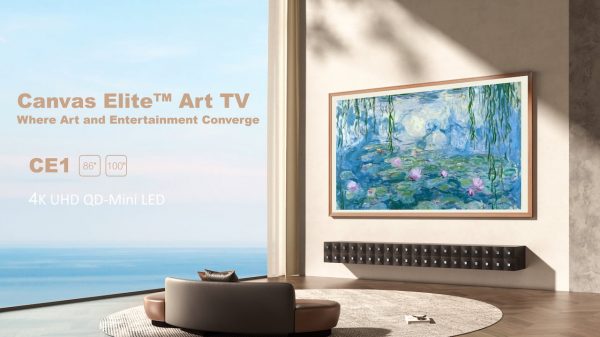
Other TV makers like Hisense and TCL have recently joined the “art TV” party with their own models while companies like LG and Sony partner with companies like Leon for custom art-style frames for their existing TVs. But Samsung invented the art TV market and their head start here clearly translates to a superior product overall. Samsung offers a rich catalog of artwork from old masters to modern works and allows the user to display their own custom artwork or photographs, if desired. Note that access to Samsung’s Art Store incurs a subscription fee – currently $50/year.
For those who want a TV to fit into their décor instead of drawing attention to itself, The Frame Pro offers design-friendly alternative to the traditional black rectangles with their shiny reflective screens and thin black bezels. Also, The Frame Pro offers all of the features of Samsung’s Tizen Smart TV platform so when you’re ready to “Netflix ‘n Chill” The Frame Pro won’t hold you back.
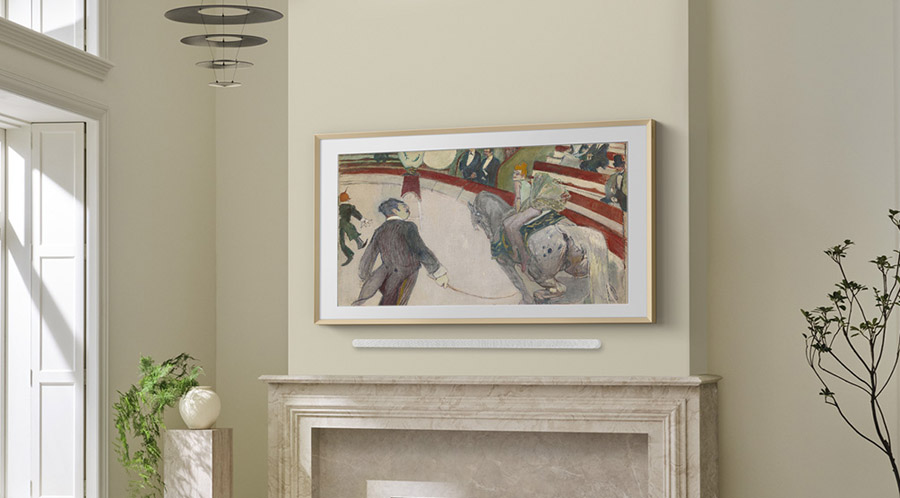
Those who want improved picture performance but still like the idea of a TV that shows artwork when not in active use will be happy to hear that Samsung has expanded Art Store access to its high-end QLED TVs in 2025. And if you want that matte glare-free screen, similar to The Frame, then you can get that on the flagship QN90F MiniLED TV. You won’t have custom bezel options as you do with The Frame, but you will get an “Ambient Mode” which can display photographs or artwork when the TV is not in active use.
Pros:
- The best Living Room TV for those who don’t want a TV in their Living Room
- Very effective at passing as an actual painting or photo print when not in use
- Includes the full Tizen Smart TV platform for streaming and smart home integration
- Improved picture performance over The Frame
- Super slim profile
Cons:
- Relatively expensive
- Separate Box for source connection can complicate installation
- Doesn’t match picture quality of traditional OLED and MiniLED/LCD TVs
Where to Buy:
Best Extra Large TV: Samsung 115-inch Micro RGB R95 LED/LCD TV
We first saw a prototype RGB backlit MiniLED TV on a trip to Sony’s headquarters in Japan. Sony might not be ready to unveil a production model just yet, but the prototype they showed us offered excellent picture quality with deep almost OLED-level blacks, good off-axis viewing and an extended color palette. RGB MiniLED TVs differ from traditional LED/LCD TVs in that they use separate red, green and blue backlight elements instead of the white or blue LED backlights used on most LED/LCD TVs. This makes the set more efficient, which is important at these huge screen sizes, and it offers a much wider color gamut than standard LED/LCD TVs, even those with Quantum Dot color layers.
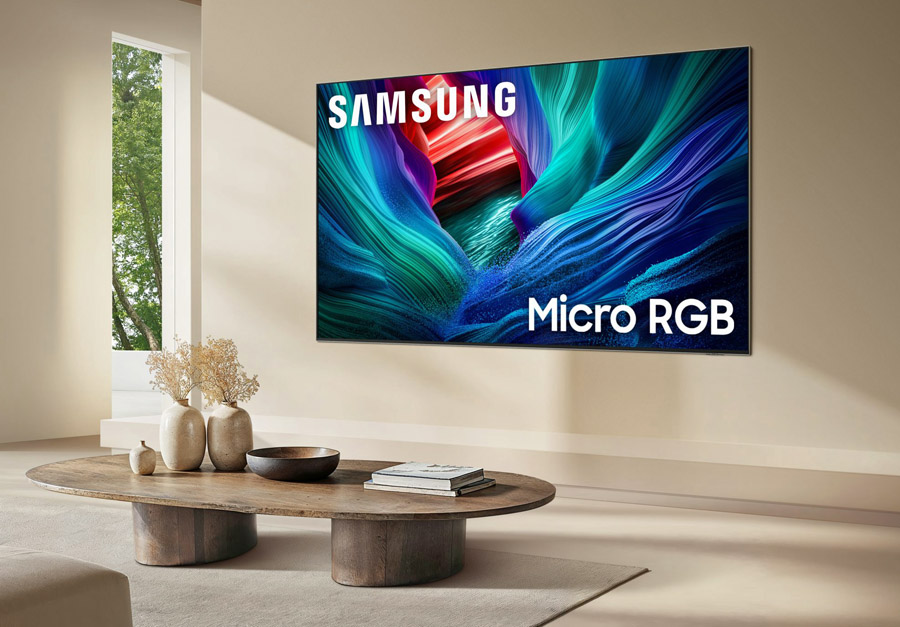
Hisense and Samsung did unveil production model RGB LED-backlit TVs in 2025, the 116-inch Hisense 116UX and Samsung’s 115-inch R95 MICRO RGB LED TV. Both TVs look impressive, not only in sheer size, but in their ability to reproduce colors we haven’t seen on consumer televisions before. Hisense claims 95% of the elusive REC.2020 color gamut, while Samsung states that their Micro RGB TV can hit a full 100% of REC.2020 (at least if you have one color on-screen at a time).
While we haven’t done formal reviews of either, we have spent extended time with both and were extremely impressed by what we saw. And they should be impressive: each one lists for a cool $30K (though the Hisense is on sale for the holidays for just $19,999). Meanwhile, the Samsung version has yet to be discounted from its $30K list price.

In terms of performance, both TVs are excellent performers with reduced haloing compared to traditional LED/LCD TVs and bright vibrant colors, but the Samsung appears to have a slight edge in halo reduction, motion handling and shadow detail over the Hisense model and it also offers more punch and three dimensionality in its color reproduction. It could be something in Samsung’s advanced AI processor or in the actual hardware of the backlighting system – Samsung’s individual lighting elements are in the sub-100 micron level and there appear to be more of them. This leads to greater precision in the backlighting system and thereby lower haloing as well as better screen uniformity.
The Samsung R95 also features the latest version of the company’s glare free matte screen which allows the image to be quite viewable even in a bright room. The Hisense screen reduces room light reflections as well, but not to the level that Samsung does.
Pros:
- Massive image suitable for a large living room or small to medium home theater
- Excellent color reproduction with rich vivid colors
- Minimal haloing around bright objects on dark backgrounds
Cons:
- Expensive
- Still some LCD TV artifacts like DSE (Dirty Screen Effect) and haloing visible on some content
Where to Buy:
Best Value Extra Large TV: Hisense 100-inch U7 Series MiniLED QLED TV
This year, despite the pricing uncertainty introduced by tariffs, we’ve seen some crazy low prices on extra large TVs with some 98-inch models priced under $1,000 during the Black Friday/Cyber Monday madness. But as with anything in life, pay a little extra, get a little extra. And in the case of the Hisense U7 Series QLED MiniLED TV, pay a little extra to get a lot extra: a native 165 Hz panel with four full bandwidth HDMI 2.1 ports, ideal for both gamers and sports enthusiasts, precision backlighting with full array MiniLED backlights, support for HDR10+ and Dolby Vision dynamic HDR and a massive 100-inch diagonal screen that brings a cinematic feel to everyday TV viewing.

The U7’s integrated Google TV O/S means you’ll find all the usual streaming apps available. And you’ll also get your choice of casting options from a mobile device with support for both Apple AirPlay 2 and Google Cast. The U7 supports Dolby Vision IQ as well as HDR10+ dynamic HDR and can hit brightness peaks up to about 3,000 nits so it’s perfectly watchable in bright rooms and can handle even the most dynamic films and TV shows in 4K/HDR.

The Hisense U7 is also one of only a few select models to support DTS:X sound on the Disney+ app on IMAX Enhanced content, though we have not yet directly tested this feature on this TV.
The 100-inch Hisense U7 is currently selling for about $2,200 at the time of publication.
Pros:
- Bright image (up to 3,000 nits peak brightness)
- Native 165 Hz panel and strong gaming features
- Anti-glare screen treatment enables bright room viewing
- Supports both Dolby Atmos and DTS:X surround sound
- Support for HDR10+ and Dolby Vision dynamic HDR
- Great value for a huge TV with strong video performance and features
Cons:
- Can be a bit too bright on some content
- Some visible haloing and blooming on bright objects with dark background
- Some motion artifacts on fast-moving objects
Where to Buy:
- Check price of Hisense 100-inch U7N QLED Mini-LED 4K TV on Amazon ($2,200 at time of publication)
Best Value OLED TV (TIE): LG B5 & Panasonic Z85A
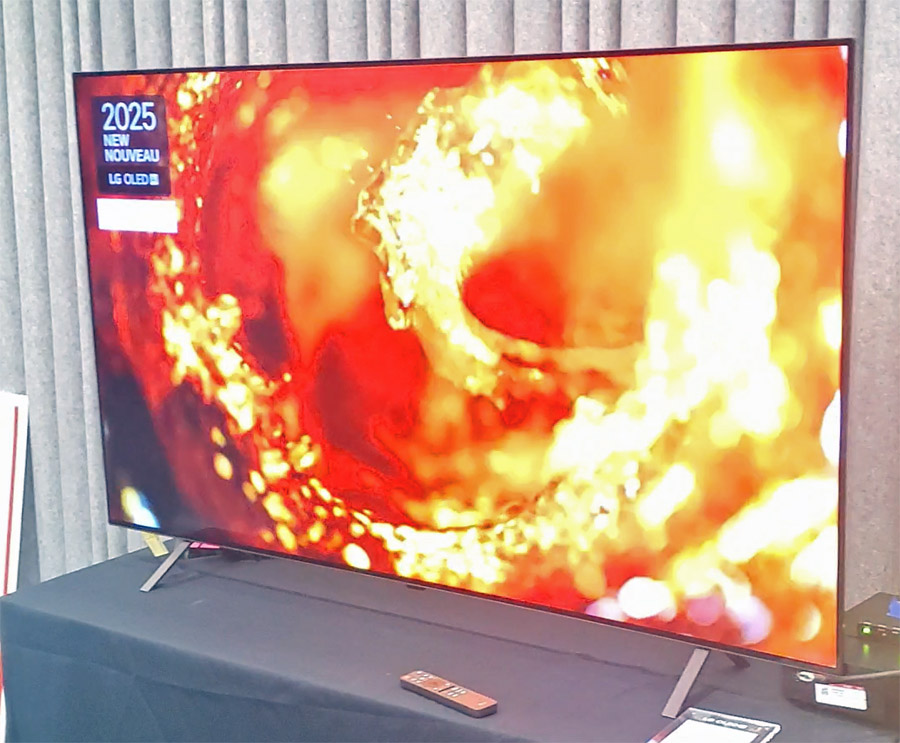
As far as MiniLED/LCD TVs have come – even with RGB backlighting – they still can’t beat the black levels and pixel-level lighting precision of an OLED TV. Unless you’ve got a very brightly lit living room and you don’t like to turn down the lights, we’d recommend an entry-level OLED TV from a name brand like Samsung, Sony, Panasonic or LG over a mid-tier to high-end MiniLED/LCD TV for most buyers. And two budget-priced OLED TVs stand out to us this year for excellent value: LG’s B5 and Panasonic’s Z85A. As of November, 2025, both are selling for around $1,000 in their 65-inch screen sizes.
LG B5 4K OLED TV
The LG B5 is a 2025 model which features LG’s latest OLED panel, though not the quad stack Tandem RGB OLED panel found in the flagship G5 OLED TV. Compared to its predecessor from 2024, the B4, which we reviewed last year, the B5 offers similar picture performance but it includes a more powerful processor which should lead to an overall improved user experience, compared to the 2024 model.
Pros (LG B5)
- Affordable for an OLED TV
- Excellent black levels and contrast
- Good out of the box color accuracy
- No haloing, blooming or DSE
- Supports both Apple AirPlay 2 and Google Cast for casting from Apple or Android mobile devices
- Supports Dolby Vision and Dolby Atmos
- Four full bandwidth HDMI 2.1 ports
Cons (LG B5)
- Some apps (like PBS) missing
- LG Magic Remote is not for everyone
- No support for HDR10+ or DTS sound
- No ATSC 3.0 (Next Gen TV) tuner
- Not ideal for bright room viewing

Panasonic Z85A 4K OLED TV
The Panasonic Z85A was introduced in late 2024 but is still current in Panasonic’s line-up. It offers picture performance that is extremely close to the LG B5, with excellent contrast and black levels, but slightly lower SDR brightness which makes it a bit less well suited for bright room viewing. Like the B5, the Z85A offers excellent out of the box color accuracy, which can be further tweaked with calibration.
Neither of these sets can match the peak brightness levels of current flagship OLED TVs like the Panasonic Z95B or LG G5, but their prices are less than half what the flagship sets are currently selling for. And the entry level sets’ near perfect black levels make for an enjoyable viewing experience in moderate to low room lighting, whether on movies, episodic TV or sports.
Pros (Panasonic Z85A):
- Affordable for an OLED TV
- Excellent black levels and contrast
- No haloing, blooming or DSE
- Good out of the box color accuracy
- Supports Apple AirPlay 2
- Includes ATSC 3.0 (Next Gen TV) tuner
- Supports both HDR10+ and Dolby Vision dynamic HDR as well as Dolby Atmos
Cons (Panasonic Z85A):
- No support for DTS sound
- Some apps (like Apple Music) are not available on FireTV
- Amazon FireTV OS and streaming platform is not for everyone
- Only 2 of the 4 HDMI ports support HDMI 2.1
Which to Choose: LG B5 or Panasonic Z85A?
With very similar overall performance, the choice really comes down to features and user experience. Neither set supports DTS:X sound while both support Dolby Atmos. For dynamic HDR, the Panasonic Z85A supports both Dolby Vision and HDR10+ while the LG B5 supports Dolby Vision only. The Z85A includes an ATSC 3.0 “NextGen TV” tuner, while the LG B5 only includes an ATSC 1.0 tuner.
Both TVs include a robust smart TV platform: LG’s own WebOS on the B5 and integrated FireTV on the Panasonic. While some criticize the FireTV’s overly commercial user experience (with more ads than some other platforms), there are also those who do not enjoy the LG user experience thanks to its odd “Magic Remote.” Both platforms support all the popular streaming services, with a few exceptions: the PBS app is not currently available on LG’s WebOS, while it is available on FireTV. Apple Music is not available on FireTV, but is available on LG’s WebOS. Both TVs support casting from Apple devices via AirPlay 2, but the LG also supports Google Cast, where the Panasonic Z95A does not.
When I needed a new TV for my own living room, the Panasonic Z85A is what I chose. To get those deep OLED blacks in a 65-inch TV from a name brand for less than $1,000? It was a no-brainer. This makes the Panasonic Z85A the literal “Editor’s Choice.” But, at the time, the LG OLED was about $200 more expensive than the Panasonic. With the prices closer (as they are now), I might have gone with the LG. Both are excellent TVs at this price point.
Also, Best Buy has an exclusive on the smallest B5 (48-inch) which they were selling during the during the Black Friday/Cyber Monday weekend for $549.99 (though it has gone up to $649.99). Note: Prices do vary, so click the links below to view current pricing.
Where to Buy:
- 65-inch Panasonic Z85A 4K OLED TV on Amazon ($999)
- 65-inch LG B5 4K OLED TV on Amazon ($977)
- 48-inch LG B5 OLED (Best Buy Exclusive) ($550-650)
Best OLED TV for Daytime Viewing: Samsung S95F
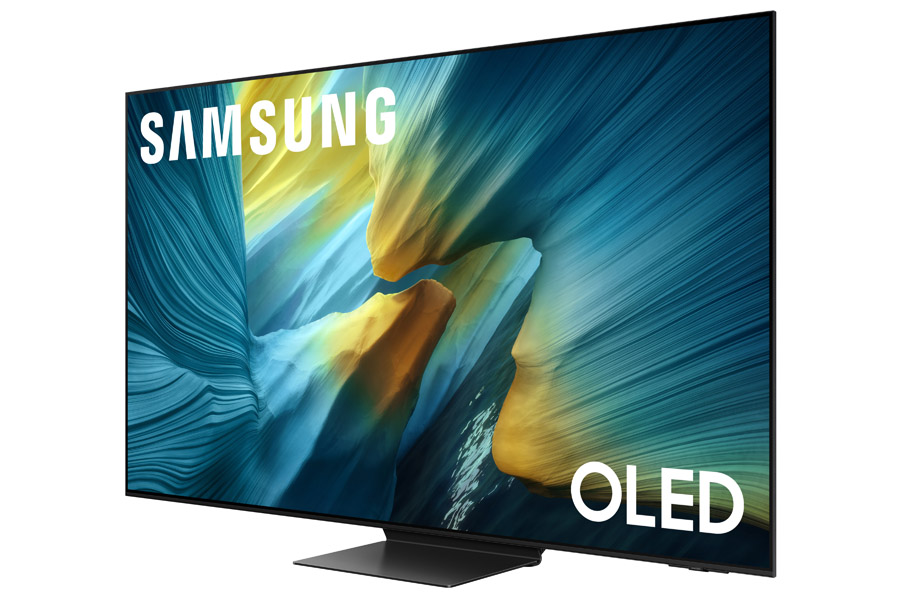
Samsung is the top selling TV brand worldwide, and, while they abandoned the OLED format (temporarily), they’ve come back strong in the past few years with their QD-OLED TVs. These TVs combine the pixel-level lighting precision of OLED TVs with the extended color reproduction of Quantum Dots. But Samsung also adds their own secret sauce in the form of a “Glare-Free” matte screen coating. This allows the company’s flagship MiniLED/LCD and OLED TVs (like the S95F OLED TV) to virtually eliminate room light reflections on the screen while preserving OLED’s picture quality advantages in contrast and black levels.
While we were critical of the first version of Samsung’s “glare free” tech, we believe the improved version available in 2025 does a great job balancing the elimination of reflections with a slight loss of black levels and contrast.
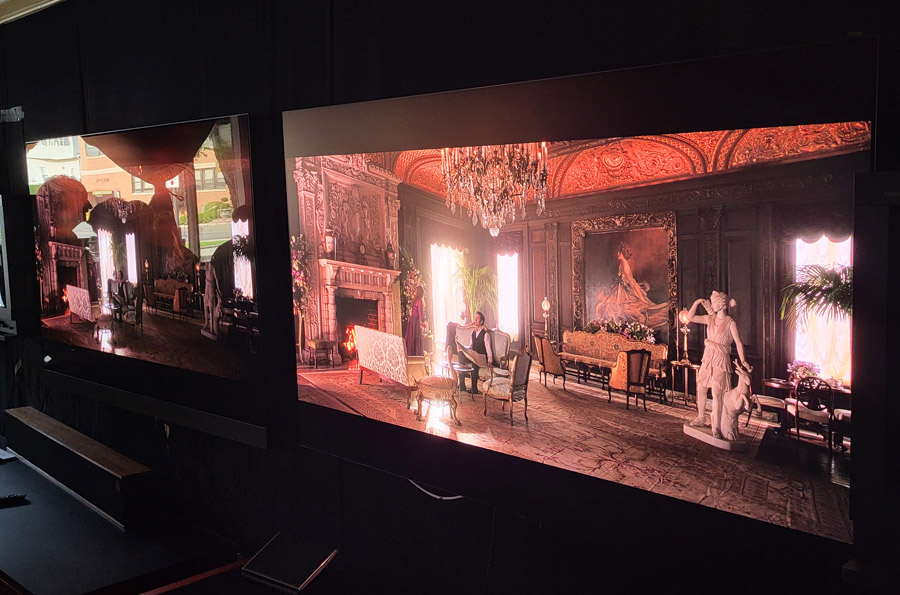
Of course, the S95F looks great in a dark room (as most OLED TVs do), but it can actually maintain a bright punchy image even when you turn the lights on, and that makes it ideal for a mixed use TV that may be used in both bright and dark room environments. The S95F features a native 165 Hz panel which make it great for gamers and for those who watch sports and appreciate smooth motion reproduction. The set’s four HDMI 2.1 ports support VRR (Variable Refresh Rate) and ALLM (Auto Low Latency Mode) for gaming.
Pros:
- Very bright for an OLED TV (over 2,000 nits peak brightness)
- Native 165 Hz panel enables excellent motion reproduction
- Four full bandwidth HDMI 2.1 ports with Variable Refresh Rate (VRR), and Auto Low Latency Mode (ALLM) for gaming
- Glare Free 2.0 screen treatment enables bright room viewing
- Support for HDR10+ dynamic HDR
Cons:
- Some reduction in contrast and black level in bright rooms
- No support for Dolby Vision
Where to Buy:
Best “Cost No Object” TV: Quantum Systems MicroLED Video Wall
To call the Quantum Pro Cinema XDR MicroLED Wall a “TV” is a bit like calling the Titanic a “boat.” Yes, the Quantum display produces a gorgeous moving image, similar in many respects to an OLED TV, but much, I mean MUCH larger. The 20-foot wide model I saw at CEDIA Expo starts at $350,000, and goes up from there, depending on options.

Similar to OLED TVs, MicroLED displays have self-illuminating pixels: each individual component of the image lights up and darkens independently. This prevents the haloing, blooming and image uniformity issues we see on all LED/LCD TVs (to a greater or lesser extent).
Micro LED Walls are not new, but I’ve never been that excited about them in the past due mainly to their Achilles heel: visible seams. Unlike OLED and MicroLED/LCD TVs, which have screens carved from a single piece of “motherglass,” MicroLED walls are comprised of multiple small flat panel display modules joined together to create a single massive display. And apparently Quantum Media Systems has gotten very good at hiding those seams.
Not only are the individual MicroLED panels manufactured with tight tolerances and meticulous quality control, but the company spends several days (sometimes up to a week) installing and calibrating each unit for each customer. They painstakingly calibrate each component display for brightness, color reproduction and color temperature so that there are no color anomalies or lighting uniformity issues from panel to panel.
All Quantum Display MicroLED walls are cutom-built and can be configured for multiple shapes and aspect ratios, with the two most popular being 16:9 and 21:9 (CinemaScope).
For more information, check out this article: My Favorite TV at CEDIA Expo was 20 Feet Wide and Starts at $350,000
The Bottom Line
TV buyers have more choices than ever in 2025, at a wide range of prices, performance and screen sizes. Whether you’re looking for a budget model for a bedroom or second home, the centerpiece of a dedicated home theater, a discrete “Art TV” that blends in with your living room, or a massive cinematic screen that sells for more than the average house, you should find something to love in this year’s batch of Editors’ Choice TV picks.
Related Reading: