NAMM is the music industry’s annual pilgrimage to Southern California, held January 20-24, 2026 at the Anaheim Convention Center organized by the industry’s trade association. Traditionally, this is where guitars, synths, microphones, software tools, and PA systems dominate the conversation; gear built for live stages, studios, and everything in between. But that narrow view no longer holds.
NAMM has quietly evolved. Alongside the instruments and pro-audio workhorses, the show now features a growing presence of high-end audio that matters to audiophiles and serious music lovers: active loudspeakers designed for real listening rooms, headphones that blur the line between studio and home use, and electronics that wouldn’t look out of place in a dedicated two-channel system. That shift is exactly why we went hunting—past the amps and drum kits—for the gear that actually earns a place in an audiophile conversation.
Table of contents
- ATC SCM150ASL Pro & SCS120 Pro
- Augspurger DUO 8 Sub212-SXE3/3500 System
- Kii Audio THREE BXT
- Best Dolby Atmos Music: Fleetwood Mac with Neumann 9.1.4 System
- PMC Dolby Atmos 9.1.6
- AKG Studio Reference System with Dolby Atmos in the Cadillac Escalade IQ
- Pioneer Sphera Aftermarket Dolby Atmos
- Spatial9
- Audeze LCD-5s
- 64 Audio Aspire 3
- Beyerdynamic HEADPHONE LAB
- Bassboss Stackatoa
ATC SCM150ASL Pro & SCS120 Pro
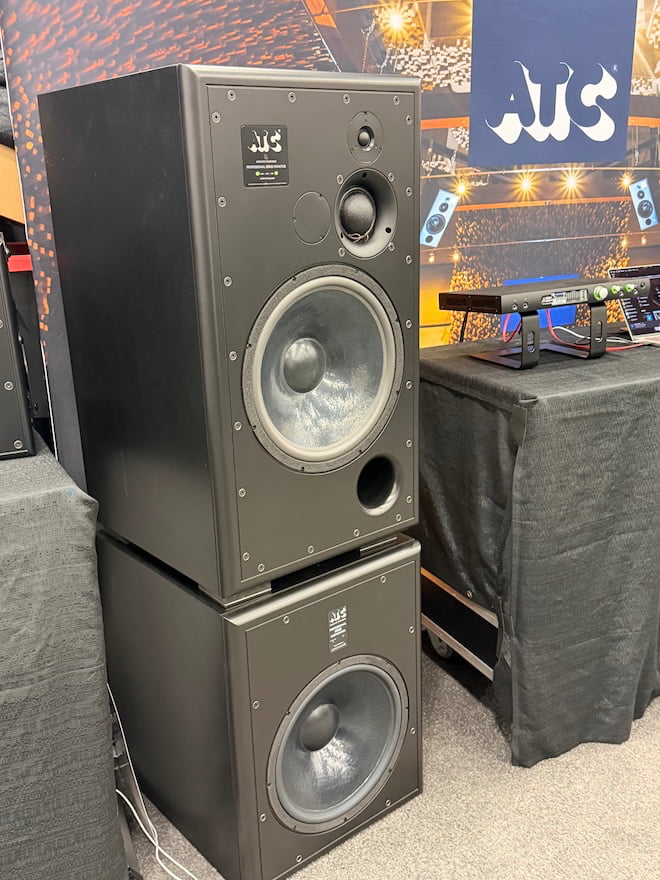
I was fortunate enough to hear ATC’s latest studio monitors and new 15-inch SCS120 subwoofer on two very different occasions. One was on the busy NAMM show floor, the other at a pre-show launch event held at the iconic EastWest Studios in Hollywood, California. Hearing similar setups in radically different environments made the strengths of ATC’s approach unmistakably clear.
In the live room of Studio 1 at EastWest, ATC demonstrated their SCM110ASL Pro wide monitors ($23,490/pair) with the new SCS120 subwoofer at $6,990 each. On the show floor, the scale went up another notch, with the SCM150ASL Pro monitors ($25,490/pair) stacked atop the same subwoofer, creating a physically imposing and sonically commanding presentation.
While these systems are designed primarily for mid-field or soffit mounting in controlled studio environments, ATC still managed to command attention on the show floor. Bass was deep and tightly controlled, never loose or overbearing, while the midrange reminded everyone why ATC has such a formidable reputation in professional circles. Vocals had body and presence, transient punch was immediate, and fine detail emerged without sounding forced or hyped.
Whether heard in a world class studio or a crowded trade show hall, the takeaway was consistent. ATC’s monitors deliver scale, accuracy, and authority in a way that feels effortless. They are not built to impress casually. They are built to tell the truth, loudly and clearly.
Augspurger DUO 8 Sub212-SXE3/3500 System
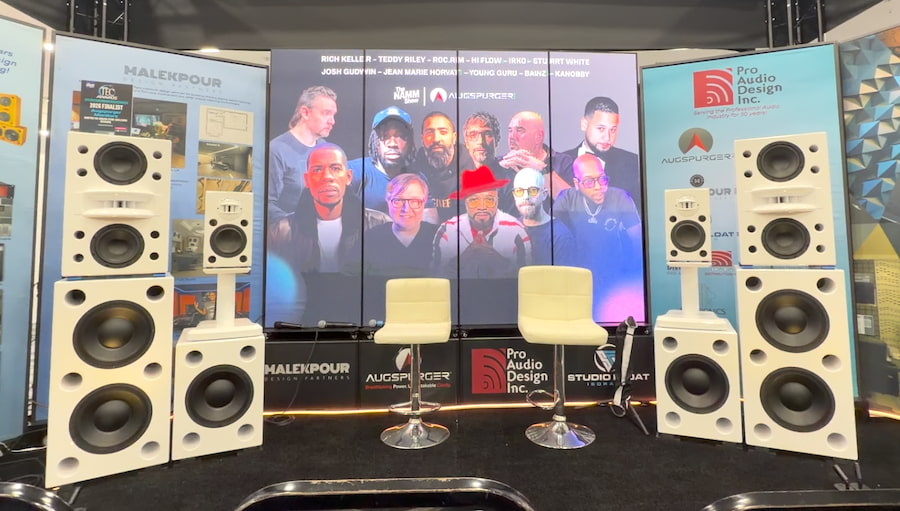
The Augspurger booth at NAMM is practically a show within the show. Founded and led by Dave Malekpour, it routinely draws Grammy winning engineers and artists who rely on Augspurger monitors to make real world decisions. After spending time with the system, it is easy to understand why these speakers are trusted by Snoop Dogg, Alicia Keys, Dr. Dre, and countless others. If your goal is to hear exactly what the artist and engineer intended, especially in hip-hop and modern pop production, Augspurger monitors make a very strong case. In terms of clean SPL, precision, and sheer impact, they can easily rival or outperform many high-end hi-fi speaker systems.
This year, Dave showcased two formidable systems. Returning was last year’s eCoustics Best in Show winner, the MX65 Sub12-SXE3D system priced at $17,500. Sharing the spotlight was this year’s standout, the larger DUO 8 Sub212-SXE3/3500 System, priced at $29,500. Both systems delivered effortless dynamics and scale, but the DUO 8 setup in particular stood out for its authority and control at high levels. Custom finishes are available in gloss or matte, with options like the glossy white shown adding $4,000 to the base price.
What separates Augspurger from many monitor brands is that Dave is not simply selling speakers. He offers a true concierge studio design approach that can include room acoustics, architectural planning, and final calibration through his affiliated brands Jocavi, Studio Float, and Malekpour Design Partners. For those who do not require full build out services, remote or on-site system tuning is also available, typically ranging from $1,500 to $2,500.
This is not hi-fi as living room décor. It is monitoring built to reveal truth at scale. And once you hear it, it is hard to forget.
Kii Audio THREE BXT
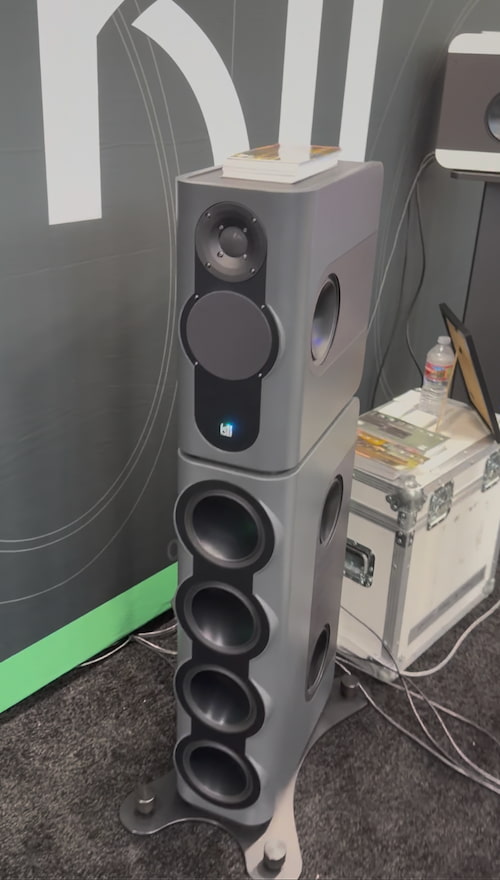
The Kii Audio THREE BXT doesn’t exactly roll off the tongue, and the technology-forward pitch—DSP-controlled, active, cardioid—might scare off listeners who still flinch at the word “digital.” That would be a mistake. What we heard at NAMM 2026 was one of the most controlled and convincing loudspeaker demonstrations on the floor, and that’s saying something in a loud, chaotic show environment that usually destroys nuance.
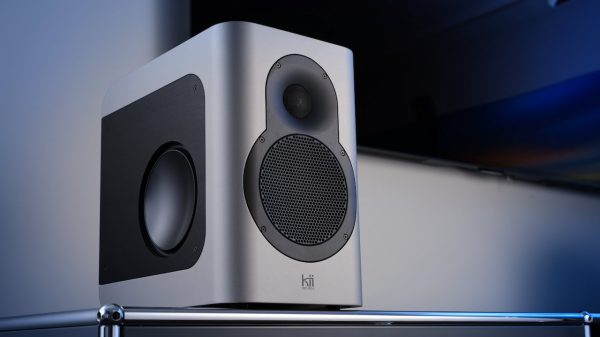
Each channel is a roughly 3,500-watt active system made up of two parts: the Kii THREE, a compact monitor handling the mids and highs, stacked on top of the BXT bass extension, which adds a vertical array of woofers. The magic trick is the cardioid dispersion. By actively canceling energy to the sides and rear of the cabinet, the system dramatically reduces early and late reflections. The result is that most of what you hear is direct sound, not room interaction—and even on a noisy show floor, that translated into pinpoint imaging, tight bass, and an unusual sense of clarity and focus.
Although the system was designed with professional studios in mind, it’s not locked into that world. The Kii THREE BXT ($31,875/pair) is just as viable in a home environment, especially for listeners who value accuracy over romantic coloration. These aren’t giant, furniture-sized floorstanders, they’re offered in 12 finishes, and they’re flexible enough to accept everything from Bluetooth to serious wired connections. That said, the speakers clearly reward a proper front end. Feeding them a high-quality source via XLR, optical, or USB, paired with the Kii Control for system management, is where they really show what they can do.
Best Dolby Atmos Music: Fleetwood Mac with Neumann 9.1.4 System
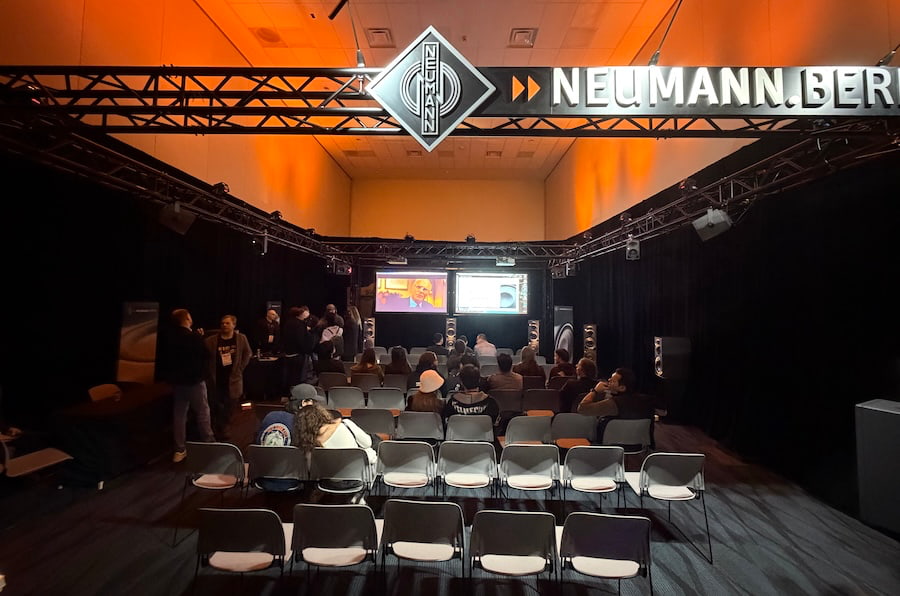
At a hi-fi show, it’s rare to hear a demonstration led by a mixing engineer or producer. At NAMM, it happens routinely. One of the most memorable sessions featured unreleased Dolby Atmos remixes of “Second Hand News,” “The Chain,” and “Dreams” from Rumours, with producer Ken Caillat in the room alongside Claus Trelby of Marshmellow Skies, who handled the Atmos mix. Heard through Neumann’s reference-grade 9.1.4 Dolby Atmos speaker system, the experience was so convincing that it made the familiar stereo mixes feel almost obsolete—unless, of course, your system is stereo only.
What stood out most was the naturalness. Music recorded nearly 50 years ago was presented as if the band were performing live in the room. Lead vocals were locked dead center, bass lines were anchored slightly left, and harmonies wrapped around the listener in a way that felt immersive without calling attention to the technology. The Atmos effects were clearly present, but always additive and emotional, never flashy or distracting. It pulled you deeper into the songs rather than pulling focus away from them.
Credit is also due to Neumann’s execution. The system consisted of nine KH 420 active loudspeakers at $5,599 each, paired with two KH 870 II subwoofers at $5,799 each, and four KH 310 actives as height speakers in the upper corners priced at $2,499 each, all deployed in a massive ballroom. Despite the scale of the room, the presentation was clean, dynamic, and remarkably coherent, with articulate and controlled bass that never lost definition. It was a textbook example of how immersive audio should be demonstrated and why hearing it done right can permanently change expectations.
PMC Dolby Atmos 9.1.6
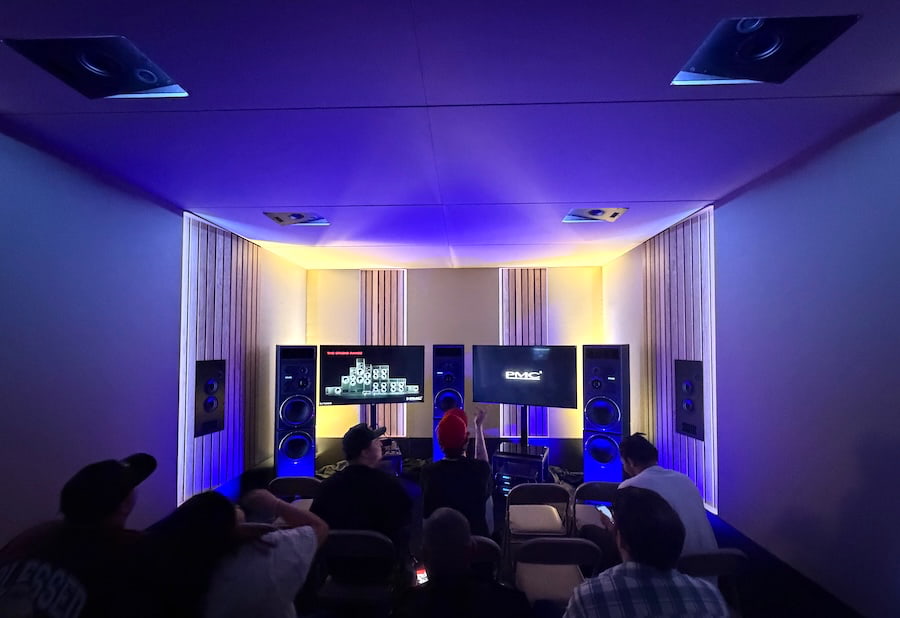
For the second year in a row, PMC delivered the most convincing Dolby Atmos music experience at the show. Their edge came from commitment: a prefabricated room built specifically for Atmos playback and an entirely new speaker lineup. Not only were the cabinets new, but the woofers, midrange drivers, and tweeters were all redesigned from the ground up.
The 9.1.6 layout was executed with precision. Three new PMC12 XBD active speakers across the front, each with a dedicated subwoofer. Six ci65 in-wall speakers ($3,190 each) handled the left, right, and rear surround channels, while six ci45 in-ceiling speakers ($2,475 each) delivered front, middle, and rear height information. Just as important as the hardware, the room itself was professionally calibrated by one of Dolby’s top tuning engineers, Bryan Pennington, and it showed immediately.
The difference between PMC’s room and other Atmos demos wasn’t subtle. The system pressurized the space, delivering real physical impact when the music called for it, with sounds snapping and darting around the listener in a way that felt effortless and controlled. A Dolby Atmos track by TechnoDad (Channa D), graciously queued up by the PMC engineer, hit especially hard—producing whip-crack dynamics and movement that made the demo feel more like a thrill ride than a trade show listen.
At the opposite end of the spectrum, Dolby Atmos material by Grammy-winning mix engineer, Andrew Scheps demonstrated just how powerful immersive audio can be when used for realism rather than spectacle. Different microphone arrays placed the listener inside an orchestra, out in front of it, or somewhere entirely unexpected. At one point, we were listening to whale mating calls rendered in Dolby Atmos—an absolute first at any trade show and strangely mesmerizing while waves sloshed overhead.
The most instructive moment came when Scheps sequentially deactivated the height and surround speakers during playback. As channels dropped out, the soundstage collapsed forward and the illusion broke apart. Even when you don’t consciously notice the height speakers, you absolutely miss them when they’re gone.
Ultimately, PMC’s system delivered one of the most compelling audiophile experiences at NAMM 2026. Notably, this wasn’t even built around the company’s largest of their new studio monitors. And yet, the result was a Dolby Atmos music demo that skeptical audiophiles owe it to themselves to hear—because this is what immersive audio sounds like when it’s done right.
AKG Studio Reference System with Dolby Atmos in the Cadillac Escalade IQ
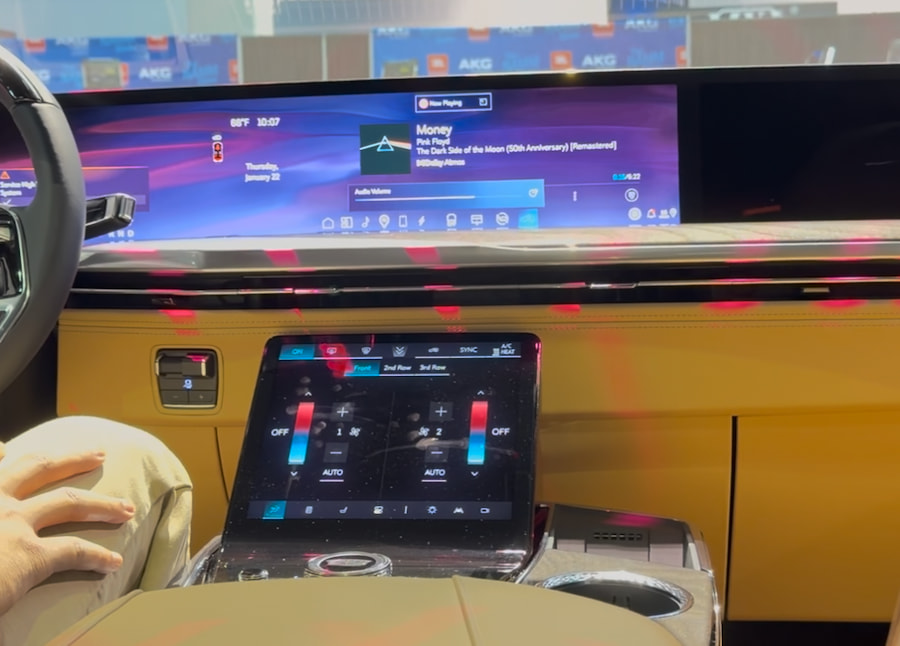
The 2026 Cadillac Escalade IQ delivered the most convincing Dolby Atmos in-car music experience we’ve heard to date—no qualifiers needed. The 38-speaker system, engineered and tuned by the acoustics team at AKG, created an immersive soundfield with real depth and coherence, where musical elements appear, move, and dissolve naturally rather than sounding artificially steered.
We experienced the system from the chauffeured rear-seat position, which may actually be the sweet spot. With an additional row of seats and substantial cargo space behind you, the listening position ends up closer to equidistant from the full speaker array. The result is a more balanced and enveloping presentation than what front-seat-only demos often deliver.
Getting speaker placement right is only half the battle—the speakers themselves have to be good, and they have to work together. AKG clearly didn’t cut corners. The system delivered excellent precision, tight and authoritative bass, punchy and articulate mids, and a level of smooth detail that never tipped into harshness. Pink Floyd’s “Money” was a standout, with the iconic cash registers and coin effects snapping across the cabin while the bass line stayed locked in and grounded.
Elton John’s “Rocket Man” was equally revealing, recontextualizing a familiar track with layered spatial effects that added scale and immersion without distracting from the song itself. At its best, the Escalade IQ’s Atmos system rivals high-quality home setups in how convincingly it stacks musical elements in three-dimensional space.
While the system can also be tuned for front-seat listening, the rear-seat Atmos experience is where it truly shines. It’s immersive, cohesive, and musically engaging in a way that feels purposeful rather than gimmicky.
Pricing for the 2026 Cadillac Escalade IQ starts at $150,600 and climbs to $161,175 with additional trim and options—but as rolling Dolby Atmos demonstrations go, this one sets a new benchmark.
Pioneer Sphera Aftermarket Dolby Atmos
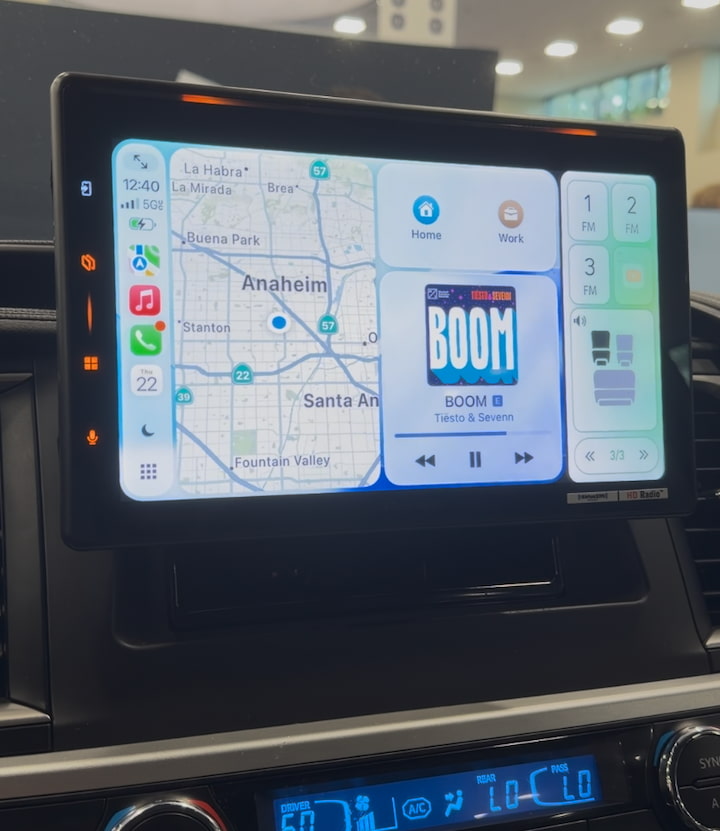
This one caught us off guard. The Pioneer Sphera is an aftermarket head unit designed for vehicles with single-DIN or double-DIN slots—a throwback to the era before dashboards became wall-to-wall touchscreens. If your car still has one of those standard openings, Sphera slides into the slot for connectivity, but features a 10.1-inch touchscreen, bringing modern conveniences like Apple CarPlay, Android Auto, and—most unexpectedly—Dolby Atmos spatial audio.
Given the reality of most factory speaker layouts—few speakers, non-ideal placement, zero height channels—we were skeptical. Sphera relies on Dolby Atmos virtualization, creating the illusion of sound moving around and above you rather than true discrete channels. On paper, that’s a tough sell. In practice, it worked far better than expected.
Pioneer demonstrated the system in two vehicles: a 2017 Toyota Highlander and a 2018 Toyota Camry. In both cases, the factory speakers were replaced with Pioneer models but left in their original locations—front and rear doors and under the windshield. The Highlander also added a 12-inch subwoofer, which made a meaningful difference in impact and scale.
Setup includes a supplied calibration microphone that measures the acoustics of your specific vehicle, and the on-screen interface allows you to prioritize sound for any seating position. Once dialed in, both cars were able to move sounds around the cabin convincingly. Dolby Atmos tracks felt spacious, dynamic, and—most importantly—fun, even without ideal speaker geometry.
To be clear, this doesn’t approach the full-blown immersion of something like the Cadillac Escalade IQ and its purpose-built Atmos system. But at $1,300, Pioneer Sphera dramatically exceeded expectations and delivers a taste of spatial audio that many car owners can realistically afford. For anyone hanging onto an older vehicle with a DIN slot, this might be the most interesting car audio upgrade in years.
Spatial9
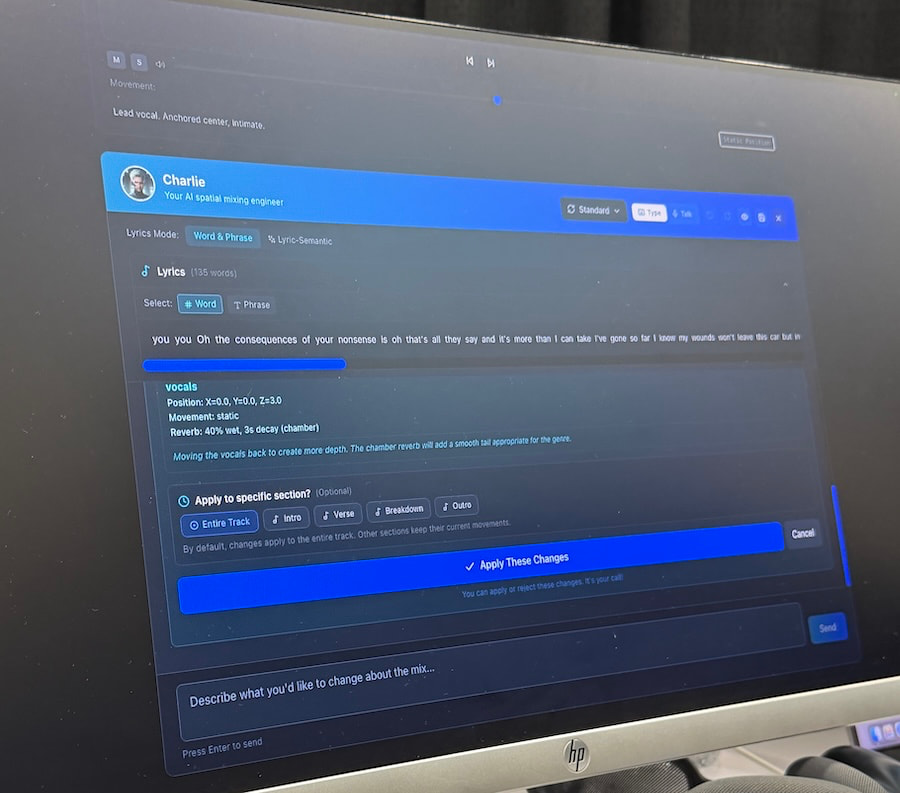
Spatial9 is best described as “ChatGPT for spatial audio”, but that shorthand undersells what it’s actually doing. The platform is designed to generate spatial mixes from stereo tracks, multitracks, or stems using a natural-language interface, with output support for formats like Dolby Atmos, DTS:X, and Eclipsa (Google’s upcoming spatial format for YouTube). Instead of wrestling with complex routing, automation lanes, and object placement, users describe what they want and the system does the heavy lifting.
The potential for Spatial9 seems limitless, feels like magic, and dramatically improves efficiency. The software has been trained on established acoustic theory along with real-world mixing and mastering practices, allowing it to make informed spatial decisions extremely quickly. The goal isn’t to replace engineers, but to remove friction, doing in seconds what can otherwise take hours or days, especially when working across multiple spatial formats
I attended the demo in the Google Eclipsa suite alongside TechnoDad (Channa D), who has released his own music in Dolby Atmos and understands firsthand how complex and time-consuming spatial mixing can be. What stood out wasn’t just how fast Spatial9 responded, but how well it understood intent. Every question we threw at the AI agent—practical, technical, and even deliberately unconventional—was handled instantly. In a few cases, it even pushed back, warning against choices that would likely compromise the mix.
That kind of guardrail matters. It suggests Spatial9 isn’t just executing commands blindly, but applying context and best practices in real time, which is something that could dramatically shorten learning curves and accelerate professional workflows.
If spatial audio really is where music production is heading, tools like Spatial9 may be what finally make it accessible at scale. Not by dumbing it down, but by making it faster, more intuitive, and far less intimidating to create.
Audeze LCD-5s
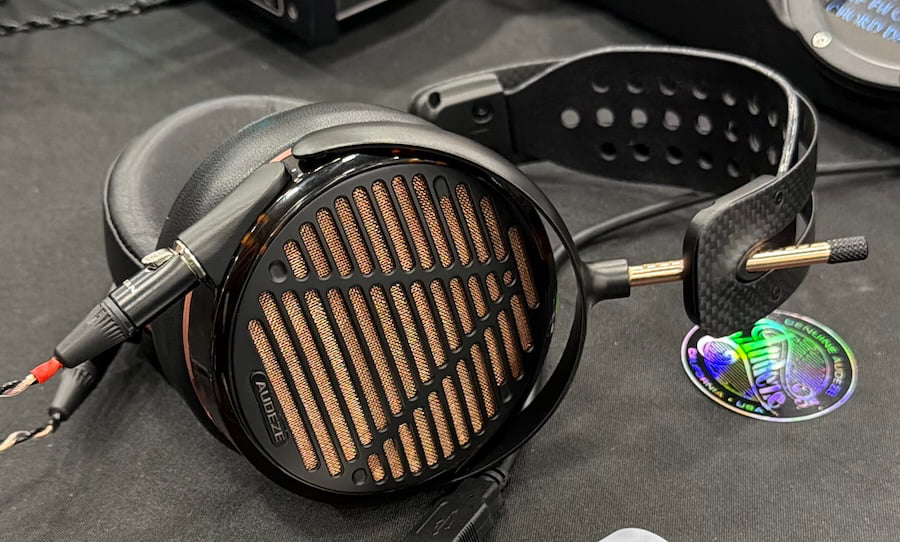
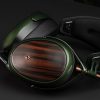
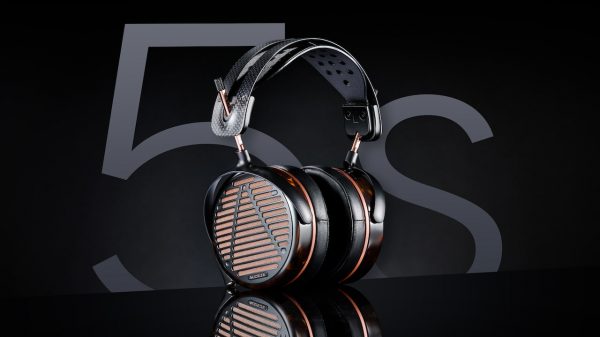
Audeze debuted the LCD-5s at NAMM 2026 as a high-end planar-magnetic alternative to the already well-regarded LCD-5. Both sit at the same rarefied $4,500 price point, but the “s” designation matters: it stands for SLAM, Audeze’s proprietary acoustic architecture aimed at improving low-frequency impact and overall bass authority. The LCD-5s is also positioned as a more convenient counterpoint to Audeze’s flagship CRBN2 electrostatic, which—at $5,999—requires a dedicated energizer rather than a conventional headphone amplifier.
Audeze set up an enclosed demo booth that allowed for level-matched comparisons across multiple models, including the CRBN2, LCD-5s, and several legacy designs. That kind of controlled environment is rare at a trade show, and it made direct comparisons meaningful rather than academic. I spent the bulk of my time moving back and forth between the CRBN2 and LCD-5s, and while both are unapologetic resolution monsters, they do not present music the same way.
The CRBN2 comes across as faster and brighter, with an almost electrostatic immediacy that can surface micro-details you didn’t know were there. It’s the headphone more likely to catch you off guard. The LCD-5s, by contrast, sounds slightly warmer and a touch fuller through the low end, with edges that feel more rounded than etched. Notes linger just a bit longer, which may translate to a less fatiguing listen over long sessions—though that balance will inevitably depend on DAC and amplifier pairing.
For the demo, Audeze confirmed the LCD-5s was driven by a Bricasti M3 DAC/amp setup costing roughly $7,000, while the CRBN2 shared the same DAC section paired with an Eksonic Aeras electrostatic energizer that adds another $7,000 to the equation. The takeaway is unavoidable: while still very expensive, the LCD-5s system comes in at a meaningfully lower total cost than a full CRBN2 rig.
Ultimately, if you’re chasing the last word in headphone detail and resolution—but want a slightly warmer, more forgiving presentation without the complexity of electrostatics—the LCD-5s absolutely deserves an audition. It doesn’t replace the CRBN2 so much as offer a different, and arguably more practical, path to the summit.
64 Audio Aspire 3
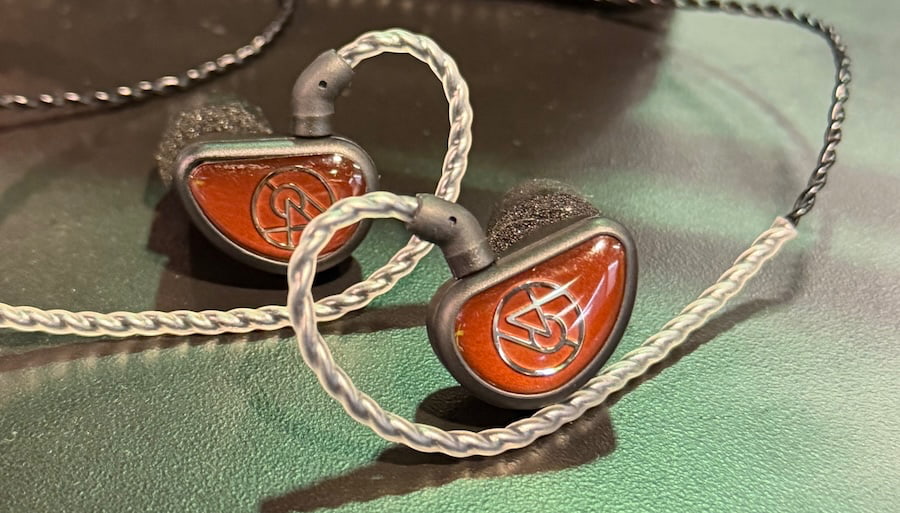
64 Audio doesn’t always aim for subtlety, but the Aspire 3 makes its case quietly and convincingly. Our returning IEM reviewer Aaron Sigal auditioned just about every in-ear monitor he could get his hands on at NAMM, and the Aspire 3 emerged as his best all-around performer for the money. At $649, it struck the right balance of sound quality, comfort, and build without leaning too hard in any one direction.
I spent time with the Aspire 3 myself and immediately understood the appeal. Fit was effortless, comfort never became an issue, and—most impressive given the environment—they sounded detailed, coherent, and engaging on a loud show floor where many IEMs fall apart. Nothing jumped out as forced or fatiguing, and nothing felt obviously missing either, which is exactly what you want from a well-tuned, real-world IEM.
The Aspire 3 may not be chasing summit-fi theatrics, but it delivers a level of refinement and listenability that makes sense for actual music lovers, not just spec-sheet collectors. Keep an eye out for Aaron’s upcoming deep dive into the NAMM IEM scene, because if the Aspire 3 is the baseline, it’s a strong year for in-ears.
Beyerdynamic HEADPHONE LAB
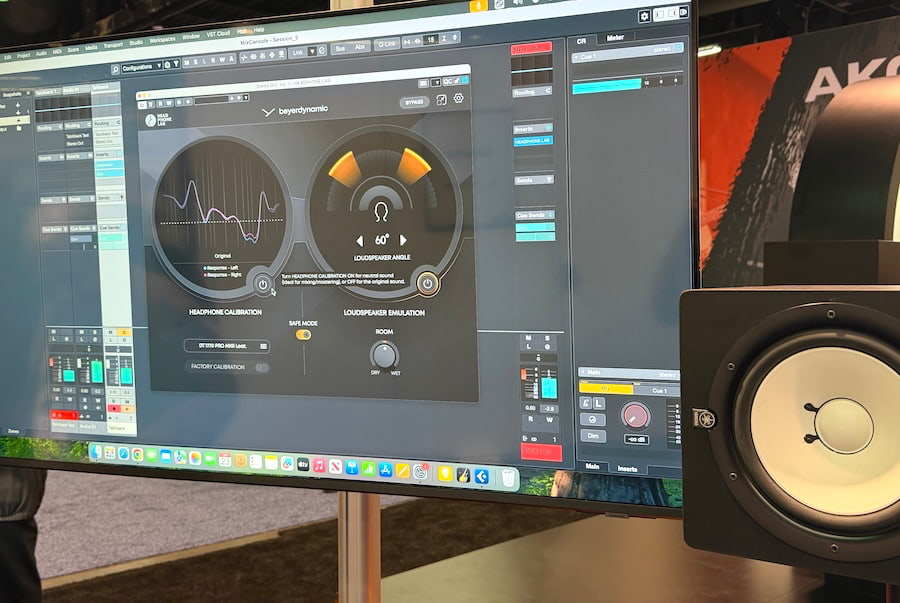
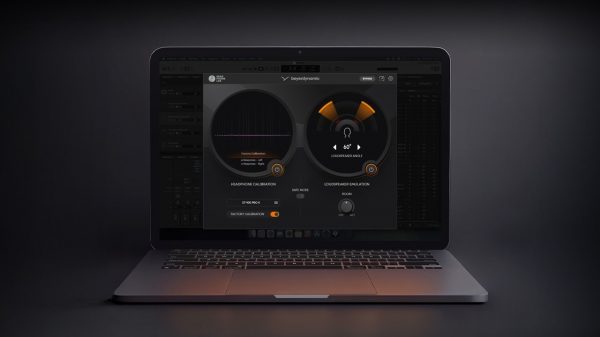
Beyerdynamic surprised us with a free software release at the very start of NAMM, but it was the demo that really changed the conversation. HEADPHONE LAB isn’t a token add-on or a marketing experiment. It meaningfully deepens what headphones can do and created a renewed appreciation for just how serious Beyerdynamic still is about precision listening.
The plug-in unlocks a new set of tools aimed squarely at mixing and mastering engineers, while also introducing a level of personalization that is unusual even by studio standards. HEADPHONE LAB can account for your head shape and applies calibration that is specifically matched to the serial number of the headphone model as it leaves the factory. Beyerdynamic’s four top studio models receive this ultra precision treatment, including the DT 700 PRO X, DT 900 PRO X, DT 1770 PRO MKII, and DT 1990 PRO MKII. Owners of other Beyerdynamic headphones are not left out, as the software also includes high quality “golden sample” profiles that anyone can use.
Beyond headphone specific calibration, HEADPHONE LAB adds room emulations and crossfeed processing designed to make headphones behave more like loudspeakers. Used properly, the effect is convincing and musically useful rather than gimmicky. While the software is clearly built with professional workflows in mind, audiophiles will also appreciate how it reshapes long listening sessions into something more natural and less fatiguing.
The bottom line is simple. Every beyerdynamic owner just received a genuine free upgrade, and the value of the entire lineup quietly went up overnight. That doesn’t happen often. Well done.
Bassboss Stackatoa
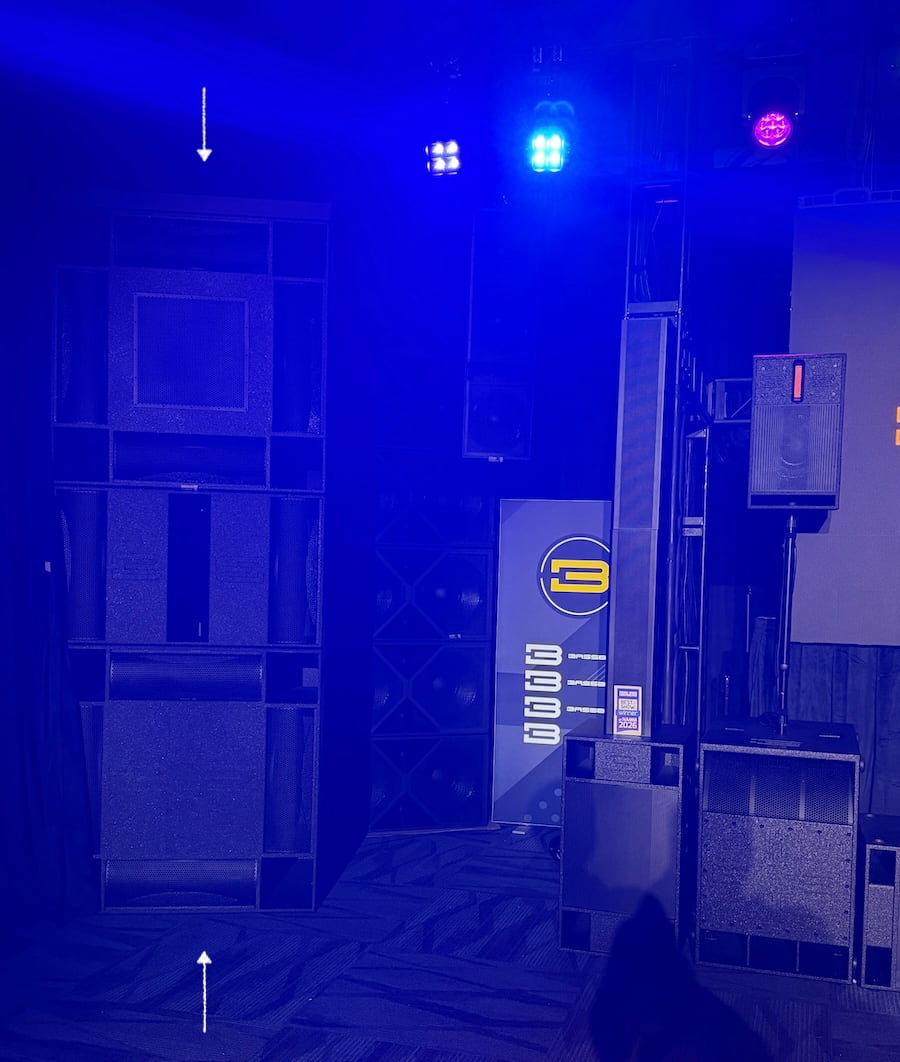
We don’t usually cover PA systems, but Bassboss made ignoring this one impossible. From outside the ballroom, roughly 50 feet away, their demo was rattling the convention center’s exterior doors. That kind of output tends to get our attention.
Walking into the room confirmed it immediately. This was unlike anything else at the show. The Bassboss Stackatoa delivers extreme sound pressure levels with bass output that is not just heard but physically felt. The low frequency energy pressurized the room to a level that bordered on uncomfortable, recalling industrial scale subwoofer demos rather than typical trade show listening. It is the kind of bass that demands respect and probably some restraint when used indoors.
Importantly, this was not a one note bass demo. The Stackatoa is a full range system capable of delivering concert level vocals, clarity, and impact alongside its seismic low end. EDM material was predictably punishing, but the system also maintained composure and intelligibility through the midrange and highs, which is where many extreme output systems fall apart.
Physically, the system is as imposing as it sounds. The three box Stackatoa stands 10 feet, 4 inches (3.15 m) tall and consists of the Krakatoa MK3 full-range loudspeaker ($17,995) on top, Kraken MK3 subwoofer ($17,995) on bottom, and Makara MK3 ($7,995) subwoofer in the middle. A single stack delivers up to 22,500 watts and incorporates six 21-inch subwoofers, four 18-inch woofers, one 18-inch low-mid driver, and a coaxial mid-high horn, all phase aligned for coherent output. A stereo pair doubles the system to 45,000 watts, with a combined cost of $87,970.
This is not an audiophile living room product, nor does it pretend to be. It is a purpose built system designed for large venues and visceral impact. Check your heart rate, protect your hearing, and brace yourself. The Bassboss Stackatoa is an unforgettable reminder of how far sound pressure can be pushed when control and accuracy are still part of the brief.
Related Reading