
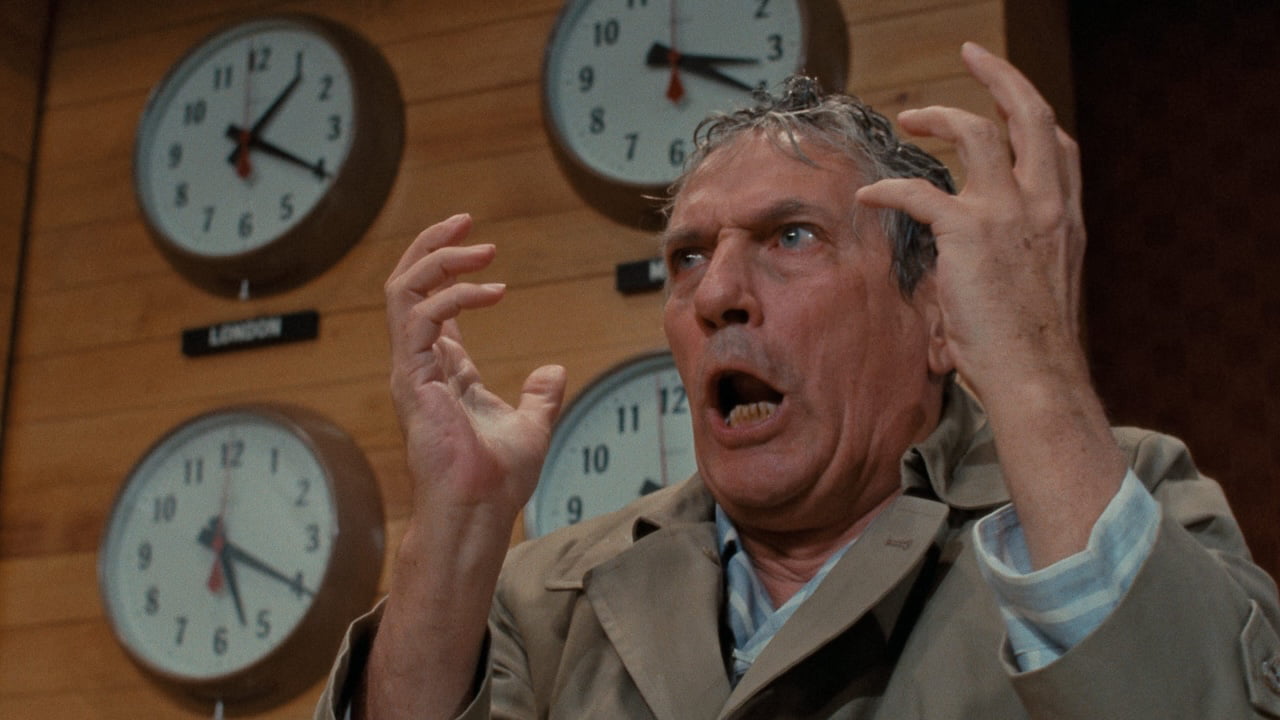
Some movies age gracefully. Others age into prophecy. Network did the latter and then some. When Sidney Lumet released this ferocious satire in 1976 from a venomously brilliant script by Paddy Chayefsky, audiences didn’t laugh it off as some cute exaggeration about television news. They squirmed. The film landed like a brick through the newsroom window; biting, unnerving, and uncomfortably close to the truth even then. Nearly fifty years later it feels less like satire and more like a documentary with better lighting. Cable news shouting matches. Personality driven commentary replacing journalism. A nonstop outrage cycle designed to keep viewers emotionally hooked. Chayefsky didn’t just understand television. He understood America’s appetite for spectacle long before the algorithms figured it out.
The story kicks off when aging news anchor Howard Beale, played with electrifying intensity by Peter Finch, learns he’s about to be fired because the ratings stink. Instead of fading quietly into retirement, Beale cracks on live television and promises to kill himself on the air during the next broadcast. Not exactly the sort of programming decision that wins industry awards. But something strange happens. Viewers tune in. Ratings spike. Suddenly the breakdown is good television. Enter Diana Christensen, played with ice-cold ambition by Faye Dunaway, a programming executive who sees Beale not as a problem but as a product. Soon he isn’t a journalist anymore. He’s a spectacle. A televised rage prophet urging viewers to open their windows and shout, “I’m mad as hell and I’m not going to take this anymore!” America listens. The ratings explode. The network cashes in. If this all feels familiar, it should, we’ve been living inside that feedback loop for decades.
The emotional backbone of the film belongs to William Holden as Max Schumacher, a veteran newsman clinging to the dying belief that journalism should still mean something. Poor Max. He’s the last adult in a room full of ratings addicts. One of the film’s most devastating scenes arrives when Max confesses his affair with Christensen to his wife, played by Beatrice Straight. Straight detonates with decades of frustration and heartbreak in a performance so raw it feels almost invasive to watch. The scene lasts only a few minutes but it anchors the film’s wild satire in something painfully real. Straight won an Academy Award for it, and rightly so.
For a moment the movie stops being about television and becomes about the collateral damage people leave behind while chasing ambition; the spouses ignored, the families sacrificed, the human wreckage left behind while the ratings climb. We’ve seen the modern version enough times: star anchors imploding, cable personalities flaming out on air, influencers chasing the next outrage clip while the cameras keep rolling. Careers burn, reputations collapse, and the audience moves on before the next commercial break. Lumet and Chayefsky knew the truth the media machine still pretends not to see or care about: behind every viral moment there’s usually someone paying the bill while the network or platform counts the clicks.
Then comes the speech that still rattles around in your skull long after the credits roll. Corporate executive Arthur Jensen, played with thunderous authority by Ned Beatty, summons Beale to a dimly lit boardroom and calmly explains how the world actually works. Nations are illusions. Democracy is window dressing. The real power belongs to multinational corporations. In 1976 Jensen name-checked IBM, Exxon, and AT&T. Today you could easily swap those out for Apple, Amazon, Google, Microsoft, and Meta and the speech would land even harder. Chayefsky understood that television news wasn’t simply reporting events anymore, it was becoming part of the corporate machine that shaped them.
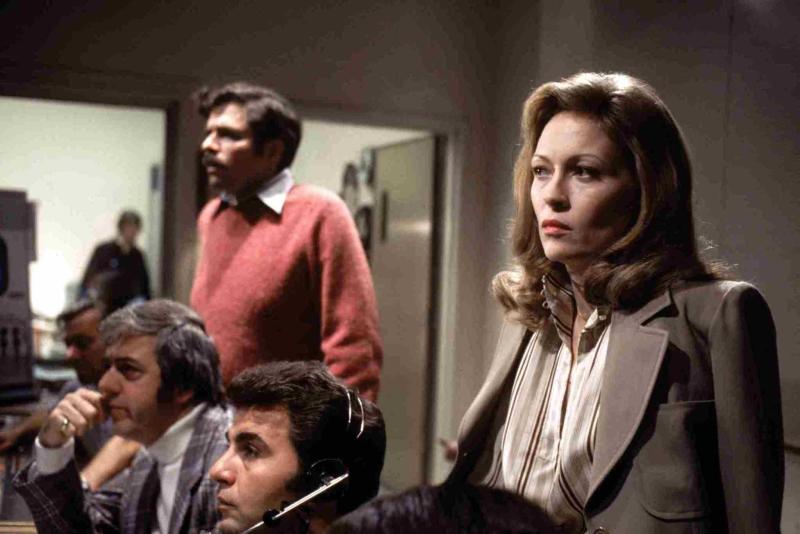
And that’s where Network starts feeling downright uncomfortable in 2026. The film predicted the outrage economy decades before anyone put a label on it. Turn on the television today and it’s emotional theater twenty four hours a day. Panels yelling. Personalities performing. Headlines engineered to keep viewers angry enough to stay glued to the screen. The business model is simple: outrage drives engagement and engagement drives revenue. Diana Christensen figured that out in about thirty seconds. Calm reporting doesn’t trend. Anger does. Journalism slowly mutated into entertainment, and entertainment eventually became politics.
Watching Network today is like opening a time capsule that contains tomorrow’s headlines. It remains wickedly funny, brutally intelligent, and powered by one of the sharpest scripts ever written about American media culture. But what really hits is how little of it feels exaggerated anymore. Chayefsky saw the trajectory clearly: once outrage becomes profitable, it becomes irresistible. The cameras keep rolling. The ratings still rule everything. And somewhere in the digital noise of modern media, Howard Beale is still shouting into the void, mad as hell, begging the rest of us to wake up before the show consumes everything.
Criterion gives Network the kind of restoration treatment the film has long deserved. The new 4K digital restoration presents the movie in Dolby Vision HDR on a dedicated 4K UHD disc, with the film’s original uncompressed monaural soundtrack preserved intact. Lumet never intended this to be a sonic spectacle. This is a film powered by dialogue, and the restored mono track keeps Paddy Chayefsky’s machine gun script front and center where it belongs.
The restoration comes from a new 4K scan of the original 35mm camera negative and is presented in the film’s original 1.85:1 aspect ratio. Dolby Vision improves contrast and shadow detail, but the image still looks like film from the mid 1970s should look. Grain is intact. The newsroom lighting remains harsh and clinical. The endless televisions scattered around the sets finally reveal more texture and depth than older transfers ever managed.
Audio stays faithful to the original theatrical presentation. The uncompressed mono track is clean and focused, which matters because this movie lives and dies by the rhythm of Chayefsky’s dialogue. From Howard Beale’s televised sermons to Arthur Jensen’s thunderous boardroom lecture, every word lands with the bite Lumet intended. Criterion did not try to reinvent Network. They cleaned it up, respected the source, and delivered the sharpest home video presentation this film has ever had.
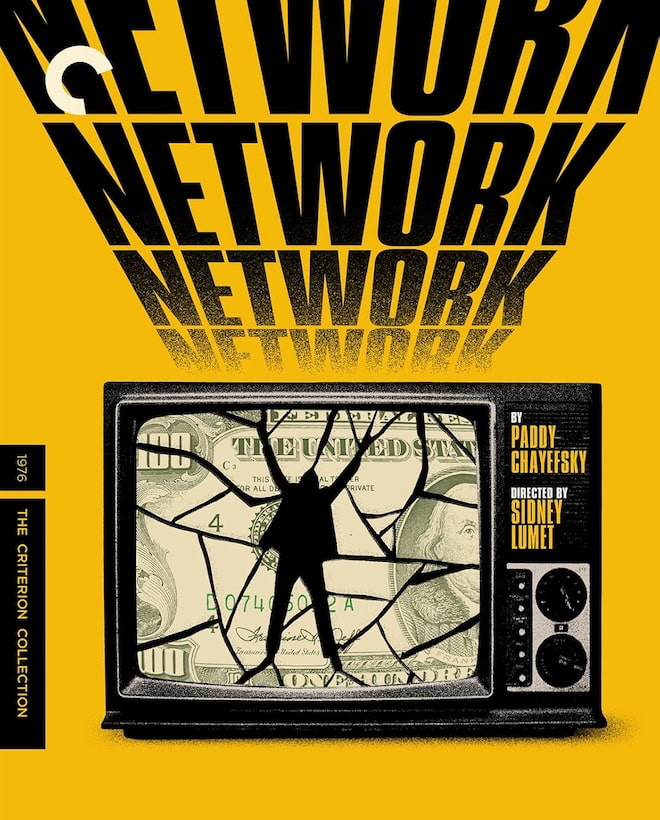
Criterion also includes a strong slate of supplemental material. Director Sidney Lumet provides a feature length audio commentary that offers insight into the film’s production, the performances, and the controlled chaos of Chayefsky’s dialogue heavy script. The set also includes Paddy Chayefsky Collector of Words (2025), a feature length documentary by Matthew Miele that explores the legendary screenwriter’s life and influence. For those who want deeper historical context, The Making of Network (2006), a six part documentary by Laurent Bouzereau, takes viewers inside the writing, casting, and cultural impact of the film.
Movie Details
- STUDIO: United Artists
- FORMAT: Ultra HD 4K Blu-ray (February 24, 2026)
- THEATRICAL RELEASE YEAR: 1976
- ASPECT RATIO: 1.85:1
- HDR FORMATS: Dolby Vision HDR
- AUDIO FORMAT: LPCM Mono (48kHz, 24-bit)
- LENGTH: 121 mins.
- MPAA RATING: R
- DIRECTOR: Sidney Lumet
- STARRING: William Holden, Faye Dunaway, Peter Finch, Robert Duvall, Wesley Addy, Ned Beatty, Beatrice Straight
Our Ratings
★★★★★★★★★★ Picture
★★★★★★★★★★ Sound
★★★★★★★★★★ Extras
Where to buy:
Related Reading:
- Make Hur Yours: Ben-Hur On 4K Ultra HD Review
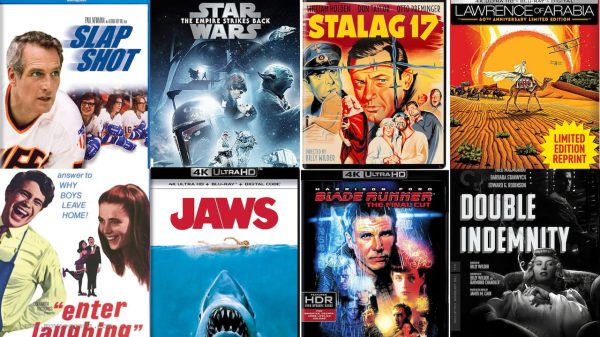
- Excalibur And Westworld Limited Edition 4K Review: Are Arrow Video’s New UHD Releases Worth It?
- 10 Best 4K UHD Blu-Ray Discs Of 2025
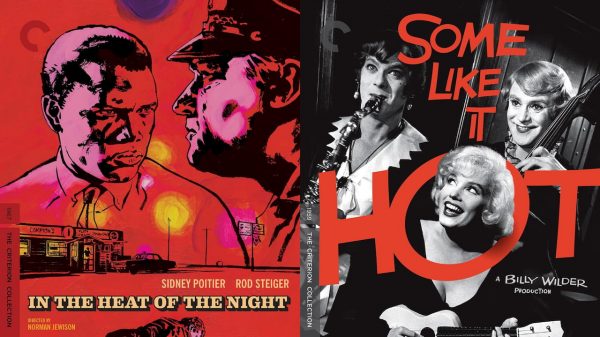
- In The Heat Of The Night & Some Like It Hot: Criterion Collection 4K Reviews That Turn Up The Heat























Antonio
March 20, 2026 at 5:12 pm
Old enough to have seen this in my local movie theater and your comparison to 2026 is dead on.
What a pathetic country we have become.
Nicely done on the review. Will have to get this one.
Ian White
March 20, 2026 at 6:11 pm
Anton,
I always liked it as a kid (I was 6 when it came out) because of William Holden. I thought Finch was a crazy old man. It rings true today and that’s not a positive. We are a giant corporation at this point.
IW