Tennessee-based Emotiva has built its reputation since 2003 by focusing on performance, solid engineering, and long-term reliability rather than boutique pricing or cosmetic excess. The company’s track record has been consistent: deliver real-world sound quality and robust build at prices that remain accessible to serious listeners.
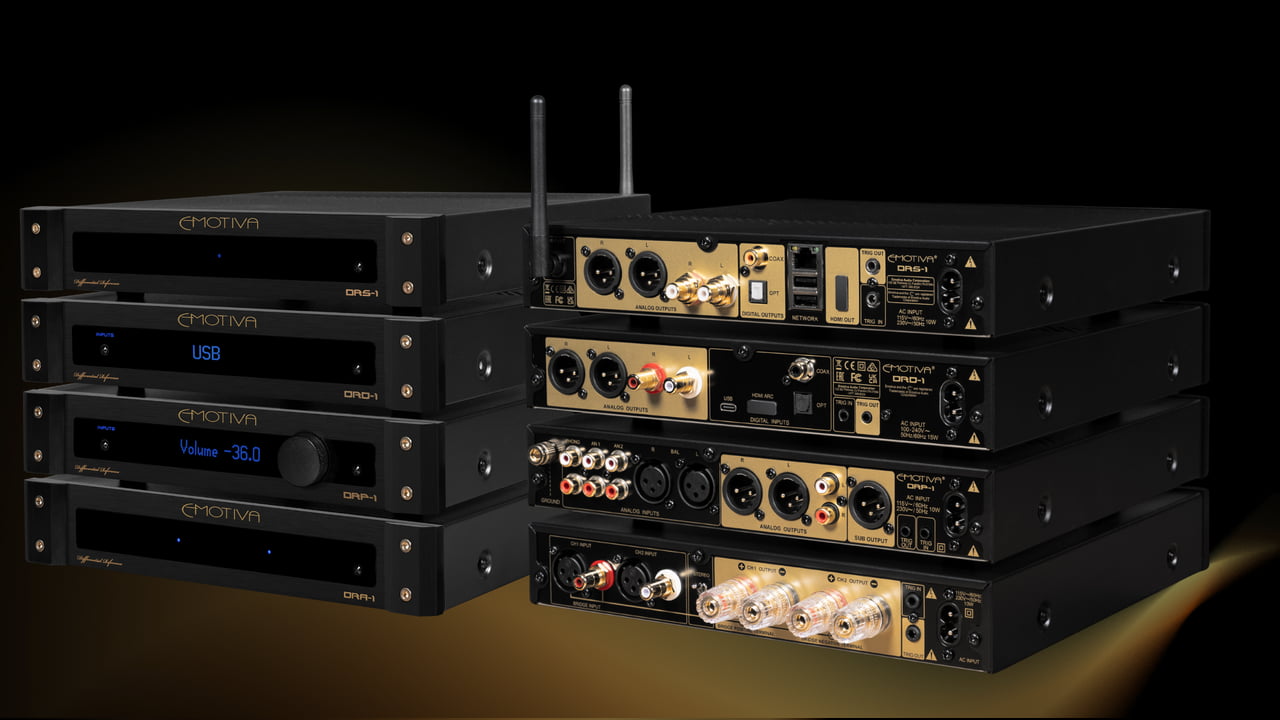
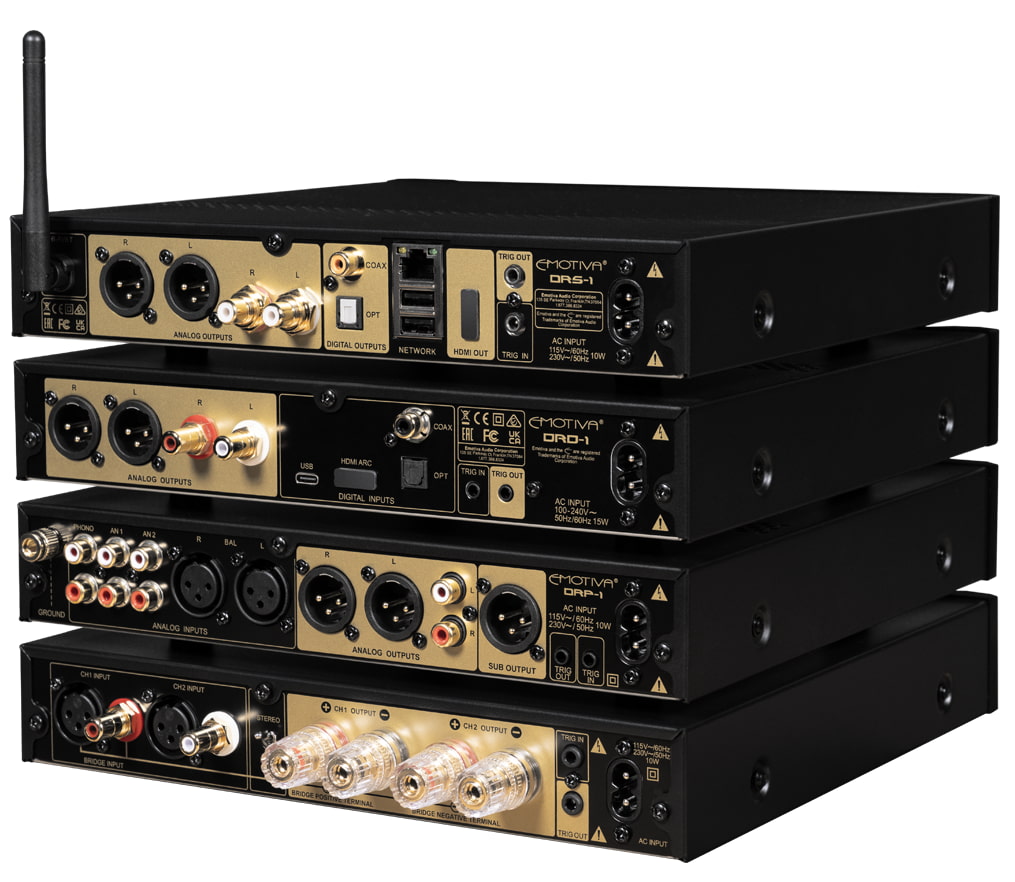
To open 2026, Emotiva is applying that same value-first philosophy to a compact format with the Differential Reference Design Series Stack—a four-component system built around a compact 10-inch-wide chassis. The stack includes the DRS-1 Streamer, DRD-1 DAC, DRP-1 Stereo Preamp, and DRA-1 Power Amplifier, all designed to work together as a cohesive system while occupying far less space than a traditional full-width rack.
Pricing is where Emotiva’s intent becomes clear. The complete Differential Reference Design Series Stack is priced at $2,599 and is available directly through Emotiva. For listeners who want to build gradually or integrate specific pieces into an existing system, each component is also available individually: the DRS-1 Streamer at $799, the DRD-1 DAC at $699, the DRP-1 Preamp at $699, and the DRA-1 Power Amplifier at $799. In typical Emotiva fashion, the numbers underline the point—this is a full-featured, well-built separates system aimed squarely at maximizing performance per dollar rather than inflating the price of entry.
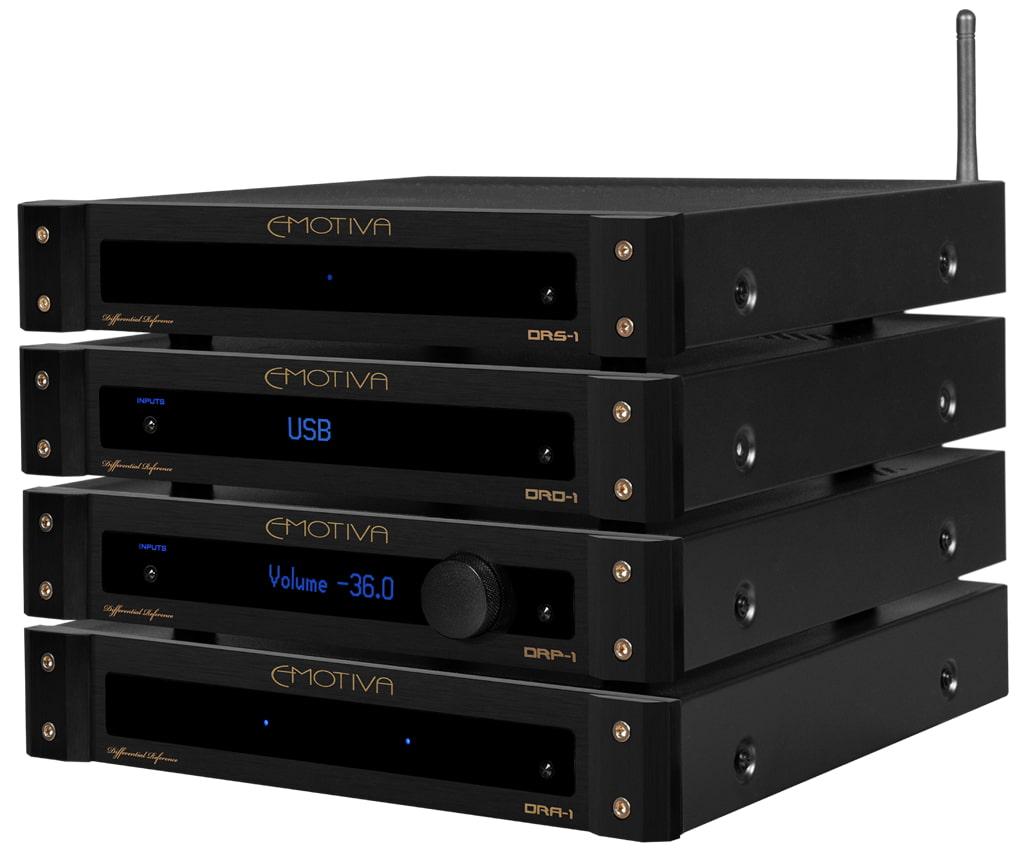
Internally, the Differential Reference Design Series Stack is engineered as a fully balanced system from source through amplification. Each component uses a differential signal topology designed to reduce common-mode noise, improve channel separation, and preserve low-level detail as audio moves between the streamer, DAC, preamp, and power amplifier. Balanced connections between components are integral to the design, helping maintain signal integrity in compact, multi-component installations.
Network playback and system control are handled via the Volumio app on iOS and Android, with support for services such as Qobuz and TIDAL, along with local network playback. A lifetime premium license is included, eliminating ongoing subscription costs for core streaming functionality.
The DAC includes an HDMI ARC input, allowing television audio to be integrated into the system using a single cable. Trigger connections enable all four components to power on and off together, reinforcing the stack’s intent as a unified system rather than a collection of standalone boxes.
All four units share identical chassis dimensions and weight: 10-1/2 inches wide x 10-1/4 inches deep x 2-1/4 inches high (unboxed, including feet) and 5 pounds each, making the complete system easy to place on shelving or furniture without the footprint of a traditional full-width rack.
Let’s take a closer look at what each component in the system provides.
DRS-1 Differential Reference Streamer
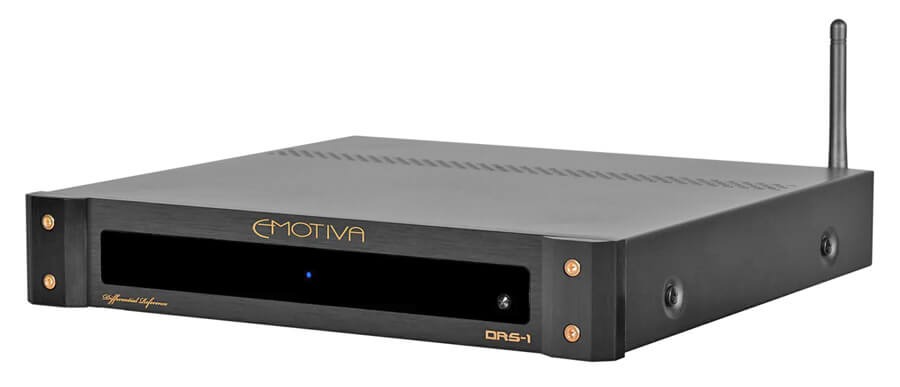
Sitting at the top of the stack is the DRS-1 Streamer, a dedicated two-channel network audio component built around the Volumio Premium operating system. The DRS-1 supports playback from multiple streaming services, Bluetooth sources, locally connected USB storage, and network-attached storage devices, making it flexible enough to function as both a primary streamer and a digital hub for stored music libraries.
In addition to wireless connectivity, the DRS-1 provides a full complement of outputs, including digital audio outputs as well as both balanced and unbalanced analog outputs. Internally, the streamer incorporates its own DAC section based on the ESS ES9038Q2M DAC chip, a 32-bit stereo converter designed for low noise and low distortion. The analog output stage uses MC33078 and OPA1656 op-amps, selected to maintain low noise levels while preserving resolution and dynamic detail.
An HDMI video output is also included, allowing the DRS-1’s interface to be displayed on a TV or projector. This output can show system menus, playback status, track information, and album artwork, providing visual feedback without the need to rely solely on a mobile device for control.
Connectivity and Output Specifications
On the connectivity front, the DRS-1 is set up to function as a self-contained streamer or as part of the larger Differential Reference stack. Wireless networking is handled via built-in WiFi, with Bluetooth included for direct playback from phones, tablets, or computers. For more stable installations, a wired Ethernet connection is also provided.
Wired audio outputs cover both balanced and unbalanced systems. The DRS-1 offers one pair of balanced XLR outputs and one pair of unbalanced RCA outputs, both operating at variable output levels controlled through the Volumio interface. For systems that rely on an external DAC or digital input stage, the streamer includes fixed-level digital outputs via optical and coaxial S/PDIF.
Physical connectivity is rounded out with two USB ports for attaching local music storage devices or peripherals such as a mouse or keyboard. A dedicated HDMI video output allows the streamer’s user interface, configuration menus, track information, and album artwork to be displayed on a TV or monitor. Trigger input and output connections are also included, enabling synchronized power control with the rest of the stack.
In terms of output performance, the balanced XLR outputs deliver up to 4.2 VRMS at 0 dB, while the unbalanced RCA outputs provide 2.1 VRMS under the same conditions. Frequency response is specified at 20 Hz to 20 kHz within ±0.2 dB for 44.1 kHz and higher sample rates, and signal-to-noise ratio is rated at greater than 116 dB, indicating a low noise floor suitable for use as either a standalone streamer or a source component feeding downstream electronics.
DRD-1 Differential Reference DAC
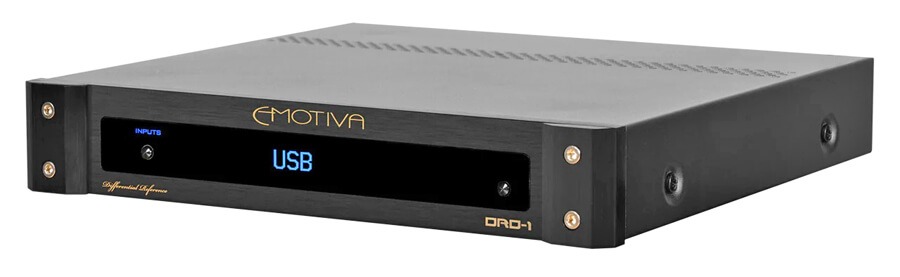
Sitting just below the DRS-1 streamer in the stack is the DRD-1 DAC, a dedicated two-channel digital-to-analog converter designed to serve as the central conversion stage for both music and TV audio. While it does share the same ESS ES9038Q2M DAC chip found in the streamer, the DRD-1 is not redundant by design. Instead, it provides a more flexible and electrically focused platform for digital conversion, allowing users to separate streaming and conversion duties if desired.
As a standalone high-performance PCM DAC, the DRD-1 offers multiple digital source inputs, including a USB audio input and an HDMI ARC input for direct connection to a television. The USB input supports sample rates up to 768 kHz, DoP up to DoP256, and native DSD up to DSD512 when used with appropriate drivers, making it suitable for high-resolution local playback from computers or dedicated servers. Optical and coaxial digital outputs are also provided, supporting stereo PCM signals up to 24-bit/192 kHz for integration with other digital components.
The analog output stage uses the same MC33078 and OPA1656 operational amplifiers found elsewhere in the stack, chosen for their low-noise characteristics and linear performance. This consistency in analog circuitry helps maintain a uniform sonic character across components while keeping noise levels low and preserving detail through the rest of the signal chain.
Connectivity and Output Specifications
The DRD-1 DAC is equipped with a straightforward but flexible set of digital inputs, allowing it to function as the primary conversion stage in a two-channel or mixed audio/video system. Digital source connections include a coaxial electrical S/PDIF input, an optical Toslink S/PDIF input, an HDMI ARC input for direct television audio, and a high-performance USB-C input for computer or server-based playback.
Analog output is provided via both balanced and unbalanced connections. The DRD-1 offers a fixed-level pair of balanced XLR outputs and a fixed-level pair of unbalanced RCA outputs, making it suitable for use with an external preamplifier or integrated amplifier without additional level management.
In terms of output performance, the balanced XLR outputs deliver up to 4.2 VRMS at 0 dB input, while the unbalanced RCA outputs provide 2.1 VRMS. Frequency response is specified from 20 Hz to 20 kHz within ±0.2 dB for 44.1 kHz and higher sample rates. Signal-to-noise ratio is rated at greater than 120 dB, and channel crosstalk is specified at less than 100 dB, underscoring the DAC’s low noise floor and strong channel separation.
DRP-1 Differential Reference Preamplifier
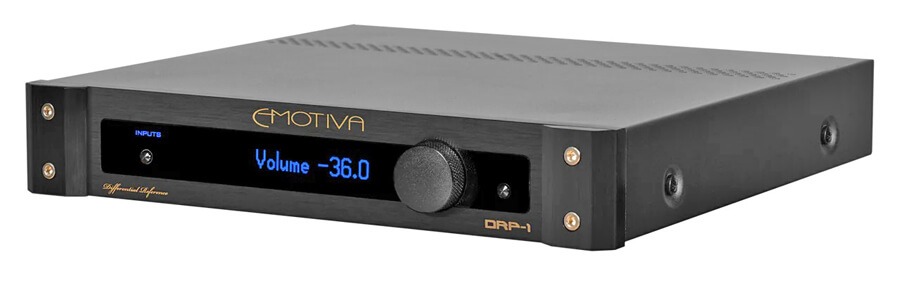
Moving further down the stack is the DRP-1 Differential Reference Preamplifier, which serves as the system’s control center for analog sources and level management. The DRP-1 is built around a fully balanced differential signal path, designed to keep internal signal routing short and electrically symmetrical to minimize noise and preserve low-level detail.
Input selection and signal routing are handled by sealed instrumentation relays, isolating inactive inputs and maintaining consistent signal integrity across sources. Volume control is implemented using a precision resistor ladder rather than a conventional potentiometer, providing accurate level adjustment while maintaining channel balance between left and right outputs across the full volume range.
The DRP-1 also incorporates internal bass management, with an 80 Hz crossover designed to simplify subwoofer integration and improve system headroom. A dedicated balanced, summed XLR subwoofer output with a robust output stage is included to support clean, low-noise connection to powered subwoofers.
As a full-function preamplifier, the DRP-1 provides multiple analog inputs and outputs, including a built-in phono stage compatible with both moving magnet and moving coil cartridges, allowing direct connection of a turntable without the need for an external phono preamp.
Connectivity and Performance Specifications
The DRP-1 offers a focused set of analog inputs designed to accommodate both line-level sources and vinyl playback. Line-level connectivity includes two pairs of unbalanced RCA inputs and one pair of balanced XLR inputs. For turntable users, the DRP-1 incorporates a dedicated unbalanced phono input that supports both moving magnet and moving coil cartridges, eliminating the need for an external phono stage.
Output connectivity mirrors the preamp’s flexible input structure. The DRP-1 provides one pair of unbalanced RCA outputs and one pair of balanced XLR outputs for connection to power amplifiers or downstream components. A summed balanced XLR subwoofer output is also included, intended to work in conjunction with the internal bass management for straightforward subwoofer integration.
Measured performance specifications reflect the preamp’s low-noise design. Signal-to-noise ratio is rated at greater than 118 dB for line-level inputs, greater than 83 dB with moving magnet cartridges, and greater than 73 dB with moving coil cartridges. Phono gain is specified at greater than 40 dB for moving magnet cartridges and greater than 60 dB for moving coil cartridges. Channel crosstalk is specified at less than 90 dB, supporting stable imaging and consistent channel separation.
DRA-1 Differential Reference Amplifier
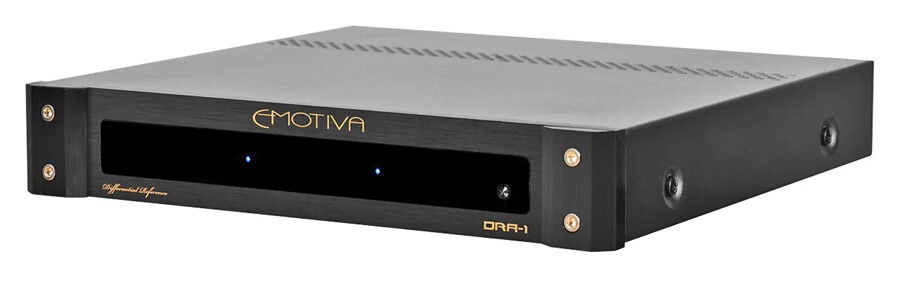
Sitting at the bottom of the stack is the DRA-1 Differential Reference Amplifier, the component responsible for translating the DRP-1’s line-level output into speaker-driving power. The DRA-1 is designed as a fully balanced power amplifier and uses a Hypex NCoreX amplification module, chosen for its low noise, low distortion, and high efficiency. The focus here is controlled power delivery with minimal coloration, allowing the upstream components to define the system’s character rather than the amplifier imposing one of its own.
Power output is rated at 100 watts per channel into 8 ohms and 130 watts per channel into 4 ohms in stereo operation. For systems that require higher output, the DRA-1 can be bridged into mono, delivering up to 400 watts into 4 ohms. Measured performance supports its role as a clean, transparent amplifier, with a signal-to-noise ratio specified at greater than 115 dB and total harmonic distortion plus noise rated at 0.0008 percent.
Speaker connections are handled via audiophile-grade five-way binding posts, with one pair provided per channel to accommodate a wide range of speaker cables and terminations. For system integration, the DRA-1 includes both trigger input and trigger output connections using standard 3.5 mm connectors with nominal 12-volt operation, allowing the amplifier to power on and off in sync with the rest of the stack.
Input and Power Specifications
The DRA-1 supports both balanced and unbalanced operation in stereo and bridged mono configurations, allowing it to adapt to a wide range of system layouts. In stereo mode, each channel is equipped with its own unbalanced RCA input and balanced XLR input, enabling direct connection from the DRP-1 preamplifier or other line-level sources.
When configured for bridged mono operation, the DRA-1 combines both channels into a single, higher-power output stage. In this mode, the amplifier uses a single unbalanced RCA input or a single balanced XLR input, depending on system requirements.
Power output in stereo mode is specified at 90 watts RMS per channel into 8 ohms from 20 Hz to 20 kHz with total harmonic distortion below 0.02 percent. Into 4 ohms, output increases to 130 watts RMS per channel across the same frequency range, with total harmonic distortion specified at less than 0.05 percent.
In bridged mono mode, the DRA-1 delivers 365 watts RMS into 8 ohms from 20 Hz to 20 kHz with total harmonic distortion below 0.1 percent. When driving a 4-ohm load in bridged mode, output rises to 400 watts RMS, with total harmonic distortion remaining under 0.1 percent across the full audio band.
You may notice that some of the power numbers listed earlier are slightly higher than the detailed specifications shown above. This isn’t a contradiction—it comes down to how amplifier power is measured and reported.
The higher, round-number ratings are typical headline figures that describe the amplifier’s maximum output under simpler test conditions, often using a single test tone. The detailed specifications, by contrast, show continuous power measured across the full audible frequency range with strict limits on distortion. Those conditions are more demanding, so the numbers are naturally a bit lower.
Remote Control
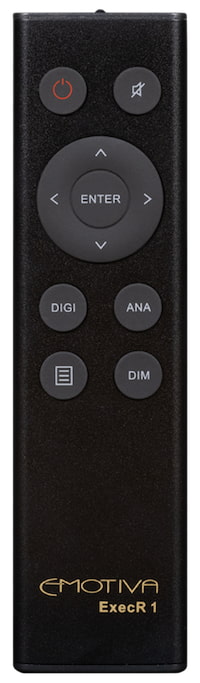
The DRD-1 Differential Reference DAC and DRP-1 Differential Reference Preamp use the same remote control. So the same remote control can be used to control both. The DRS-1 Differential Reference Streamer can be controlled by its own dedicated app or from a standard web browser running on any device connected to the network. And the DRA-1 Differential Reference Amplifier can be controlled by a standard trigger signal from one of the other DR Series components, or any other device that has a standard trigger output.
The Bottom Line
The Differential Reference Design Series Stack is Emotiva doing what it has always done best: prioritizing performance, flexibility, and long-term value over consolidation for its own sake. For $2,599, buyers get a true four-box separates system—streamer, DAC, preamp with phono, and power amplifier—built around a fully balanced signal path, proper power amplification, and real system expandability. That alone sets it apart in a market where “all-in-one” solutions dominate.
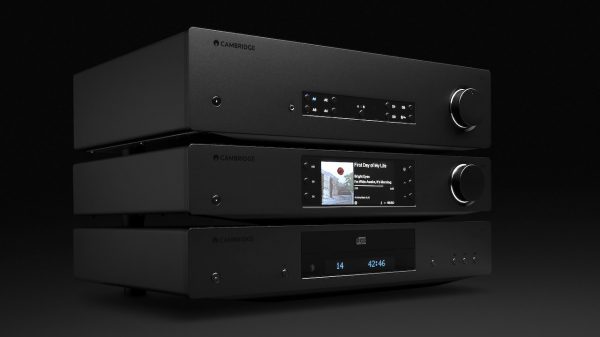
Compared to similarly priced high-end network amplifiers from brands like Cambridge Audio, Eversolo, or NAD, the Emotiva approach trades convenience for control. Instead of a single chassis doing everything, the Stack separates digital processing, analog control, and amplification, reducing internal interference and giving users more flexibility to upgrade, replace, or expand individual components over time. The inclusion of HDMI ARC, a balanced subwoofer output with bass management, a built-in MM/MC phono stage, and the option to bridge the power amplifier further reinforce its system-first design.
This system makes the most sense for listeners who want the performance advantages of separates without the cost, space, or complexity traditionally associated with them. If you value clean power delivery, balanced architecture, modularity, and the ability to grow your system rather than replace it wholesale, the Differential Reference Design Series Stack offers a compelling alternative to a single high-end network amplifier at roughly the same price.
Price & Availability
The complete Differential Reference Design Series Stack is available for $2,599 at Emotiva, which includes $400 in savings versus buying individually:
- DRS-1 Differential Reference Design Streamer $799 at Emotiva
- DRD-1 Differential Reference Design DAC – $699 at Emotiva
- DRP-1 Differential Reference Design Preamp – $699 at Emotiva
- DRA-1 Differential Reference Design Power Amp – $799 at Emotiva
Related Reading: