Were you planning on purchasing a new Samsung QD-OLED (aka QD Display) TV this year? You might have to wait.
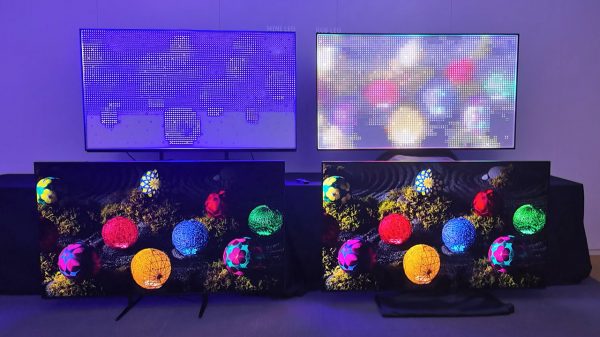
QD-OLED has been heralded as the next big thing in TV tech as it is hoped by its proponents to eventually replace LCD-based (including LED/LCD, QLED, and miniLED) TVs and OLED TVs in the marketplace. Preliminary indications are that QD-OLED TV tech delivers the goods with picture quality, eliminating some of the downsides of current LCD-based and OLED TV tech.
QD-OLED TV (aka QD Display): Quick Facts
QD-OLED TV tech combines Quantum Dots with OLED which eliminates the need for an LCD panel. A layer of OLEDs placed on the back of the TV emits blue light (similar to a backlight). The blue light strikes a layer of quantum dots to produce green and red light, while a portion of the blue light from the OLED layer passes through to the screen.

The result of combining blue OLED with green and red light via the Quantum Dots produces the displayed screen images without the need to have an LCD screen panel and extra color filters.
QD-OLED TVs display absolute black just as an OLED TV, while also displaying a wide color gamut. However, blue organic OLEDs are unstable and have a short lifespan. To compensate, three layers of blue OLEDs are used to stabilize the blue light output and extend life.
Getting QD-OLED TVs To Market: Not So Fast!
Currently, the only maker of QD-OLED panels for TVs is the Samsung Display Company.
Note: Samsung Display and Samsung Electronics are both under the Samsung Corporate umbrella, but they operate as two separate companies, and, as explained below, they don’t always see eye-to-eye on product strategy.
Samsung Display has worked out an agreement with Sony to buy QD-OLED panels at a price they both can live with. However, its own sister company, Samsung Electronics, has informed Samsung Display that their panels are still too expensive, so they aren’t buying in. This dispute is causing a major conflict between the two companies.
Sony is moving forward with their QD-OLED TV plans using Samsung Display panels and has already announced its forthcoming first model series (Bravia XR-A95K) in 55 and 65-inch screen sizes. However, Samsung Electronics has not announced any specifics on forthcoming models and there is no listing of any forthcoming QD-OLED TVs on its website.

The main stumbling block for Samsung Electronics appears to be that they want Samsung Display to sell them QD-OLED panels for the same price that OLED panel maker LG Display sells to several TV brands for (including a recently-completed deal with Samsung for a new line of OLED TVs).
Samsung Display has responded with the fact that it’s offering the panels to Samsung Electronics for the same price they are charging Sony, which they point out is already low considering this is new TV tech that is different than LG Display’s OLED TV tech and mass production is not running at full capacity.
For example, one of the reasons the QD-OLED panels are more expensive than current OLED panels is that LG Display has been making OLED panels for several years in large quantities.
This has resulted in continuous manufacturing improvement that has raised the OLED yield level to about 90%. This has also enabled a continuous downward price trend for OLED TVs on the retail level. On the other hand, QD-OLED panel production is only now getting off the ground with low quantity and is reportedly only running a yield level of about 30%.
Tip: The yield percentage represents the number of display panels coming off the assembly line that are defect-free so that they can be sold and incorporated into actual TVs. The lower the yield percentage, the higher the manufacturing cost.
With low production yields, the desire of Samsung Electronics to price a QD-OLED TV even close to what their current own QLED or LG’s OLED TVs are selling for is unrealistic, and will probably be so for the next couple of years.
Our Take
As of the publish date of this article, Samsung Display and Samsung Electronics are still at odds over QD-OLED TV.
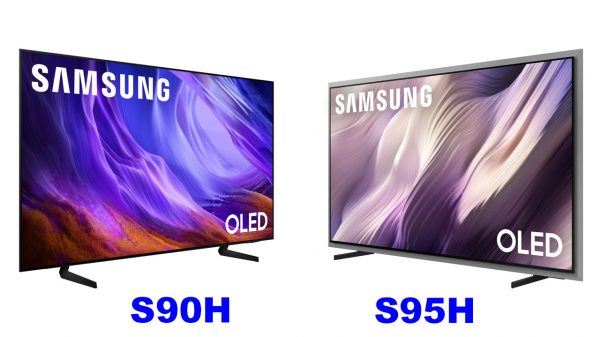
UPDATE 3/17/2022: Well it looks like Samsung Display and Samsung Electronics may have quietly resolved their differences as Samsung Electronics has announced they will be offering two QD-OLED TVs for 2022. The two models are as follows: QN55S95B (55-inches/$2,399.99) and (QN65S95B (65-inches/$3,499.99). One thing that is confusing is that they are being labeled as OLED TVs, rather than QD-OLED or QD Display TVs.
The remaining text below is from the original version of this article.
For Samsung Display, Samsung Electronics has been their biggest customer (since they are related companies). If Samsung Electronics doesn’t buy any QD-OLED panels, Samsung Display is going to have to line up more brand customers or hope that Sony’s QD-OLED TVs are successful enough out the gate that they will buy more panels.
On the other side, the time for Samsung Electronics TV dominance is not necessarily a sure thing long term as they rely heavily on LCD-based TV tech and Samsung Display has, for all practical purposes, ended LCD panel production.
That means that Samsung Electronics has to buy LCD panels from China-based companies, which doesn’t always assure the consistent quality that Samsung expects, especially for its higher-end QLED and Neo QLED sets.
The final point to make is that while the two “Samsungs” continue bickering, Sony may end up the winner as they will be credited as the first TV maker to get a working QD-OLED TV on store shelves (such as Best Buy/Magnolia) and even though they will be very pricey for 55 and 65-inch screen sizes, those with cash-in-hand and the first-adopter customer base will start buying. Some observers think Sony’s 55-inch model will be around $3,000 and the 65-inch will be around $4,000.
It is anticipated that Sony will make the Bravia XR-A95K model series available by mid-2022, but if Samsung Display and Samsung Electronics can’t solve their differences, Samsung Electronics might miss the boat until 2023.
Tip: Dell/Alienware has announced a forthcoming 34-inch QD-OLED PC/Gaming monitor for $1,300.
To dig deeper into QD-OLED, refer to our companion articles:
This is a developing story. If/when new information becomes available, this article will be updated.