Craft Recordings didn’t coast into the end of 2025 — they lit a match and walked away. The Original Jazz Classic sseries signs off for the year with three releases that feel chosen, not padded: Plus 4 by Sonny Rollins, Soul Junction from the Red Garland Quartet, and After Hours — a smoky, after-midnight Prestige date led by Thad Jones and Frank Wess, with Kenny Burrell and Mal Waldron quietly stealing the room. No museum pieces. No “important but dull” box-checking. Just records that still sound dangerous when you turn them up.
Released in 1956, Plus 4 now carries the weight of history, but it wasn’t recorded under its shadow. When Sonny Rollins walked into the studio with Clifford Brown, Max Roach, Richie Powell, and George Morrow, the music was pure momentum — forward-looking, confident, and alive with possibility. The fatal car crash that claimed Brown and Powell would come roughly three months later, transforming Plus 4 into something far heavier in retrospect than it ever was in the moment.
That hindsight changes how the record lands, but it doesn’t soften it. What you hear instead is a band playing with conviction, not caution — musicians pushing ideas, testing limits, and refusing to coast. Rollins doesn’t sound like a guest; he sounds like someone staking a claim. Plus 4 isn’t a eulogy or a memorial document. It’s the sound of creative fire at full burn, preserved just before history intervened and rewrote the narrative.
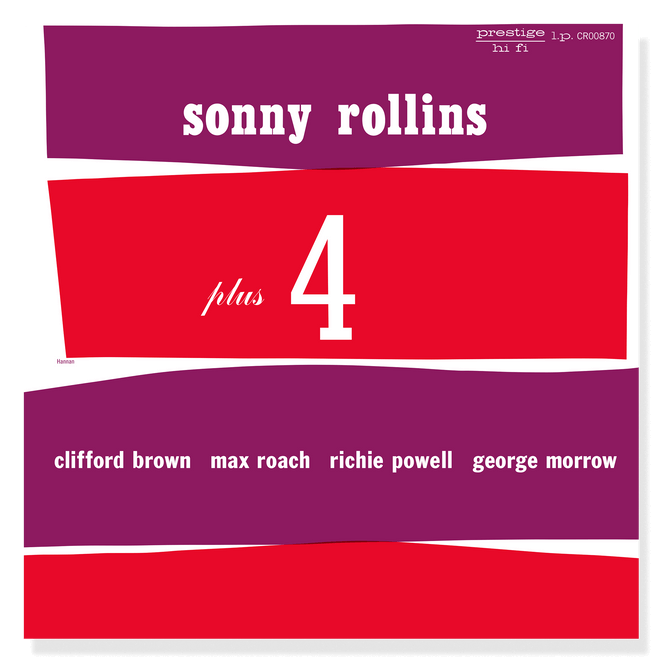
By the time Sonny Rollins walked into Van Gelder Studio to cut Plus 4, he wasn’t just bringing tunes — he was bringing baggage, timing, and a point to prove. Rollins had written Pent-Up House and Valse Hot while working as a sideman in the Max Roach / Clifford Brown Quintet — and that mattered. In the mid-’50s, sidemen didn’t usually get this kind of continuity.
You either recorded with the rhythm section or borrowed the leader. What you didn’t do was bring the entire working band with you. Rollins did it anyway, five months after replacing Harold Land, who headed west to care for his ill wife. That decision gives Plus 4 its edge: this isn’t a pickup session, it’s a band that already knows where the bodies are buried.
And Rollins didn’t arrive polished and pampered. Before Chicago came calling, he was working as a janitor, practicing obsessively, and quietly recalibrating his life — a short sabbatical by his standards, but long enough to sharpen the blade. When the Brown/Roach Quintet hit Chicago in November 1955 and set up shop at the Bee Hive Club in Hyde Park, Rollins sat in, blew the doors off, and walked out with the tenor chair. Thirty-two minutes later — all of it captured on tape in Hackensack — Plus 4 was born.
And yes, this is New Jersey, so after Van Gelder shut the lights off, any self-respecting musician would’ve gone hunting for sustenance at White Mana. Because great jazz may be immortal, but nobody plays like this on an empty stomach.
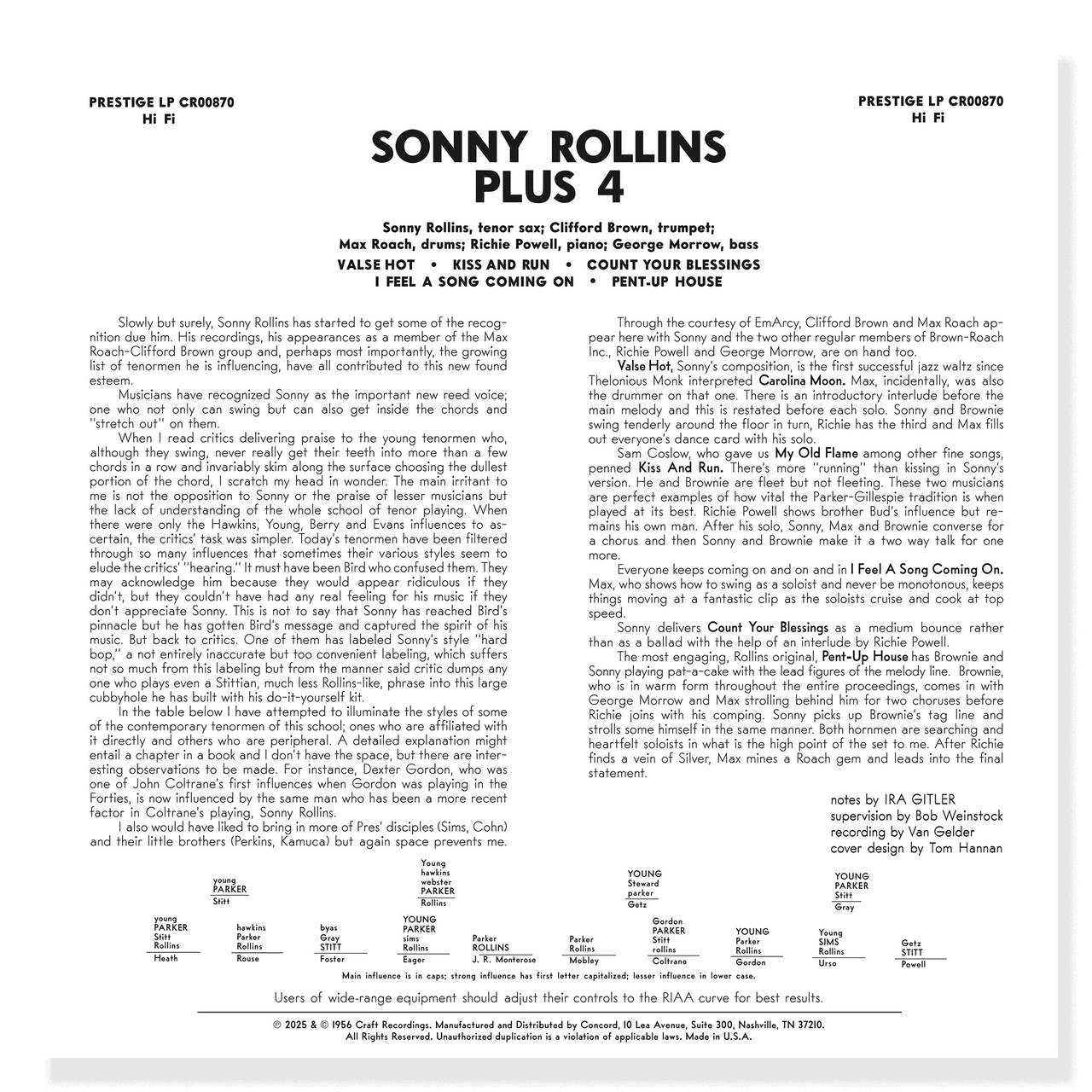
This one gets the full audiophile treatment and not the fake kind with a hype sticker doing all the work. AAA lacquers cut directly from the original master tapes by Kevin Gray at Cohearent Audio, pressed on 180-gram vinyl at RTI. Original yellow Prestige-style label, heavyweight jacket, the whole nine. Craft Recordings and Original Jazz Classics didn’t cut a single corner here — and it shows the second you pull it from the sleeve.
The pressing is dead-center and whisper-quiet, the kind that makes you stop checking your setup because there’s nothing to fix. Sonically, it’s big, open, and unapologetically present. The horns jump out into the room with body and bite, not that flattened, polite reissue nonsense. I don’t own an original pressing, so I won’t play internet historian, but this version sounds clean, full, and utterly unstrained — no grit where it doesn’t belong, no airbrushing either.
Call it what it is: sonic gold. And yes, it should feel premium at this price. People don’t mind paying for quality — they mind being taken advantage of. And that’s not what this music deserves. Craft Recordings is operating on a different level of excellence in 2025, treating records like Plus 4 as cultural artifacts, not just inventory. This is how it should be done: respect the music, respect the listener, and let the results speak louder than the marketing copy.
Where to buy: $39.99 at Amazon
Related Reading:
- Benny Golson’s “Gone With Golson” Vinyl Reissue Review: Craft Recordings Restores 1960 Prestige/New Jazz Rarity
- Wheelin’ And Dealin’ 180-Gram Vinyl Review: Craft Recordings’ OJC Reissue Showcases Waldron And Wess
- Review: Here’s Lee Morgan – Craft Recordings’ OJC Reissue Revives A Hard Bop Rarity
- Review: Looking Ahead – Ken McIntyre & Eric Dolphy’s Boundary-Pushing OJC/Craft Recordings Reissue On 180g Vinyl