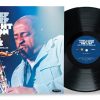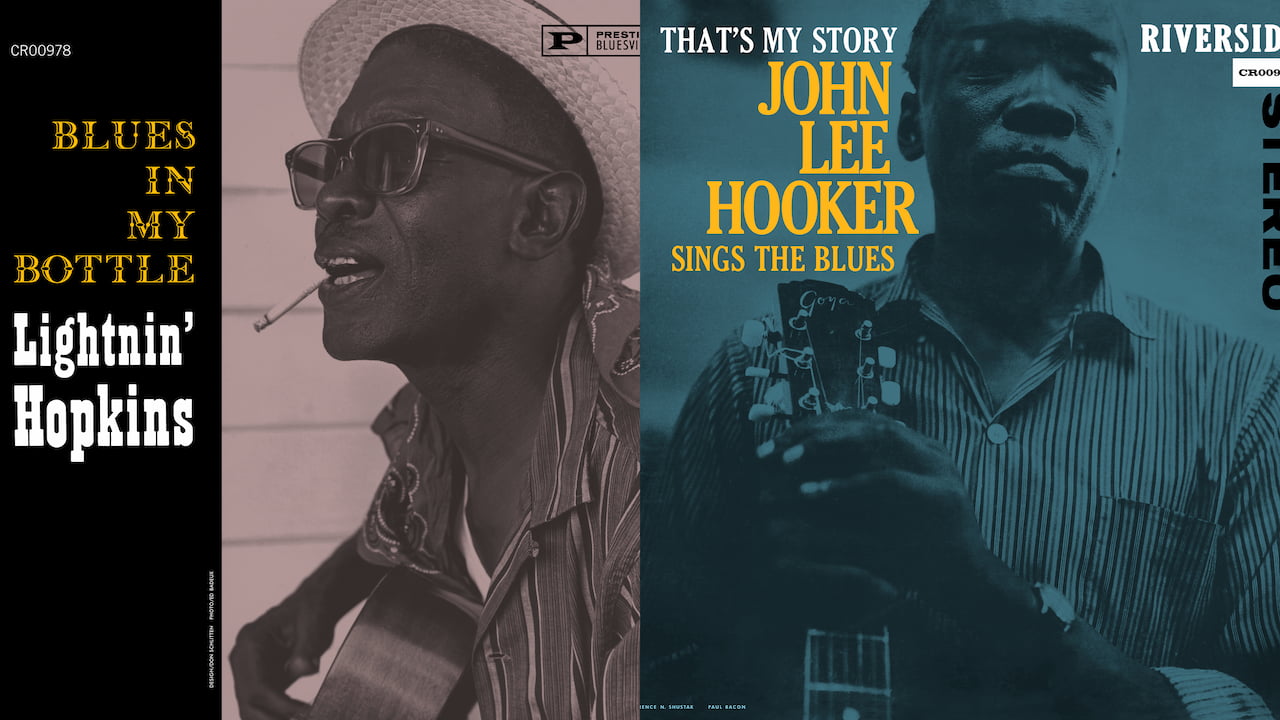
Craft Recordings is bringing Bluesville Records back into sharp focus on April 3 with no shortcuts and no gimmicks—just properly done, AAA-remastered reissues of two essential blues albums: John Lee Hooker’s That’s My Story (1960) and Lightnin’ Hopkins’ Blues in My Bottle (1961). Cut from the original master tapes and pressed on 180-gram vinyl in partnership with Acoustic Sounds, these releases continue Bluesville’s mission of honoring the roots of American blues with care, context, and pressing quality.
Both albums strip things down—Hooker backed by seasoned jazz players Sam Jones and Louis Hayes, Hopkins alone and unfiltered—revealing just how deep their musicianship really ran beyond the electric swagger. Since relaunching in early 2024, Bluesville Records has proven it isn’t messing around, and after covering standout Bluesville reissues in 2025 from Terry Callier, Pink Anderson, Furry Lewis, Memphis Slim, and Lonnie Johnson, this latest drop feels less like a revival and more like a statement: this music still matters, and it deserves to be done right.
John Lee Hooker – That’s My Story
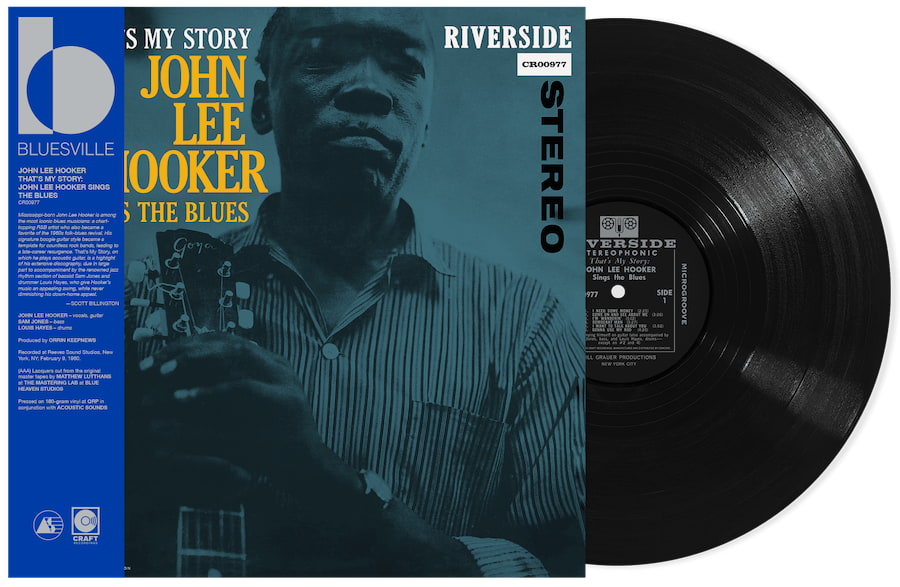
Fondly tagged the “King of the Boogie,” John Lee Hooker was one of those artists who didn’t just influence music—he bent it to his will. Born in Mississippi and later relocating to Detroit, Hooker helped define postwar electric blues while leaving fingerprints all over rock and soul, shaping everyone from the Rolling Stones and Jeff Beck to Bonnie Raitt and Santana. He broke through early with “Boogie Chillen’,” a 1948 R&B No. 1 that sounded like nothing else on the radio and made it clear he wasn’t interested in playing by anyone else’s rules.
By the 1950s, Hooker was releasing singles at a relentless pace, cutting enduring sides like “I’m in the Mood” and the chart-topping “Crawlin’ King Snake.” While most listeners associate him with raw, electrified boogie riffs, some of his most revealing work came when things were stripped back. Recorded for Riverside Records and produced by Orrin Keepnews, 1960’s That’s My Story paired Hooker with two heavyweight jazz players—bassist Sam Jones and drummer Louis Hayes, both best known for their work with Cannonball Adderley. The result is stark, brooding, and intimate, with Hooker’s voice firmly at the center of the picture.
The album leans heavily on originals but slips in smart, swinging covers, including Berry Gordy and Janie Bradford’s “Money (That’s What I Want)”—retitled “I Need Some Money”—and Rosco Gordon’s “No More Doggin’.” Jones and Hayes know when to push and when to disappear, giving Hooker room to dig deep on cuts like “One of These Days,” “You’re Leavin’ Me Baby,” and “Wednesday Evenin’ Blues.” On several tracks, Hooker goes it alone, most notably on the pointed “Democrat Man,” which lands with more bite precisely because there’s nothing cushioning the message.
Released during the folk-blues revival, That’s My Story arrived just as a new audience was discovering Hooker on its own terms. Critics took notice, and the album quickly earned its reputation as one of his most honest and emotionally direct statements—an early sign that the LP format would suit him just fine.
Where to buy: $32.99 at Amazon (available April 3, 2026)
Lightnin’ Hopkins – Blues in My Bottle
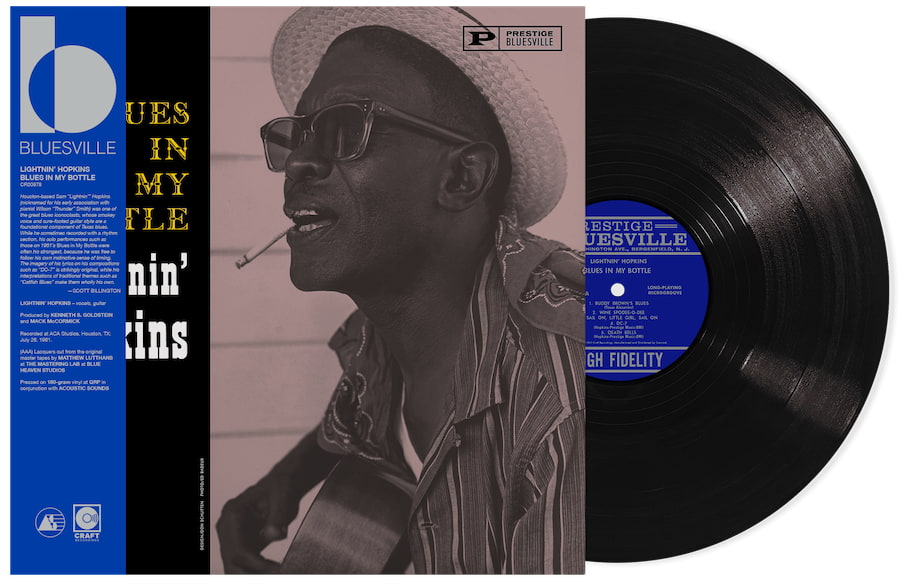
Houston-born Lightnin’ Hopkins was nothing if not relentless. Over a career that stretched nearly 40 years, Sam “Lightnin’” Hopkins built one of the deepest catalogs in blues history, combining razor-sharp guitar instincts with a conversational, almost stream-of-consciousness songwriting style that felt lived-in rather than performed. His influence ran wide and deep, earning admiration from Townes Van Zandt and Stevie Ray Vaughan to members of R.E.M. and the Grateful Dead.
Hopkins began recording in the mid-1940s and quickly established himself across Texas, but it was the folk-blues revival of the early 1960s that finally pushed him into the national spotlight. Recorded in 1961, Blues in My Bottle captures Hopkins right at the start of that ascent and stands as his third studio album for Prestige’s Bluesville imprint. Produced by musicologist and folklorist Mack McCormick alongside folklorist-producer Kenneth S. Goldstein—both central figures in the American folk revival—the session remains one of the most revealing entries in Hopkins’ catalog.
Best known for his electric work, Hopkins goes in the opposite direction here, performing entirely solo with acoustic guitar. The stripped-back approach puts everything front and center: his weathered voice, elastic timing, and gift for storytelling. Traditional numbers and blues standards like “Goin’ to Dallas to See My Pony Run,” “Catfish Blues,” and the title track “Blues in My Bottle” sit comfortably alongside originals such as “DC7” and “Death Bells,” which underline his knack for turning everyday observation into something quietly devastating.
The set also includes a spirited take on the 1949 R&B hit “Drinkin’ Wine, Spo-Dee-O-Dee,” proving that even at his most minimal, Hopkins could still swing when he felt like it. Blues in My Bottle isn’t about polish or theatrics. It’s Lightnin’ Hopkins, unfiltered and unaccompanied, documenting his world in real time—one of the clearest examples of why his voice still carries weight decades later.
Where to buy: $32.99 at Amazon (available April 3, 2026)
Related Reading:
- Terry Callier “The New Folk Sound” Review: Craft & Bluesville Stop The Vinyl Neglect At Last
- Review: Furry Lewis – Back On My Feet Again Gets 180g Reissue From Bluesville And Craft Recordings
- Review: Memphis Slim – At The Gate Of Horn 180G LP Reissue By Craft Recordings Revives Bluesville Classic
- Pink Anderson Vol. 1: Carolina Blues Man Review – Delta Dirt, Fingerpickin’ Fury, And Pure Blues Swagger