
Table of contents
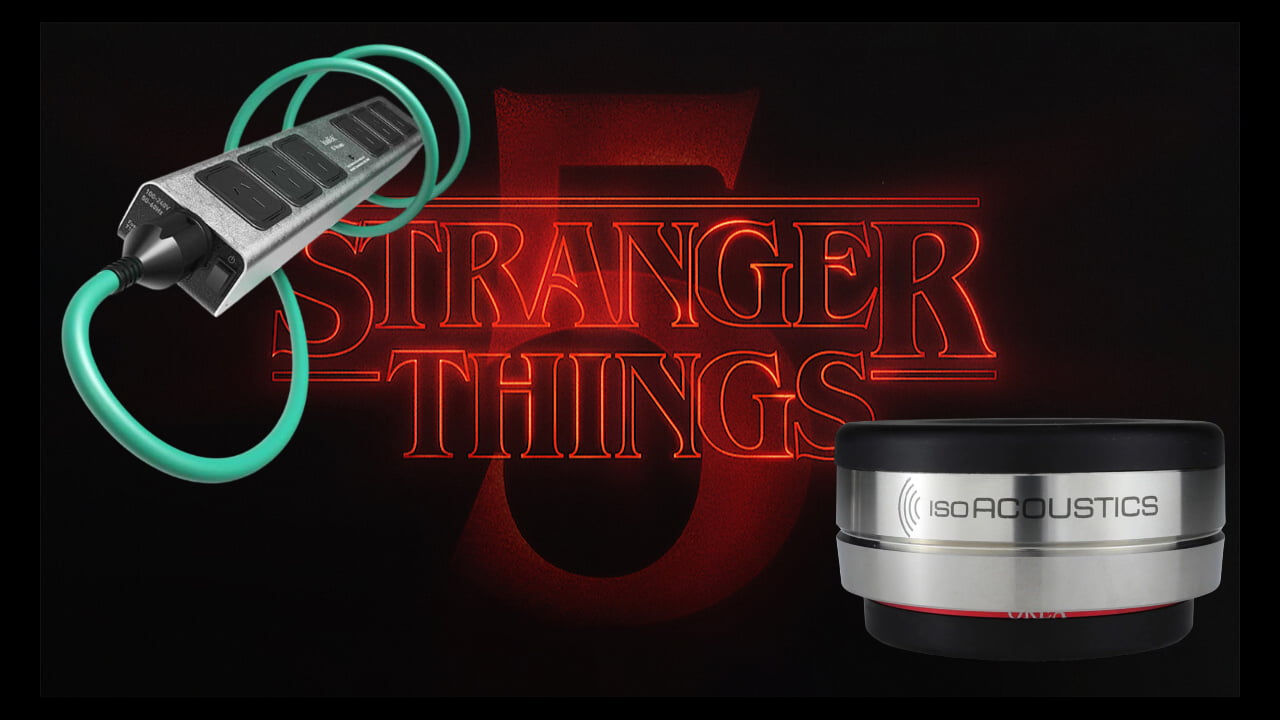
- Stranger Things Season 5: The Show That Refuses to Let Pop Culture Move On
- IsoAcoustics OREA: Because Your Gear Deserves Better Than Four Rubber Doorstops
- IsoTek V5 Polaris: The Entry-Level Line Conditioner That Actually Cleans Up Your Power Act
- The Great Weiner Resurrection: The Hot Dog Comeback Nobody Ordered, But It’s On Your Plate Anyway
Thanksgiving and Black Friday are finally in the rearview mirror, our stomachs have filed their official complaints, and—full disclosure—mine is about to get an upgrade whether it likes it or not. Complex abdominal surgery is on deck in about a week, and if all goes according to plan, I’ll be rocking the Billy Hargrove torso twelve weeks later. No magic pills, no vanity shots, no Hollywood shortcuts. Just a mesh bandage, a painfully sensible diet, and the charming realization that when you hit 55 and 13 people from your graduating class and extended circle are already gone… you start taking the maintenance schedule a little more like Bosch: grim, necessary, and not up for debate.
It also means this is the last stretch where you’ll catch me lifting or reviewing anything with real mass for a while. January puts me firmly in the lightweight division: headphones, DACs, streamers, headphone amps, and bookshelf speakers—nothing that requires two Advils and a heating pad afterward.
Marantz, Devialet, Quad, Advance Paris, FiiO, Andover, Fosi, and Wharfedale are all in the production queue right now, which means the home stretch of the year is stacked. December is the final waltz with the heavy hitters — integrated amps and loudspeakers hefty enough to make a UPS driver question every life choice that led to your front porch. After that, we move into the lightweight division, but for now the big gear gets its last dance.
And somehow, all of this feels perfectly in step with the Stranger Things energy running through the audio world right now. Weird rebirths, unexpected twists, physics-defying accessories, and brands doing things nobody saw coming. Hawkins isn’t the only place where reality buckles a little—hi-fi seems determined to follow suit.
Stranger Things Season 5: The Show That Refuses to Let Pop Culture Move On

Hollywood keeps insisting it’s “back,” but the box office numbers keep screaming, “No, you’re not.” Television is eating cinema’s lunch because the film industry has apparently forgotten how to make a rock-solid movie that isn’t bloated, preachy, or designed by committee. For every Nuremberg that shows a pulse, we get 25 high-budget disasters limping through Q4 without making back craft services.
If you’re curious how 2025 has treated Tinseltown so far, my summary is sitting right over here—spoiler: it’s uglier than a January release schedule. When even Marvel coughs up three underperformers in one year, you know the machine is broken.
Meanwhile, TV is out here taking bigger swings than the entire studio system. Stranger Things pulled a full David Chase, disappeared for years, and still returned with the final season detonating global viewership—#1 in 92 markets on Netflix in under three days.

Why? Because it’s one of the few pieces of entertainment left that actually entertains. It crosses generations: Gen X, the eternally irritated millennials, and the 15–25 TikTok theorists who churn out multiverse explanations faster than Marvel can cancel projects. And yes, I’m in the mix too. With kids between 12 and 23 (and one already a fully credentialed adult with three degrees and a job), we basically counted down the minutes to the end of Thanksgiving just so we could rewatch all four new episodes again.
People are exhausted—by politics, by prices, by doomscrolling, by the general “everything is on fire” vibe. They want escapism that doesn’t lecture them, doesn’t insult their intelligence (much), and doesn’t cost half a paycheck for a ticket and popcorn. Stranger Things delivered exactly that. And Hollywood, if it’s paying attention at all, should be terrified.
It also helps that Stranger Things flies in the face of everything clogging up cable and streaming right now. We’ve hit peak serial-killer docudrama—yes, I’m aware of the irony since Vecna is literally vaporising children like it’s his side hustle—but at least Hawkins makes it entertaining. Then there are the home-improvement shows, which have officially crossed into science fiction. Has anyone, in the history of mankind, ever had a contractor work that fast, that cleanly, or without royally screwing something up? I’ve seen kitchen remodels take less time on TV than it takes my plumber to return a text.

And don’t get me started on reboots. Hollywood keeps resurrecting things nobody asked for, and somehow we’re even getting an American reboot of Squid Game. Why? If I want to experience that level of mayhem, questionable decisions, and potential homicide, I can drive into certain parts of Philadelphia while searching for a cheesesteak. And no, don’t make stomach jokes—I wasn’t there, you didn’t see me, and we will never speak of this again.
Netflix believes in this kind of programming so much they’re basically turning my neighborhood into the new Hawkins, Indiana—with better pizza and higher property taxes. They’re dropping $1 billion into Monmouth County to build the largest TV and movie studio east of the Mississippi on 300 vacant acres at the old Fort Monmouth. I could walk there if my legs felt ambitious, though let’s be honest: I’ll be stuck in traffic on State Road 35 like everyone else.
And because no media conglomerate can sit back and let Netflix have all the fun, Paramount—freshly merged with Skydance/CBS and hungry to prove it still exists—just announced it’s leasing a brand-new studio complex in Bayonne, NJ. Yes, Bayonne, across from Staten Island. Insert your favorite Staten Island joke here; I’ll refrain only because my wife is from there, and I enjoy waking up without a pillow mysteriously pressed over my face.

The irony? New Jersey is already the most unaffordable state in America. But somehow our lovingly corrupt political class managed to grease enough wheels, palms, and gears to convince two massive entertainment empires that the Garden State is the future of TV and film production. Forget Hollywood. Forget Atlanta. Apparently the next great era of screen entertainment is going to be forged between a shuttered army base, an industrial waterfront, and a Wawa.
Stranger things, indeed.
IsoAcoustics OREA: Because Your Gear Deserves Better Than Four Rubber Doorstops
The audio accessories world is a circus—equal parts legitimate engineering, creative half-truths, and full-blown Upside Down mysticism—and I’ve spent decades watching people argue about it like their lives depend on whether a cable riser improved their “air.”
This is the same corner of the industry that brought us $3,000 power cords, $1,000 Ethernet cables, green felt markers for CDs, cable cradles that look like failed sculpture projects, and magical stones that allegedly “open the soundstage.”
And then there’s room acoustic treatment so bizarre it resembles the Stranger-Things-fied version of Phil Spector’s studio—minus the murder, hopefully.
Enter IsoAcoustics—the rare accessory brand that doesn’t require holy water, incense, or a séance to justify its existence. The Toronto-based company actually has credibility, and not the “my cousin once built a studio in his garage” kind. David Morrison spent years designing facilities for major broadcast networks like the CBC—also known as the Communist Broadcasting Corporation if you grew up in Toronto and enjoy a little gentle heresy—so they’re not exactly dabbling in this stuff.
Isolating studios in Toronto isn’t a theoretical exercise; it’s trench warfare against physics. Try building a broadcast facility directly over the subway system and you’ll discover very quickly why vibration control matters. That’s the environment IsoAcoustics was born from: real studios, real structural challenges, and real consequences if the engineering doesn’t hold up.
IsoAcoustics builds real hardware with real engineering behind it: the Aperta Series for speakers and subs, a full lineup of vibration-control platforms, and of course the award-winning GAIA loudspeaker isolation feet that absolutely do what they claim. I’ve reviewed multiple IsoAcoustics products over the years, including the GAIA, and while none of them will ever be confused with “budget-friendly,” the impact is undeniable.
Sometimes the results are overwhelmingly positive; occasionally they shift the sound in a way not everyone will love. But the key detail is this: they actually work, which already puts them miles ahead of half the accessory market.
The OREA Series continues that tradition, offering isolation for speakers, components, amplifiers, and turntables. If it vibrates—and in audio, everything vibrates—OREA can tame it.
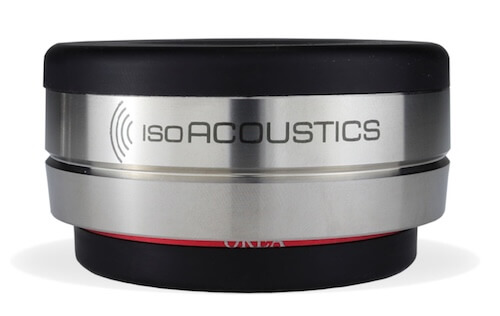
The OREA Bordeaux is the heavyweight of the lineup, measuring 2.6″ x 1.4″ (67 x 36mm) with no tilt and a 32 lb (14.5 kg) weight capacity per unit. Each foot is machined from stainless steel with a low-profile design, so it won’t jack up the height of your gear.
Every OREA model is tuned for a specific load and marked with a colored ring on the bottom to indicate its capacity. The design uses a dual-flange system: the top creates a mild suction effect against the underside of your component, while the bottom grips the supporting surface. The result is controlled, stable isolation without adding bulk or wobble.
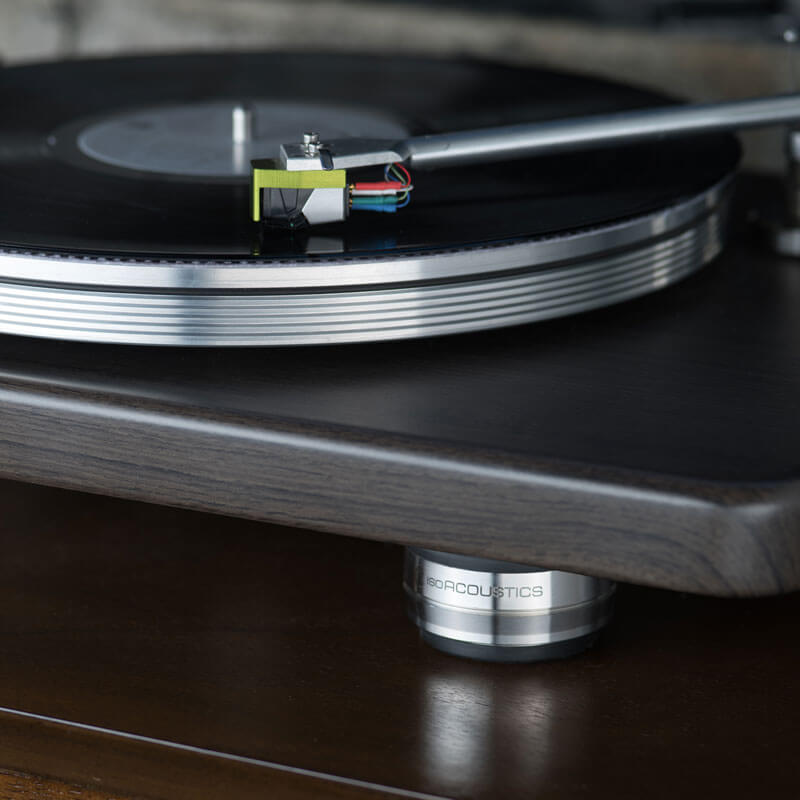
In my experience, dropping OREA under suspended turntables—like my restored Thorens decks from Vinyl Nirvana—and under source components like CD players, music servers, and power amps delivers a genuinely positive impact. Unlike the Aperta stands I use on my desktop (which boost clarity, detail, and soundstage width but can also thin out the mids and bass with certain speakers), the OREA don’t seem to commit any fouls.
Is the improvement massive? No. You’re not suddenly unlocking secret master tapes. But do you get better overall system clarity, more micro-detail, and a noticeably lower noise floor? Absolutely.
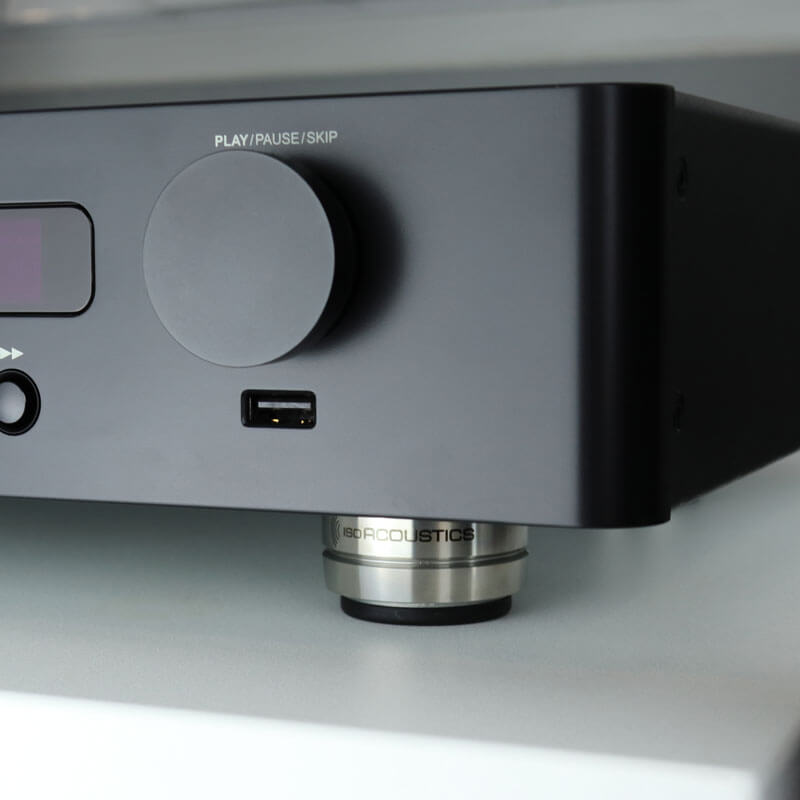
Just don’t get delusional. Placing OREA under your WiiM Pro Plus won’t magically turn it into a WiiM Ultra. IsoAcoustics makes more affordable pucks that work great for lightweight gear—and I use those under my plastic Panasonic Blu-ray players. But nothing in this universe is turning a $129 streamer into an Innuos Pulse. Come on, people. This isn’t Hawkins.
Where to buy: $49.99 to $89.99 each at Crutchfield | Amazon | IsoAcoustics
IsoTek V5 Polaris: The Entry-Level Line Conditioner That Actually Cleans Up Your Power Act
One of the oldest and most contentious debates in Audio La-La-Land is the role of the power line conditioner: what it’s actually supposed to do, whether it makes an audible difference, and why anyone would drop $5,000 on one when the outlets in your house are $2 specials your contractor yanked out of a Home Depot bin. Add in the bargain-basement wiring snaking through your walls—designed primarily to not burn your house down while you sleep—and the whole argument starts feeling like something straight out of Hawkins Lab: lots of mysterious energy, questionable experiments, and no one agreeing on what the hell is really happening.
Over the past 28 years, I’ve invested in exactly two power line conditioners. Not twenty. Not a rotating stable of “upgrades.” Just two Chang Lightspeed 6400 units with six outlets each that cost me $650 apiece back in 1998. They still work. And I know they work because the moment I unplug my two best TVs from them, I can literally watch the noise floor creep into the image. The picture loses a bit of sharpness, and both displays have been fully ISF calibrated, so it’s not my imagination or bad settings. Clean power matters.

But I also learned something very early on, back when my equipment racks were loaded with hulking power amplifiers, CD transports, DACs, phono preamps, line stages, and every other heat-generating brick we all thought we needed: plugging my amplifiers into either conditioner made the sound quality worse. Not subtly. Not “maybe if I squint and tilt my head.” Worse.
I even tried my MartinLogan electrostatic loudspeakers through them, and the results were mixed at best. Some gear benefits from conditioned power. Some gear absolutely does not. That lesson has stuck with me longer than half the equipment I’ve owned.
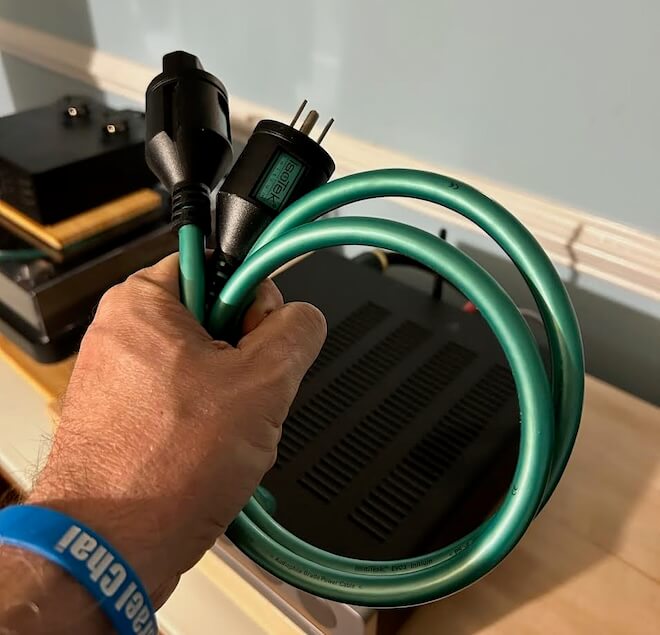
The IsoTek V5 Polaris ($895 USD with the Initium C13 Power Cable) is essentially a compact six-outlet power-cleaning bar built to reduce both Differential Mode and Common Mode noise while maintaining stable current delivery across all connected components. IsoTek reworked the design with nine times more Differential Mode filtering than the previous version, lower resistance for improved amperage, and a 60 percent improvement in Direct Current Resistance. It also steps up surge protection to 45,000A, which is no small upgrade for a strip that weighs just 5.2 pounds and measures 3.1″ × 2.0″ × 20.1″.
Each of the six outlets references back to a central PCB that uses double the copper loading and silver plating, and each outlet is isolated to prevent cross-contamination of noise between components. The V5 Polaris uses IsoTek’s delta filter topology, delivering more than 20 dB of noise reduction at 1 kHz and around 42 dB at 10 kHz, which is the point where RFI usually becomes a problem.
Internal wiring is silver-plated 6N oxygen-free copper, and the aerospace-grade FEP dielectric keeps resistance low. IsoTek’s KERP (Kirchhoff’s Equal Resistance Path) helps ensure consistent power delivery across the strip. It supports 100–240V, up to 10A, and manages 2,300W at 230V or 1,150W at 115V, depending on your wall voltage.

For those who wonder what the hell all of that means, we have no way to independently verify any of the claimed improvements over previous generations because we never used them, and my only honest baseline is my own experience. I connected the Quad 3 Integrated Amplifier to the V5 Polaris using one of my Clarus Audio power cables—which costs more than the power conditioner itself and is usually paired with my Cambridge Audio Edge A plugged directly into the wall. I also repeated the test using the stock Quad power cord.
Sources included the WiiM Ultra, Cambridge Audio CXN100, my MOON by Simaudio phono preamp, Thorens TD-145, Pro-Ject Debut Pro, Audiolab CDT6000, and even my Samsung and Panasonic TVs.
Loudspeakers for testing included the Wharfedale Super Denton, Q Acoustics 5040, and the Q Acoustics M40 Wireless Speakers, giving me a broad spread of sensitivities, amplifier demands, and real-world scenarios to see how the V5 Polaris behaved across different systems.
As my late Bubie would say in her thick Yiddish accent, “Nu?”
Working backwards, the Q Acoustics M40 didn’t suffer at all when plugged into the V5 Polaris using their bargain-bin supplied power cords. I still haven’t bothered upgrading them, but even so, the speakers sounded cleaner through the IsoTek. A touch more openness, a bit more composure. Nothing dramatic, but definitely not imagined. And importantly, the M40’s bass—already surprisingly robust for such a small cabinet—didn’t thin out in either scenario.
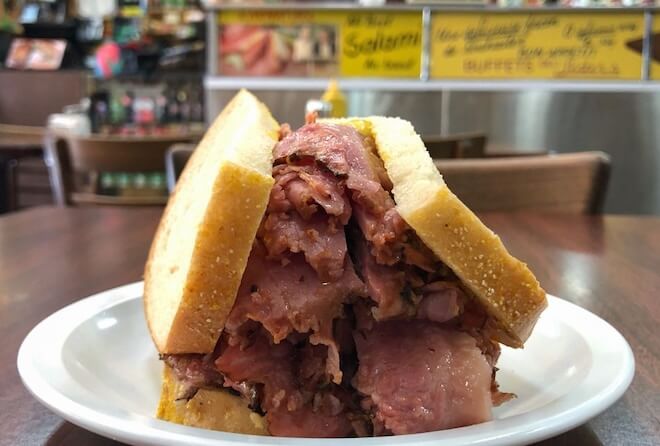
Switching over to the Quad 3 told a clearer story. I love this amplifier (full review lands next week), and it pairs beautifully with the Wharfedale Super Denton, but its bass character leans more full than tight. Think Montreal smoked meat at Schwartz’s: overflowing, flavorful, and stacked a little too high between the rye. And if we’re being honest, the rye is better at Lester’s or Snowdon anyway.
Switching between the V5 Polaris and the wall made the differences pretty clear. Plugged into the IsoTek, the Quad 3 had better definition and the bass tightened up a notch. The overall tonal balance didn’t really shift, but the presentation was definitely cleaner. The top end had a touch more clarity—most noticeable with vocals and jazz, where sibilants softened and micro-details came through with a bit more ease.
The bigger changes came from the sources. The WiiM Ultra, Audiolab 6000CDT, and both turntables sounded different enough that I pulled out my NAD C 316BEE V2 and Audiolab 6000A just to confirm I wasn’t imagining anything. Same result: cleaner, less noise, better impact. Vocalists moved slightly forward in the mix with more precise imaging. Interesting stuff. Maybe not as interesting as the sandwiches or hot dogs I can’t eat right now, but still enough to make the point.
There is no question the IsoTek has a positive impact—especially on sources and TVs. Power amps? I’d keep those in the wall. Speaking of things I want to keep in the wall… let’s talk about hot dogs.
Where to buy: $895 at Crutchfield | IsoTek
The Great Weiner Resurrection: The Hot Dog Comeback Nobody Ordered, But It’s On Your Plate Anyway

Growing up in the food industry hardwires you in ways therapy can’t undo. My family owned a pizza chain, so food wasn’t just a hobby—it was the oxygen in the room. And it was easy to indulge because back then I was 6’3″ and thin like a Hollywood A-lister on Ozempic… just without the weekly injections or the $900 bill. I ate everything: veal sandwiches the size of small children, panzerottis that could concuss a man, dim sum, pho, deli meats by the pound, biltong, and enough pizza to feed the entire Italian Army in North Africa.
But one of my true weaknesses? The hot dog.

When I lived in Chicago, I took it like a grown adult at the Wiener’s Circle at 9 p.m. in the cold—char dog, full blast, verbal abuse included. And in Washington D.C., I would disappear with my lady friend in college to Ben’s Chili Bowl at a time when bullets were flying and the neighborhood required the situational awareness of a Secret Service detail. But back then, hot dogs were still acceptable currency.
But over time, hot dogs fell out of fashion. Not healthy. Not chic. And let’s be honest: most of us don’t actually want to know what’s in them. They got pushed into the margins—picnics, Fourth of July grills, late-night bar crawls when you needed to kill whatever terrible choices were still lingering on your palate.

But lately… something strange is happening.
The hot dog is back. Fully resurrected. I’m talking “get in the car and drive 80 miles for two dogs with everything and a side of fries” back. And suddenly, deciding who makes the best dog isn’t just banter—it’s become a full-contact sport. Hot dog snobbery is alive, well, and apparently ready to throw hands.
Living where I do in New Jersey, I could walk to the WindMill in Long Branch and partake whenever the mood strikes. But let’s be honest: their dogs are… fine. Big. Maybe too big. More spectacle than balance. And while plenty of Garden State lifers will swear eternal loyalty to Rutt’s Hutt, I’m not one of them. Deep-fried “rippers” are a religion I never fully converted to.

You want the best hot dog in New Jersey? Hiram’s Roadstand in Fort Lee. End of discussion.
Limited seating, no frills, no nonsense. How do I know? I used to live in Teaneck, periodically escaping the kosher bubble for something a little more primal. When you know, you know. The Chili Dog, the Chili Cheese—both worth the drive, the wait, and the inevitable cholesterol lecture.

And there’s something nostalgic about Hiram’s that goes way beyond the menu. You can almost picture the parade of characters who’ve passed through over the decades. Musicians slipping out of Rudy Van Gelder’s studio in Englewood Cliffs after a late-night session, grabbing a couple of chili dogs before heading home with reels under their arms. Or maybe a few Jersey wiseguys crossing back over the bridge after “business” in the city, pulling into Hiram’s for a couple of dogs and a Coke before disappearing into the night toward Clifton or Newark.
It’s the kind of place that feels stitched into the state’s DNA—where the food hasn’t changed, the prices haven’t gone insane, and the ghosts of Jersey past probably still argue about who makes the better chili.
Hiram’s Roadstand
1345 Palisade Ave
Fort Lee, NJ 07024
Related Reading:
- Antonio Meze’s Headphone Legacy, Violectric’s HPA V324 Amp, Popori Acoustics, And The Price Of World Series Dreams: Editor’s Round-Up
- Is The Algorithm Living Rent-Free In Our Heads? The 21st-Century Thought Police Of What We Read, Watch, Think, And Hear
- Cambridge Audio Joins Spotify Lossless Push, JLab Expands With JBuds Open & Epic Pods, And Nothing Launches Ear (3): Editor’s Round-Up
- Network Amps, Wireless Headphones, Lossless Spotify – And Hollywood Still Pretending It’s Relevant – Editor’s Round-Up





















Asa
December 5, 2025 at 10:46 pm
Excellent writing, Ian, and may better health be your friend in 2026. Health is the foundation of everything else we do (or can’t/don’t do). Enjoy the down time.
Have to check out the latest STs. Enjoyed the first four and wasn’t sure if they’d do encore.
Also seems like a bonus addition of the Iso puck is better heat ventilation for amps/receivers tucked away in a console that give them some additional breathing room?
My wife found a great supplier of yummy hotdogs that are actually decently healthy from real ‘non-mystery’ meat and contain no nitrates or health sucking ingredients. I haven’t had them in ahwile but have to look them up again and find the name.
Lastly, I’m sure you saw where Netflix is acquiring WB? Is that what the new studio is for? I also saw it was a defense against the latest Paramount move. Like all other industries, the ones with funds acquire the less funded and we end up with a perception of choice, but it seems to be the same product just with a different wrapper.
Happy Chanukah and Merry Christmas.
Ian White
December 5, 2025 at 10:56 pm
Asa,
Appreciate that. There will be very little down time. Maybe a weekend.
I should not be eating hot dogs. No comment from my physician.
Our coverage of the Netflix/WB/HBO acquisition will be live tonight. We’ve been working on it all day.
I think it’s going to be a very interesting play. Which will not close for TWO years. Everyone is going nuts online about how this is the end of physical media and I’m just rolling my eyes. As long as Netflix doesn’t limit the WB movie titles to only 2 weeks in theaters before they vanish to Netflix only — I’m ok with this.
More to come.
IW
David
December 6, 2025 at 12:00 am
Ian,
This southern New Jersey native is here in Oregon wishing all the best for you in your surgery and recovery.
It always piques my interest when I see your byline on an Ecoustics article. I look forward to your review of the Quad 3 as well. It appears to be an intriguing option on the integrated front.
Stranger Things. We’ve waited a long time for this season. That hasn’t dampened our enthusiasm for the series or our eagerness to start watching, which won’t happen until I get the new LG oled C5 set up. My wife and I grew up in the 60s and 70s, our kids grew up in the 90s. No one is immune to the attraction of the 80s nostalgia and the thrilling story-telling of this Duffer brothers production.
David
p.s. The humble Victory Dogs food truck in southern Oregon might offer some competition to Hiram’s.
David
Ian White
December 6, 2025 at 12:56 am
David,
Much appreciated. Not looking forward to it but it’s what I need to do. On the plus side, my stomach will be fabulous. Quad 3 review on Monday or Tuesday. Have that and the new Andover SpinPlay coming over the next few days.
I love the show. I was born in 1970, obsessed over Stephen King as a young reader and writer, and I was a teenager during this period. I see myself in a few characters. And how I dressed. Ewww.
Probably a good time to mention that all of the Netflix coming to my neighbourhood stuff has inspired me to create a new show concept…which I’ve been working on already with two friends in the industry. We have multiple concepts but one is food. All I can say. Will write that establishment down.
IW
Anton
December 7, 2025 at 3:47 pm
Netflix deal won’t go through. Trump will make sure it doesn’t to make his friends at Paramount happy.
Power conditioners make sense but only when we’re talking surge suppression and sources. I agree with you on the amplifier side.
Those hot dogs look delicious. Expect some reviews once you are healed.
Ian White
December 7, 2025 at 6:32 pm
Anton,
It will go through. Do you really believe Netflix put up a nearly $6 billion kill fee if they didn’t believe it would get approval? There is no legitimate reason to oppose it. They are buying an American company and preserving those assets here. What a friggin hypocrite the Trump administration would be if they opposed it. American company preserving an American company. I don’t want to hear a “but the jobs…” argument either from anyone. Do you know how many thousands of people have been fired or will be fired by Paramount/Skydance/CBS? It’s already happening.
Netflix will have to make new contracts with the movie theater operators so that the films stay for at least 3 weeks (which is when movies make 90% of their money) and that’s how it will play out. Maybe the bigger thing for Hollywood is MAKE BETTER MOVIES.
I’ve seen over 60 new films this year. I’m struggling to pick 10 for my year-end list. Very telling.
Those hot dogs are amazing.
IW