
It’s 2025, and while streaming might be more convenient than ever, it still doesn’t hold a candle to the uncompressed video and lossless audio fidelity of a 4K Ultra HD (UHD) Blu-ray Disc. Even the best streaming services are plagued by compression artifacts, fluctuating bitrates, buffering, and inconsistent HDR performance. If you’re serious about movies—really serious—a dedicated 4K Blu-ray player in 2025 isn’t a luxury. It’s a necessity. The biggest issue? Great options are not plentiful.
I’ve spent over 40 years building a personal film library of more than 3,700 titles—across every format imaginable. LaserDisc, DVD, Blu-ray, UHD Blu-ray—each one a snapshot in the evolution of how we watch. From Star Wars and Exodus, to Stalag 17, Double Indemnity, The Breakfast Club, No Country for Old Men, and Lawrence of Arabia, these films didn’t just entertain me—they shaped me. And I’ve preserved that lifetime of movie-watching in physical form. Streaming platforms can’t touch that.
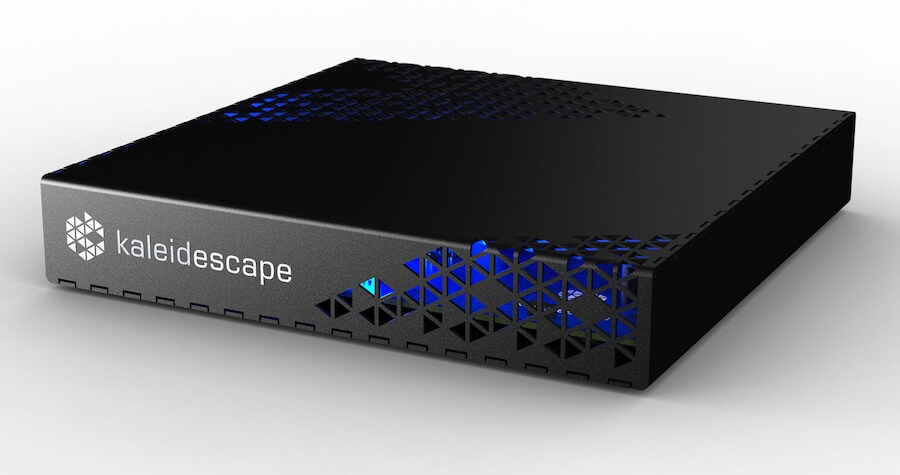
Owning a physical copy means having the version; uncut, unrestored unless you want it to be, with all the bonus features, director commentaries, and behind-the-scenes insights intact. Streaming? Try finding Double Indemnity with film noir historian commentary or Lawrence of Arabia in its full, remastered 70mm glory at 80+ Mbps. You’d need a Kaleidescape system just to come close—and even then, you’re still dependent on licensing deals to make sure you own it forever.
If you’ve invested in a quality home theater, your setup deserves better than a glorified YouTube stream. A 4K Blu-ray player gives your library and your passion—the respect it deserves.
Unlike streaming, owning a physical disc means permanent access to your collection. No surprise edits, no content removals, and no “remastered” versions that swap in CGI you never asked for. Plus, 4K Blu-ray offers uncompressed Dolby Atmos and DTS:X audio tracks that mainstream streaming services simply can’t replicate.
But it’s not just about specs. The cultural tide is turning back toward ownership.
People still buy physical movies?
Despite what Silicon Valley would have you believe, people still buy physical movies—and not just weirdos hoarding DVDs in their basement next to a lava lamp and a stack of old Fangoria magazines. Real movie lovers—those who alphabetize their shelves, track down foreign pressings, and still get misty-eyed over CAV laserdiscs—know the truth: owning a film is freedom.
You want Double Indemnity with restored mono and two commentary tracks? You want the original, theatrical Star Wars without cartoon Jabba and weird blinks? You’d better own it. Streaming is rented convenience. Physical media is cinematic permanence.
That said, buying physical media in 2025 is like hunting for a Kyber crystal on Jedha with a blindfold and a broken map. Best Buy? Gone to the great Geek Squad in the sky. Target? More interested in pushing throw pillows and cold brew than classic cinema.
Even Barnes & Noble—one of the last national chains still bothering to sell physical movies—feels like it’s on borrowed time. Sure, you can still find some Criterion gems and 4K releases tucked between the novelty mugs and leather-bound journals, but the once-glorious film section has shrunk to a shadow of its former self.
That leaves Walmart and Amazon. One is a fluorescent fever dream of $5 bins and misplaced Fast & Furious sequels. The other? A digital Wild West where hunting down the right edition of Blade Runner feels like you’ve been cast as Deckard in a sequel nobody greenlit—scrolling through endless third-party sellers, mismatched cover art, and “currently unavailable” listings.
Want that 4K steelbook with the theatrical cut, final cut, bonus disc, and three hours of commentary from Ridley Scott in a bathrobe? Better preorder it six months early, or prepare to pay triple on eBay from someone in a region you’ve never heard of.
Let’s be clear: physical media isn’t dead—it’s just clinging to life support, and we’re the ones keeping it breathing. Because some of us still care about watching Star Wars without CGI lizards randomly slithering through Mos Eisley, or experiencing Lawrence of Arabia in a bitrate that doesn’t resemble a YouTube trailer from 2009.
This isn’t about nostalgia. It’s about preservation, quality, and control—before it all disappears into the streaming void. And when physical movies are gone, all those director’s commentaries, alternate cuts, and restorations will be like tears in rain… Time to press play.
In 2024, sales of physical media formats—including DVDs, Blu-rays, and 4K Ultra HD discs—continued their decline, with total sales falling below $1 billion for the first time in the U.S. This decline represents a 23.4% year-over-year decrease, marking a significant drop from the $16 billion peak in 2005.
Despite the overall decline, there were some notable successes in physical media sales last year:
US Physical Media Sales: while studios don’t report exact unit sales, reports are circulating that several titles did sell over 50,000 units each, in the US alone. The top 3 sellers were “Deadpool & Wolverine,” “Dune: 2,” and “Godzilla x Kong: The New Empire.” And even though it was released in 2023, “Oppenheimer” cracked the top 4. Read more about 2024 disc sales in MediaPlay News
DVD and Blu-ray Sales in the UK: In the UK, “Dune: Part Two” reportedly led in physical media sales with 132,000 copies sold across both formats (including 4K Blu-ray). Other top performers were “Wonka,” “Oppenheimer,” and “Deadpool & Wolverine.”
Regarding 4K Ultra HD discs specifically, 2024 saw 583 new releases, setting a record for the format. However, specific sales figures for 4K Ultra HD discs were not detailed in the available sources.
In summary, while individual titles achieved significant sales, the overall market for physical media experienced a substantial decline in 2024, reflecting a broader industry trend towards digital formats and streaming services.
And let’s not forget independent labels like The Criterion Collection, Arrow Video, Kino Lorber, Severin Films, and Vinegar Syndrome—champions of physical media who treat cinema with the reverence it deserves. These aren’t just movie distributors—they’re preservationists, curators, and educators. Movie nerds like us.
Their releases are often the definitive editions featuring director-approved restorations, rare archival footage, audio commentaries, scholarly essays, and full booklets that transform each disc into a film school in a box.
Try finding House, Come and See, or Repo Man streaming in 4K with multiple commentaries and alternate cuts. Not happening. These labels specialize in the weird, the wonderful, and the nearly lost—films that aren’t getting billion-dollar licensing deals from Disney+ or Netflix. If you love cinema in all its forms, physical media from these labels is how you preserve it.
What to look for in a 4K Blu-ray player?
Great question—whether you’re a casual movie fan or a full-blown cinephile with a dedicated theater room, here are the key things to look for when buying a 4K Blu-ray player in 2025:
Video Quality Features
- Full 4K UHD Support – Make sure it handles native 4K Blu-rays, not just upscaled 1080p.
- HDR Support – Look for HDR10, Dolby Vision, and HDR10+ support to get the most out of a variety of content and the capabilities of modern TVs.
- Upscaling – A good player will upscale regular Blu-rays and DVDs to 4K cleanly, without adding noise or artifacts.
Audio Performance
- Lossless Audio Formats – Support for Dolby Atmos, DTS:X, TrueHD, and DTS-HD Master Audio is essential for full home theater immersion.
- Analog Audio Outputs – Audiophiles with high-end stereo or multichannel setups may want players with premium DACs and analog outs.
Disc & File Format Support
- Multi-Format Disc Support – Plays 4K UHD, Blu-ray, DVD, CD—and ideally SACD and DVD-Audio if you’re into those.
- Region-Free Playback (for DVDs/Blu-rays) – Especially important for collectors who import titles.
- File Playback – Some players can read digital files via USB or over your network (MKV, MP4, FLAC, etc.).
Build Quality & Processing
- Solid Chassis & Vibration Dampening – Better mechanical design means quieter operation and fewer read errors.
- High-Performance Video Chips – Like Panasonic’s HCX processor or similar for superior color and detail rendering.
Connectivity & Smart Features
- HDMI 2.0 or 2.1 – For full bandwidth, Dolby Vision passthrough, and eARC compatibility.
- Dual HDMI Outputs – One for video, one for audio—great for older receivers that don’t support 4K/HDR.
- Streaming Apps – Optional. Handy, but honestly, most people already have better streamers or smart TVs.
- Ethernet Connectivity — For firmware updates at a minimum. Sony recently announced a new 4K Blu-ray player without it and folks were not amused.
High-End 4K Blu-ray Players (2025)
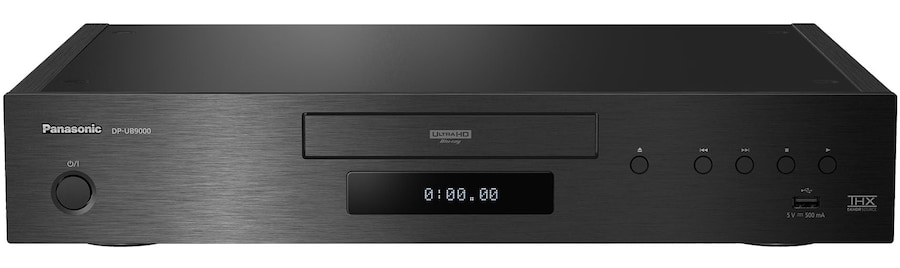
Panasonic DP-UB9000P1K
- Price: $1,199.99 at Amazon | Crutchfield
- 4K Support: Supports all major HDR formats, including HDR10, HDR10+, Dolby Vision, and HLG
- Audio: Up to 32-bit/384kHz resolution (PCM) and DSD for music playback, built-in audio decoding for Dolby Digital, Dolby TrueHD, DTS, and DTS-HD Master Audio, and supports Dolby Atmos and DTS:X passthrough when output is set to “bitstream”
- Features: Alumite-treated aluminum chassis, built-in Wi-Fi, Alexa/Google Assistant compatibility, plays Ultra HD Blu-ray discs, 3D and standard Blu-ray discs, DVDs, CDs and rewriteable discs
- Connectivity: 2 x HDMI, coaxial and Toslink optical digital audio output, 7.1-channel analog RCA audio output, single-ended RCA and balanced XLR stereo analog audio outputs, two USB ports (front and rear-panel) and dual-band Wi-Fi and ethernet port for streaming video
- Best For: The Panasonic DP-UB9000P1K is a flagship 4K Ultra HD Blu-ray player designed for discerning home theater enthusiasts and audiophiles who demand top-tier performance. It delivers exceptional video quality, supporting all major HDR formats—including HDR10, HDR10+, Dolby Vision, and HLG—thanks to Panasonic’s advanced HCX processor and HDR Optimizer. This ensures stunning visuals with precise color reproduction and dynamic contrast, making it ideal for high-end 4K TVs and projectors .
Magnetar UDP800
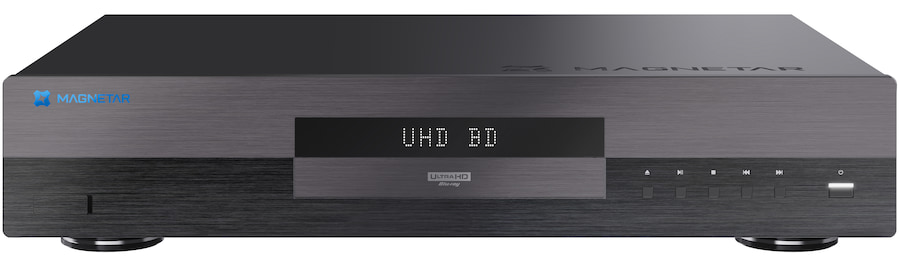
- Price: $1,599.99 at Magnetar
- 4K Support: HDR10, HDR10+ and Dolby Vision, can convert low resolution video sources up to 4K 50/60Hz (3840 x 2160) resolution.
- Audio: Can decode DSD64/128, multi-channel DSD64, and 192kHz/24-bit PCM with AIFF, ALAC, APE, FLAC and WAV audio file support, Dolby TrueHD and DTS-HD Master Audio, as well as Dolby Atmos and DTS-X
- Features: Dual-layer chassis, brushed aluminum front panel, support for UHD Blu-ray, Blu-ray, Blu-ray 3D, DVD-Video, DVD-Audio, AVCHD, SACD, CD, Kodak Picture CD, CD-R/RW, DVD±R/RW, DVD±R DL, BD-R/RE
- Connectivity: HDMI audio: up to 7.1 channel 24-bit/192kHz PCM, up to 5.1 channel DSD, Bitstream, HDMI video: UHD 23.976/25/30/50/59.94/60Hz, 1080 I/P, 720P, 576I/P, 480I/P, stereo analog audio: XLR balanced output, RCA output, Optical/coaxial digital outputs
- Best For: The Magnetar UDP800 is a premium 4K Ultra HD Blu-ray player designed for discerning cinephiles and audiophiles who demand top-tier performance from their physical media collections. It supports a wide array of disc formats, including UHD Blu-ray, Blu-ray, DVD, CD, SACD, and DVD-Audio, ensuring compatibility with both modern and legacy media.Equipped with advanced HDR support—Dolby Vision, HDR10, and HDR10+—and a robust build quality, the UDP800 delivers exceptional video clarity and dynamic range.
Pro tip: Magnetar just made a bold statement at CEDIA 2025 with its MKII Series — the UDP900MKII and UDP800MKII universal Blu-ray players. These aren’t just rehashed models; they’re tuned-up updates aimed squarely at home theater enthusiasts.
The MKIIs build on the original UDP900 and UDP800, promising upgrades across the board: features, AV fidelity, and integration. On paper, it all looks impressive. But until we get a unit in-house for testing, we can’t really say how much of that promise holds water. That said, I’ve lived with a UDP800 at home, and let me tell you — it’s stellar. If the MKII follows that trajectory, it’s worth keeping an eye on.
Mid-Range & Entry Level 4K Blu-ray Players
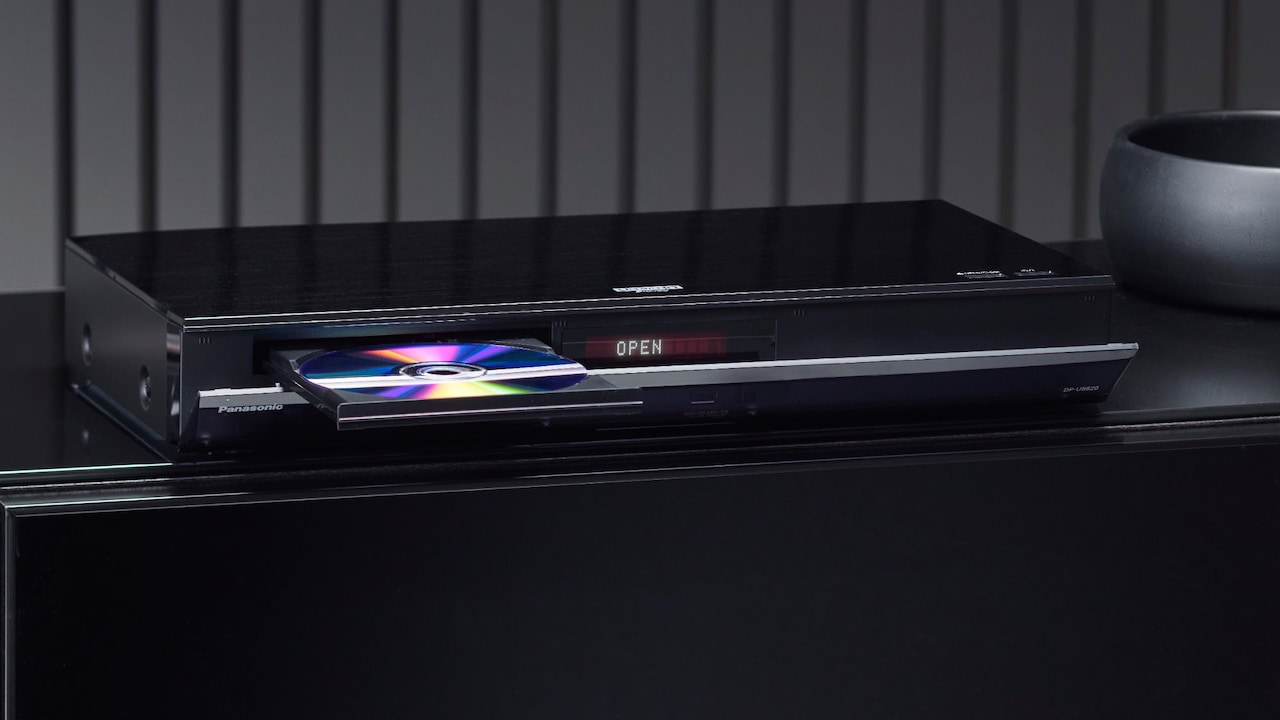
Panasonic DP-UB820
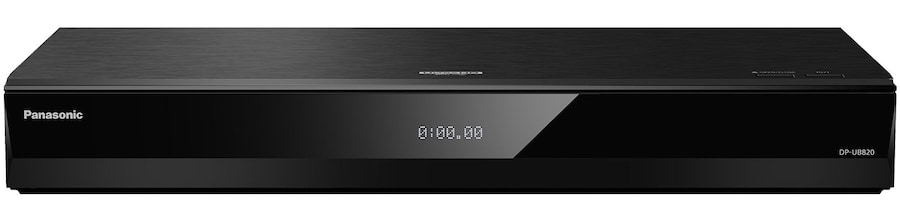
- Price: $549.99 at Amazon | Crutchfield
- 4K Support: HDR10, HDR10+, Dolby Vision, and HLG
- Audio: Dolby Digital, Dolby TrueHD, DTS, and DTS-HD Master Audio, and supports Dolby Atmos and DTS:X passthrough when output is set to “bitstream”, 32-bit/384kHz resolution (PCM)
- Features: Built-in Wi-Fi, plays Ultra HD Blu-ray discs, 3D and standard Blu-ray discs, DVDs, CDs and rewriteable discs
- Connectivity: Two HDMI outputs for separating audio and video signals, Toslink optical digital audio output, 7.1-channel analog RCA audio outputs, two USB ports (front and rear-panel)
- Best For: The Panasonic DP-UB820 is an excellent choice for home theater enthusiasts, physical media collectors, audiophiles, and value-conscious buyers. It delivers top-tier 4K video performance with support for Dolby Vision, HDR10+, Dolby Atmos, and DTS:X—making it ideal for those who want a cinematic experience at home. Its compatibility with a wide range of disc formats (Ultra HD Blu-ray, Blu-ray, DVD, CD) and high-resolution audio (including DSD and ALAC) also makes it a great fit for serious collectors and audio lovers.
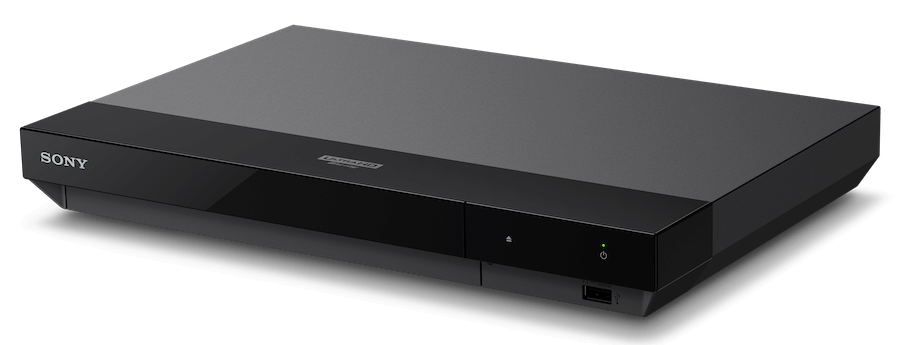
Sony UBP-X700/M
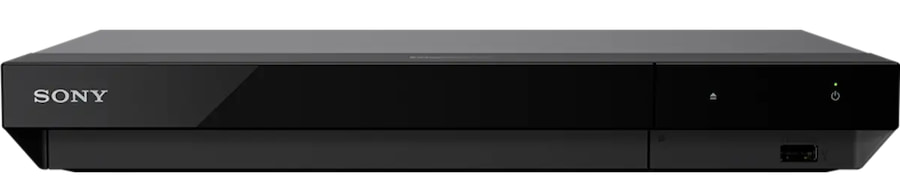
- Price: $258.00 at Amazon
- 4K Support: HDR10 and Dolby Vision
- Audio: Built-in audio decoding for Dolby Digital, Dolby TrueHD, DTS, and DTS-HD Master Audio, supports Dolby Atmos and DTS:X passthrough when output is set to “bitstream”, plays AAC, AIFF, ALAC, DSD (.dff and .dfs files), FLAC, MP3, and WMA audio file formats
- Features: Built-in Wi-Fi, support for Ultra 4K HD Blu-ray discs, 3D and standard Blu-ray discs, DVDs, CDs and rewriteable discs
- Connectivity: 2 HDMI outputs for separating audio and video signals, coaxial digital audio output, Ethernet port for internet connectivity, built-in Wi-Fi for wireless streaming
- Best For: The Sony UBP-X700/M is a budget-friendly 4K Ultra HD Blu-ray player aimed at casual viewers and movie lovers who want solid performance without breaking the bank. It supports all major HDR formats—Dolby Vision, HDR10, and HLG—offering a noticeable boost in picture quality for 4K TVs. While it lacks some of the premium build materials and high-end processing of more expensive players, the X700/M delivers crisp visuals and dependable disc playback, making it a great entry point for those new to UHD Blu-ray or upgrading from standard Blu-ray.
- On the audio front, it handles Dolby Atmos and DTS:X pass-through via HDMI, which makes it a solid companion for soundbars and AV receivers. Built-in streaming apps like Netflix and YouTube give it added versatility, though the app interface is pretty basic. With dual HDMI outputs, it plays nicely with older audio systems while still passing full 4K video to your display. If you want a no-nonsense player that covers all the essentials, the UBP-X700/M is a smart pick for budget-conscious users who still care about quality.
The Bottom Line
If you’re serious about home theater, a proper 4K Blu-ray player is still the gold standard for AV performance. Streaming may offer convenience, but it can’t compete with the high bitrate video, lossless Dolby TrueHD and DTS-HD MA audio, or the full suite of HDR formats (including Dolby Vision and HDR10+ on premium players).
Whether you’re chasing frame-accurate tone mapping, faster disc load times, or SACD/DVD-Audio support, the current crop of 4K Blu-ray players are engineered to extract every last pixel and decibel from your media. Accept no substitutes — your OLED and Atmos setup deserve better than compressed streams.
Related Articles:
- Yes, Sony Is Cutting Recordable Blu-ray Disc Production
- Sony Refreshes Best-Selling 4K Blu-ray Player… But There’s a Catch
- Magnetar Doubles Down On Physical Media With UDP900MKII And UDP800MKII Blu-Ray Players At CEDIA 2025
- Kaleidescape’s New Strato M Movie Player Does 1080p HD for $2K. Say What?
































Asa
November 12, 2025 at 6:16 pm
Thanks for the review, and reminder, Ian, of how good a system can sound with the right matching hardware, and not necessarily the most expensive.
I have the first edition of the Panasonic DP-UB9000 and it still gets firmware updates! When friends are over, they are always blown away with how good my ‘mid-tier’ system sounds with movies & live music coming from physical media.
Do you have a vault for all those movies and is it insured? Impressive.
Live concerts are my main go-to with Blu-Ray…as long as the production quality is good and they aren’t doing one-second cuts the entire show, it is better than being there. I don’t miss the drunks and coming home smelling like I slept in a bar all week (and tasting it for that long), but maybe some enjoy the week-long contact highs.
Btw, did you hear that RUSH is going to start touring again with drummer, Anika Nilles? Probably my most attended live rock show. I might have to check it out, or wait for the Blu-ray. 😉
Ian White
November 12, 2025 at 6:29 pm
Asa,
I will always own a BD player. Have 2 back-ups in boxes. The OCD part of me has them organised in way that it too embarrassing to even mention. They are included in our insurance. I’m very mixed on the Rush 50 Tour. Saw Rush 19 times and while I find her percussion style rather interesting and I’m sure she will be fine — I’m not fine with the prices. And I had access to Cleveland and Toronto tickets. Not spending over $1,000 to see Rush. Or any other band.
IW
Asa
November 13, 2025 at 5:21 pm
Haha…OCD has its benefits. Mine are alphabetized, and sorted by genre. Lol.
I looked up prices and they’re not as bad as I feared, but I won’t be seeing them as they don’t play anywhere close to me. I’m sure it will be a mixed bag of sorts w/o Neil.
Live shows are embarrassingly expensive, but with no money in producing an album for artists, they charge what they can get away with which also supports the hustlers at the top.
Blu-rays, ftw.
Anton
November 15, 2025 at 3:53 pm
Unless you have a really large movie collection, these seem like an unnecessary expenditure. Streaming is perfectly fine for 99% of the population.
Ian White
November 15, 2025 at 5:18 pm
Anton,
I have over 3,700 movies. I would love a Kalediscape system but adding 3,700 movies to that would run $20,000+ I would prefer to pay $1,000 for the best possible Blu-ray Player and handle my own discs.
IW
Robert Florczak
November 13, 2025 at 2:03 pm
And if you’re really, REALLY serious about movies, you’ll project them rather than watch them on a TV, which is basically a huge, sophisticated flashlight shining at you!
Ian White
November 13, 2025 at 6:44 pm
Robert,
While I’m a big proponent of projectors/screens, I don’t think that’s true. With 3,700+ movies, I’m VERY serious about movies. More than 99% of the general population who have never heard of 50% of the movies that I own from overseas.
IW
Robert Florczak
November 14, 2025 at 11:36 am
For some reason you’re focusing on the movies themselves. My comment refers to the vastly different aesthetic in the look of projected film ONTO a surface, the way it was intended. This requires a sensitivity to quality similar to what you pointed out about the difference in quality between streamed movies and physical media. A TV just doesn’t compare, regardless of the quality of the disc, and, to my mind, a TV user is “almost” very serious! Good discussion.
Ian White
November 14, 2025 at 2:31 pm
Robert,
Because the movies are the most important part. A terrible movie on a 200-inch Stewart screen is just garbage blown up on a wal1. I go to 5-6 new movies a month at my local AMC and love the cinema in its purest form — but most people don’t have the financial resources or space to do the screen/projector experience properly. I’m converting my garage into a proper media/guest room and a projector/screen is the likely end result — but only because I don’t want to spend $20,000 on a 116-inch TV with the best possible image quality. It will always be about the movies. I can watch Ford, Kurosawa, Lubitsch, Wilder, Scorsese, and others on a 13″ B/W TV if that’s what is available.
IW
Anton
November 15, 2025 at 3:56 pm
Some of these sophisticated “flashlights” are very expensive once you get over 75” and most of us would love a 110” TV to enjoy our movies.
Ian White
November 15, 2025 at 5:17 pm
Anton,
While I love the concept of an 110″+ 4K TV for watching movies, the current price structure for the best ones is akin to buying a car. I would also remind you that a TV that large is not the easiest install if going on a wall and somewhat dicey on a stand with little kids. A UST projector and 150″ ALR screen would be under $10K delivering the best image quality in that category.
IW
Pete
November 16, 2025 at 8:28 pm
So, what is the best option player under $500? I have an LG C3 and a Samsung soundbar (whatever the popular one is). I’m done with streaming. I want real uncompressed picture and true Dolby atmos sound. Please advise.
Ian White
November 16, 2025 at 10:55 pm
Pete,
If you can find the Panasonic DP-UB820 on sale under $500 — definitely the best option. The Sony UBP-X700/M under $275 is worth every cent. The Panny will deliver better overall image quality, but it’s double the price before any sales.
IW
Pete
November 14, 2025 at 3:45 am
So, what is the best option player under $500? I have an LG C3 and a Samsung soundbar (whatever the popular one is). I’m done with streaming. I want real uncompressed picture and true Dolby atmos sound. Please advise.
Matthew Weflen
November 18, 2025 at 3:27 am
The UB820 can be found under 500 from most retailers. It’s the best option around that price, because the Sony players are notorious for skipping problems on triple layer discs (which represent a good half or more of all 4K discs). I owned two of them, and both skipped regardless of settings. They’re now 1080p only players in my house while the UB820 takes care of 4K discs.
James
November 14, 2025 at 11:22 am
A wonderful article. I have been a avid collector of classic films for over 20 years. A full 7.1 set up is the way to go. Spent many thousands on system over the years. I have a blu ray/4k library of around 800 discs.
I love film, and will always pioneer better, more pure ways to indulge my love. I will Never STREAM My movies. The quality of the film and the extra content is priceless. I hold these articles in high regard, it shows the younger generation that its not all about youtube and ad free content. I commend those who keep physical media alive, and pray it continues.
Ian White
November 14, 2025 at 2:26 pm
James,
Appreciate that very much. Physical media for me is like a book. If I can’t touch it, it’s nothing more than a rental. And that’s the biggest issue with streaming; you don’t own any of it.
IW
James hunter
November 14, 2025 at 4:06 pm
Totally agree. There is something magical about getting a film you love, (12 angry men strings to mind), reading the booklet inside, watching the amazing film and listening to the film historians view on the commentary… seeing the vivid blacks and contrasting whites as the film continues.
Then being able to return to the film months later and relive it.
On a streaming service, you’ll never know if the movie is available or if you’ll even be able to find it.
You’re right. Physical media is for keeps, and no one can deprive you of it.
Björn Blomberg
November 16, 2025 at 10:55 am
I don’t believe in 4k, because on 3 meters distance and with a truly excellent 75 inch Sony, can you only see the finest FullHD details IF you have perfect vision… But that is anyhow great, with an old Pioneer BRP-150 *hehe*
But it’s a tragedy that great new films NOT is released in Europe, as The amazing drama documentary “The Ministry Of Ungentlemanly Warfare” that I only could buy on a elegant Chinese copy (and get the money back) from eBay… But a copy will die in 2 to 10 years!
Ian White
November 16, 2025 at 3:00 pm
Bjorn,
The problem is also that obscure films don’t always make it onto streaming services; I have plenty of Korean, Japanese, Israeli, and Chinese films that are best served in a physical copy — which are the original versions of the film.
I have 30 year old DVDs and even older CDs from Criterion Collection that play perfectly fine.
IW
Séamus O'Dwyer
December 16, 2025 at 12:59 am
If you love movies and shows from WB/DC Comics like me. Why the hell would you want to waste your money while watching them on streaming services? I watched older WB films like East of Eden and Willy Wonka & The Chocolate Factory very recently. The quality of those older films do look absolutely amazing on 4K Blu-ray. They look like a visual feast on that format. They both looked absolutely superb.
I would say this because I have been panic buying WB/DC movies on 4K & Blu-ray for the past while. The only reason I’m doing that is because of the recent news about Netflix buying up Warner Bros Discovery.
I just couldn’t contend with the idea that I had to watch my favourites from that studio on a streaming service from now on. I think streaming movies & shows via a monthly subscription just ruin the integrity & artform of a good story when it’s not given the proper respect that it deserves on the big screen. Other people who are not into this hobby may not agree with me on this point. But I don’t actually care if they don’t like hearing it. It’s my viewpoint & I’m sticking to it.
But that didn’t stop me watching other 4K movies from other studios either. Lawrence of Arabia from Sony/Columbia Pictures is an absolute revelation on 4K Blu-ray. The film provides flat out excellent quality from start to finish. I have the 4K steelbook of Lawrence of Arabia in my collection since late August. However the movie is now being released as a regular 4K Blu-ray edition from the 9th of February 2026.
Pre-orders are already currently up for it online for people who live in Australia, the UK & Ireland so far which is great news for anyone who never owned the coveted 60th anniversary steelbook release of the film up until now.
It took me about over 10 months of missed pre-orders to get that steelbook into my hand. Once it came to me via Amazon UK. It felt like a hard fought victory was bestowed on me at long last. The artificial scarcity nonsense coming from Sony felt like an unstoppable chore that felt like it would never end. People who are now hearing news of the regular 4K edition of the film would now be breathing a huge sigh of relief that this news has come through for them in the last day or so.
Ian White
December 16, 2025 at 1:57 am
Séamus,
Physical is always going to beat streaming. Hence the reason why I keep writing about this topic. I certainly didn’t buy 3,700 movies over the past 40 years to just stare at the cases.
I’m not as negative (yet) about the Netflix offer on WB. It has to pass through a mountain of regulatory committees and then there is the Paramount counter-offer. Will be 2+ years before any of this gets sorted. I must confess that I’m cheering for Netflix. Their new mega-studio is being built 2 miles from my front door here on the Jersey Shore.
The other obvious reason to continue buying physical copies is that the streaming services can pull a movie whenever they want. I’ve noticed that a number of movies are about to disappear from Netflix on the 31st.
IW